Lord Byro had spent three years at…
May 1809 CE
Lord Byro had spent three years at Trinity College, engaging in sexual escapades, boxing, horse riding and gambling.
Also while at Cambridge he formed lifelong friendships with men such as John Cam Hobhouse, who initiated him into the Cambridge Whig Club, which endorses liberal politics, and Francis Hodgson,
a Fellow at King's College, with whom he will correspond on literary and other matters until the end of his life.
Byron had racked up numerous debts as a young man, owing to what his mother terms a "reckless disregard for money".
She lives at Newstead during this time, in fear of her son's creditors.
He had planned to spend early 1808 cruising with his cousin, George Bettesworth, who was captain of the thirty-two-gun frigate HMS Tartar, but Bettesworth's unfortunate death at the Battle of Alvøen in May 1808 had made that impossible.
From 1809 to 1811, Byron had gone on the Grand Tour, customary for a young nobleman.
He had traveled with Hobhouse for the first year and his entourage of servants included the Byron's trustworthy valet, William Fletcher, who was often the butt of Hobhouse and Byron’s humor.
The Napoleonic Wars force him to avoid most of Europe, and he instead he had turned to the Mediterranean.
The journey provided the opportunity to flee creditors, as well as a former love, Mary Chaworth (the subject of his poem from this time, "To a Lady: On Being Asked My Reason for Quitting England in the Spring").
Letters to Byron from his friend Charles Skinner Matthews reveal that a key motive was also the hope of homosexual experience.
Attraction to the Levant was probably also a reason; he had read about the Ottoman and Persian lands as a child, is attracted to Islam (especially Sufi mysticism), and will later write, "With these countries, and events connected with them, all my really poetical feelings begin and end."
Byron had begun his trip in Portugal, from where he wrote a letter to his friend Hodgson in which he describes his mastery of the Portuguese language, consisting mainly of swearing and insults.
Byron had particularly enjoyed his stay in Sintra that is described in Childe Harold's Pilgrimage as "glorious Eden".
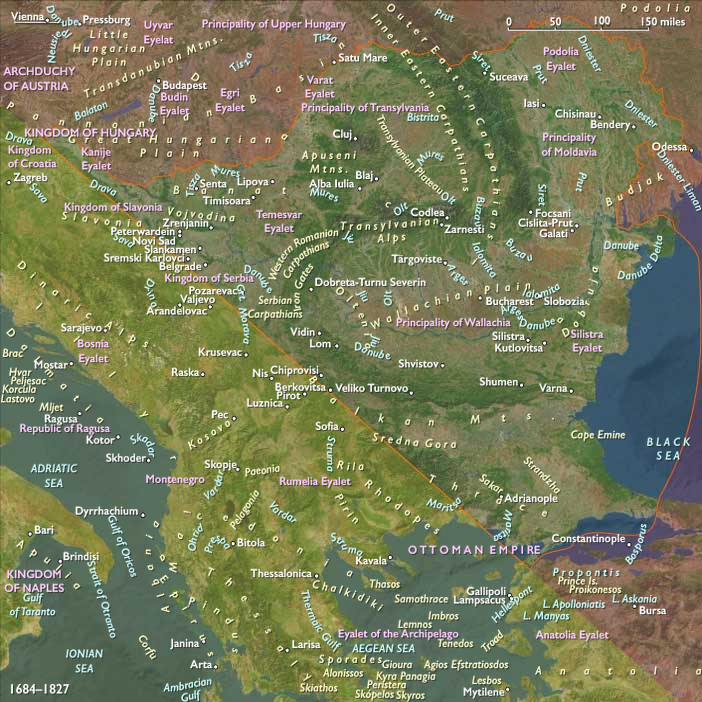
From Lisbon he had traveled overland to Seville, Jerez de la Frontera, Cádiz, Gibraltar and from there by sea on to Malta and Greece.
While in Athens, Byron had met fourteen-year-old Nicolo Giraud, who became quite close and taught him Italian.
It has been suggested that the two had an intimate relationship involving a sexual affair.
Byron will send Giraud to school at a monastery in Malta and bequeath him a sizeable sum of seven thousand pounds sterling.
The will, however, will later be cancelled.
"I am tired of pl & opt Cs, the last thing I could be tired of", Byron wrote to Hobhouse from Athens (an abbreviation of "coitum plenum et optabilem" —complete intercourse to one's heart's desire, from Petronius's Satyricon), which, as an earlier letter establishes, was their shared code for homosexual experience.
In 1810 in Athens Byron wrote Maid of Athens, ere we part for a twelve-year-old girl, Teresa Makri (1798–1875).
Byron had made his way to Smyrna, where he and Hobhouse had cadged a ride to Constantinople on HMS Salsette.
While Salsette is anchored awaiting Ottoman permission to dock at the city, on May 3, 1810 Byron and Lieutenant Ekenhead, of Salsette's Marines, swim the Hellespont.
Byron will commemorate this feat in the second canto of Don Juan.
He will return to England from Malta in July 1811 aboard HMS Volage.
Locations
Groups
Subjects
Regions
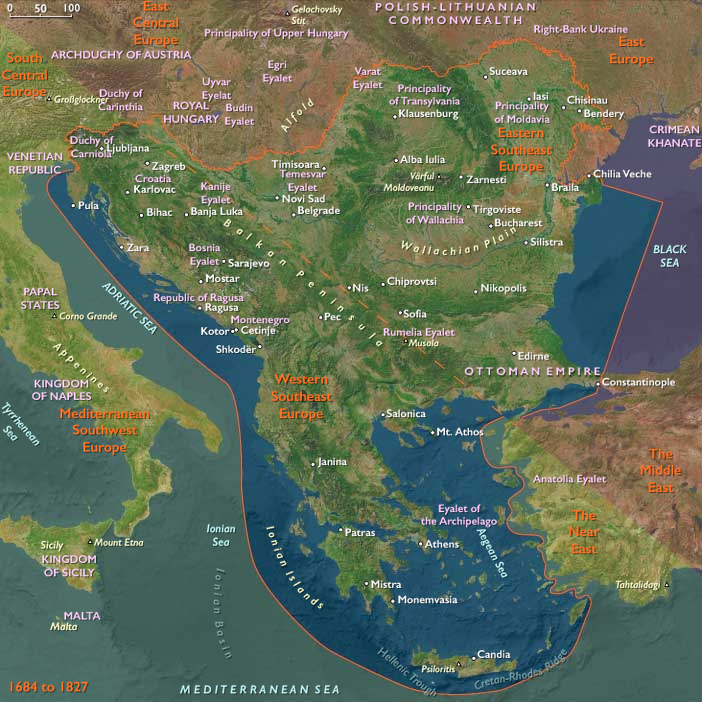
Southeast Europe
View →Subregions