Event
Several native groups, each with its own…
Several native groups, each with its own cacique, populate the area occupied by the Teques; Guaicaipuro's tribe, which is located in what is now San José de los Altos, is the largest one.
The Spaniards, having discovered gold in the area of the land of the Teques, had started to exploit the mines.
Guaicaipuro had attacked, forcing the Spanish to leave.
Following the attack, the governor of the province of Venezuela had sent Juan Rodríguez Suárez to pacify the area, which apparently he did after defeating Guaicaipuro in several engagements.
Believing he had achieved his task, the Spanish commander and his soldiers had then departed the area, leaving behind miners and three of his sons.
Once the Spanish soldiers had left, Guiacaipuro assaulted the mines killing all the workers as well as the sons of Rodríguez Suárez.
Rodríguez Suárez, who was on his way to the city of Valencia, with a small contingent of only six soldiers, with the purpose of meeting Lope de Aguirre, another Spanish conquistador, had been ambushed by Guaicaipuo and killed immediately thereafter.
After these successes, Guaicaipuro has become the main and central figure in the uprising of all the native tribes in the vicinity of the Caracas valley, and managed to unite all the tribes under his command.
They had in 1562 defeated an expeditionary force led by Luis Narváez.
Due to the fierce attacks, the Spanish have retreated from the area.
At the time of the founding of the city of Caracas, the narrow coastal valley in which it lies is populated by indigenous peoples.
Francisco Fajardo, the son of a Spanish captain and a Guaiqueri cacica, had attempted to establish a plantation in the valley in 1562 after founding a series of coastal towns.
Fajardo's settlement did not last long: it was destroyed by natives of the region led by Terepaima and Guaicaipuro.
This is to be the last rebellion on the part of the natives.
Captain Diego de Losada lays the foundations of the city on July 25, 1567, on the site of the native settlement of Catuchacao, naming it Santiago de León de Caracas, Caracas being the name of a local Indian tribe.
Don Pedro Ponce de León is appointed the provincial governor.
Caracas is today the capital and largest city of Venezuela.
-
{# Image navigates to the detail page; the magnifying-glass chip is the only Fancybox lightbox trigger (kept a separate sibling — anchors can't nest). #}
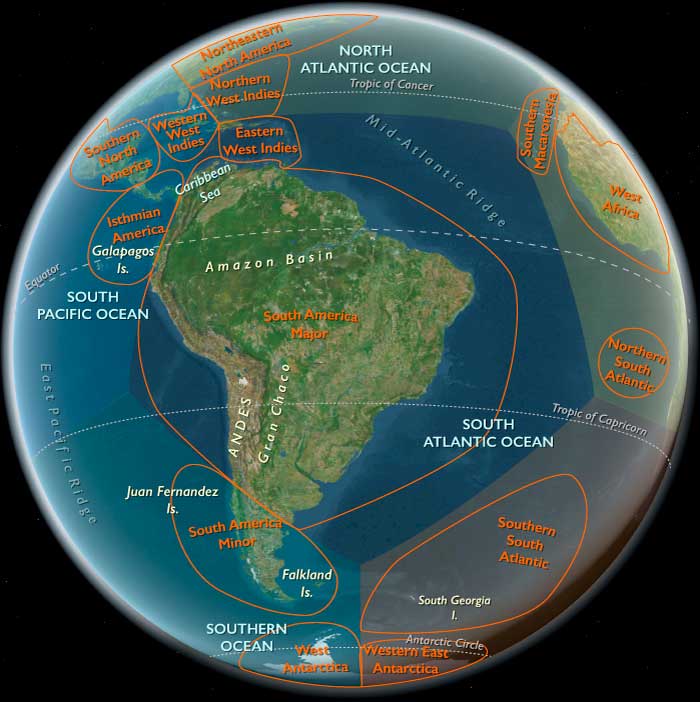
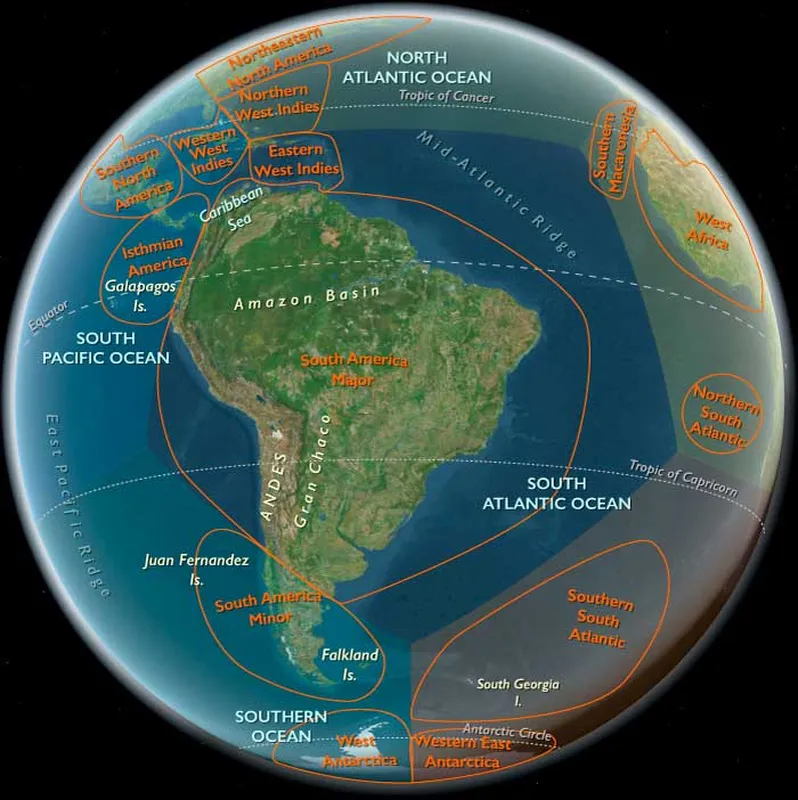 South America and The Eastern Isles
World
-
{# Image navigates to the detail page; the magnifying-glass chip is the only Fancybox lightbox trigger (kept a separate sibling — anchors can't nest). #}
 South America
Region
-
{# Image navigates to the detail page; the magnifying-glass chip is the only Fancybox lightbox trigger (kept a separate sibling — anchors can't nest). #}
 South America Major
Subregion