
The Ku Klux Klan is one among…
August 1867 CE
The Ku Klux Klan is one among a number of secret, oath-bound organizations using violence, including the Southern Cross in New Orleans (1865) and the Knights of the White Camelia (1867) in Louisiana.
Historians generally see the KKK as part of the post Civil War insurgent violence related not only to the high number of veterans in the population, but also to their effort to control the dramatically changed social situation by using extrajudicial means to restore white supremacy.
The original Ku Klux Klan had been created on December 24, 1865, during Reconstruction of the South after the Civil War, by six well-educated Confederate veterans from Pulaski, Tennessee,
The name is formed by combining the Greek kyklos (circle) with clan, added for alliteration’s sake.
The group had been known for a short time as the "Kuklux Clan".
In 1866, Mississippi Governor William L. Sharkey had reported that disorder, lack of control and lawlessness were widespread; in some states armed bands of Confederate soldiers roam at will.
The Klan uses public violence against blacks as intimidation.
They burn houses and attack and kill blacks, leaving their bodies on the roads.
At an 1867 meeting in Nashville, Tennessee, Klan members gather to try to create a hierarchical organization with local chapters eventually reporting up to a national headquarters.
Since most of the Klan's members are veterans, they are used to the hierarchical structure of the organization, but the Klan will never operate under this centralized structure.
Local chapters and bands are highly independent.
Former Confederate Brigadier General George Gordon develops the Prescript, or Klan dogma.
The Prescript suggests elements of white supremacist belief.
For instance, an applicant should be asked if he was in favor of "a white man's government", "the reenfranchisement and emancipation of the white men of the South, and the restitution of the Southern people to all their rights." (Ku Klux Klan, Organization and Principles, 1868". State University of New York at Albany.)
The latter is a reference to the Ironclad Oath, which had stripped the vote from white persons who refused to swear that they had not borne arms against the Union.
Confederate General Nathan Bedford Forrest becomes Grand Wizard, claiming to be the Klan's national leader.
Historian and Forrest biographer Brian Steel Wills writes, “While there is no doubt that Forrest joined the Klan, there is some question as to whether he actually was the Grand Wizard of the Ku Klux Klan.” (Wills, Brian Steel. A Battle from the Start: The Life of Nathan Bedford Forrest, 1992; p. 336)
Forrest had become involved sometime in late 1866 or early 1867.
A common report is that Forrest had arrived in Nashville in April 1867 while the Klan was meeting at the Maxwell House Hotel, probably at the encouragement of a state Klan leader, former Confederate general George Gordon.
The organization had grown to the point where an experienced commander was needed, and Forrest fit the bill.
In Room 10 of the Maxwell, Forrest was sworn in as a member. (Hurst, Jack. Nathan Bedford Forrest: A Biography. (1993))
According to Wills, in the August 1867 state elections the Klan was relatively restrained in its actions.
White Americans who make up the KKK hope to persuade black voters that a return to their state of repression and near-slavery, as it existed before the war, is in their best interest.
Forrest assists in maintaining order.
It is only after these efforts fail that Klan violence and intimidation will escalate and become widespread. (Wills, Brian Steel (1992). A Battle from the Start: The Life of Nathan Bedford Forrest. New York, New York: HarperCollins. p. 338)
Author Andrew Ward, however, writes, “In the spring of 1867, Forrest and his dragons launched a campaign of midnight parades; ‘ghost’ masquerades; and ‘whipping’ and even ‘killing Negro voters and white Republicans, to scare blacks off voting and running for office.’” (Ward, Andrew. River Run Red: The Fort Pillow Massacre in the American Civil War. Viking Penguin: 2005. p. 386)
Groups
Topics
Regions
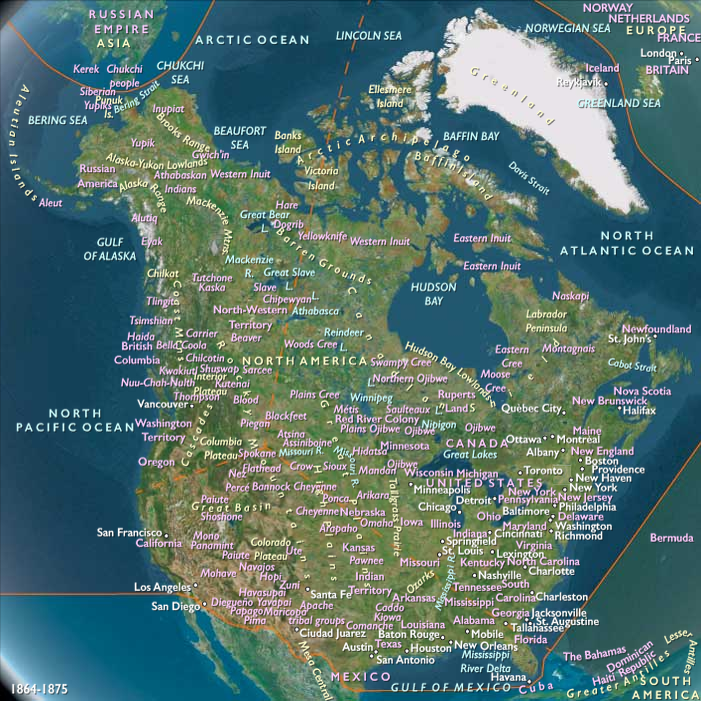
Northern North America
View →Subregions
