Palmyra (Tadmor) had in fact entered the…
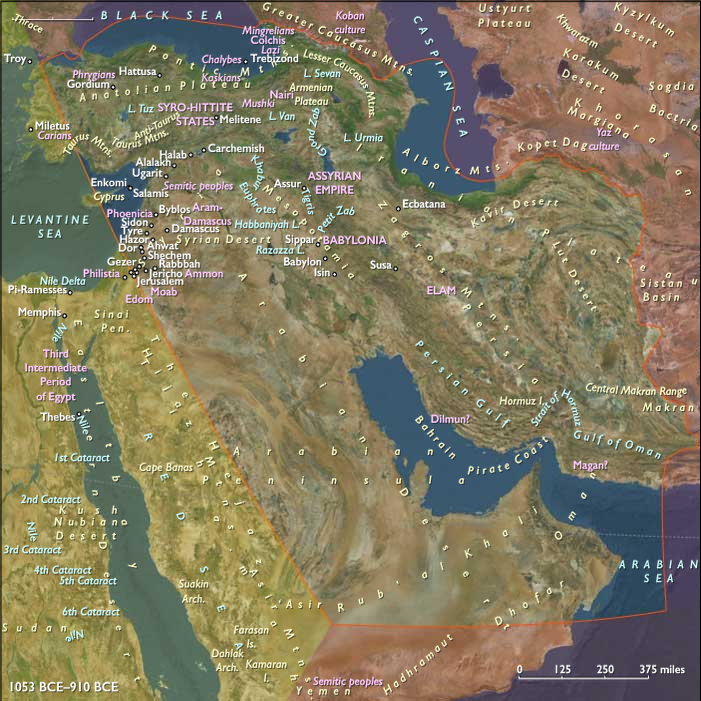
1053 BCE to 910 BCE
Palmyra (Tadmor) had in fact entered the historical record around 2000 BCE, being mentioned in a number of Old Assyrian documents, such as a contract made by Puzur-Ishtar the 'Tadmorean' at Kültepe in the nineteenth century BCE.
Tadmor is mentioned in the Mari tablets as a stop for trade caravans and nomadic tribes, such as the Suteans.
King Shamshi-Adad I of Assyria passed through the area on his way to the Mediterranean at the beginning of the eighteenth century BCE; by then, Palmyra was the easternmost point of the kingdom of Qatna.
The city is mentioned in a thirteenth-century BCE tablet discovered at Emar, which recorded the names of two "Tadmorean" witnesses.
King Tiglath-Pileser I of Assyria recorded his defeat of the "Arameans" of "Tadmar" at the beginning of the eleventh century BCE; according to the king, Palmyra was part of the land of Amurru.
The Hebrew Bible (Second Book of Chronicles 8:4) records a city by the name of "Tadmor" as a desert city built (or fortified) by King Solomon of Israel; Flavius Josephus mentions the Greek name "Palmyra", attributing its founding to Solomon in Book VIII of his Antiquities of the Jews.
Later Arabic traditions attribute the city's founding to Solomon's Jinn.
The association of Palmyra with Solomon is a conflation of "Tadmor" and a city built by Solomon in Judea and known as "Tamar" in the Books of Kings (1 Kings 9:18).
The biblical description of "Tadmor" and its buildings does not fit archaeological findings in Palmyra, which is a small settlement during Solomon's reign in the tenth century BCE.
Locations
Groups
Regions
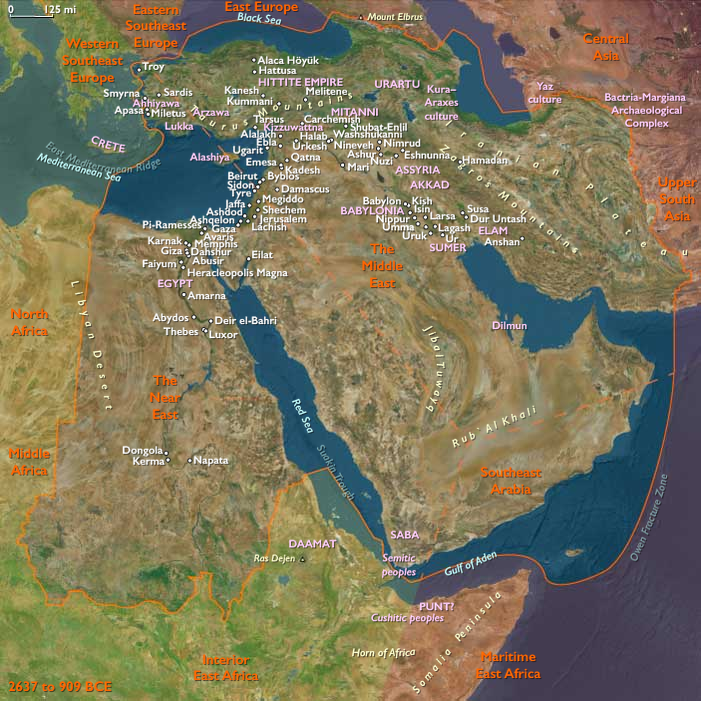
The Near and Middle East
View →Subregions