
Throughout the seventeenth century, both …
Years: 1540 - 1683
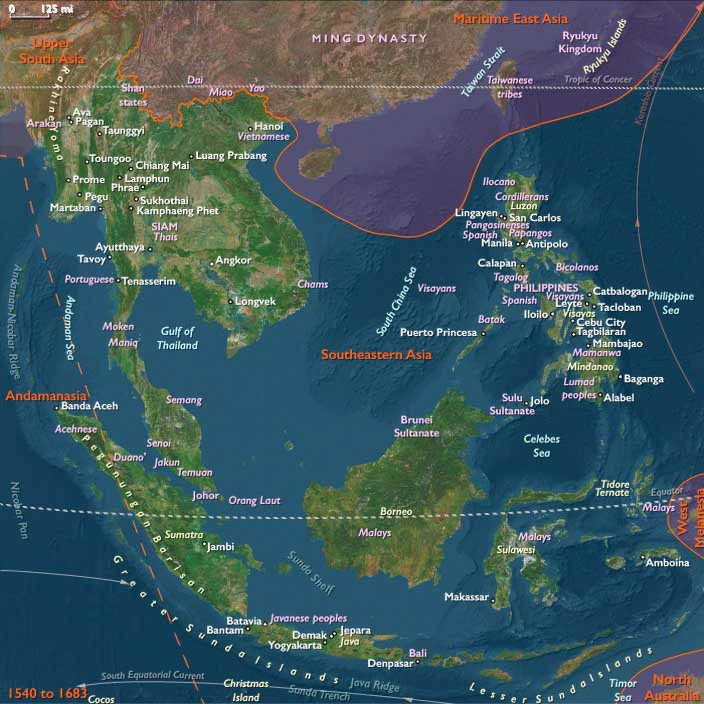
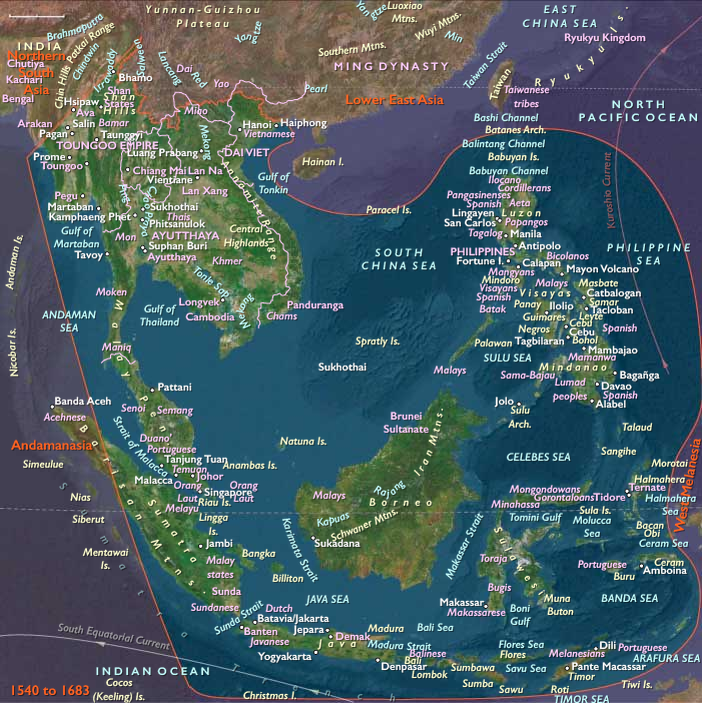
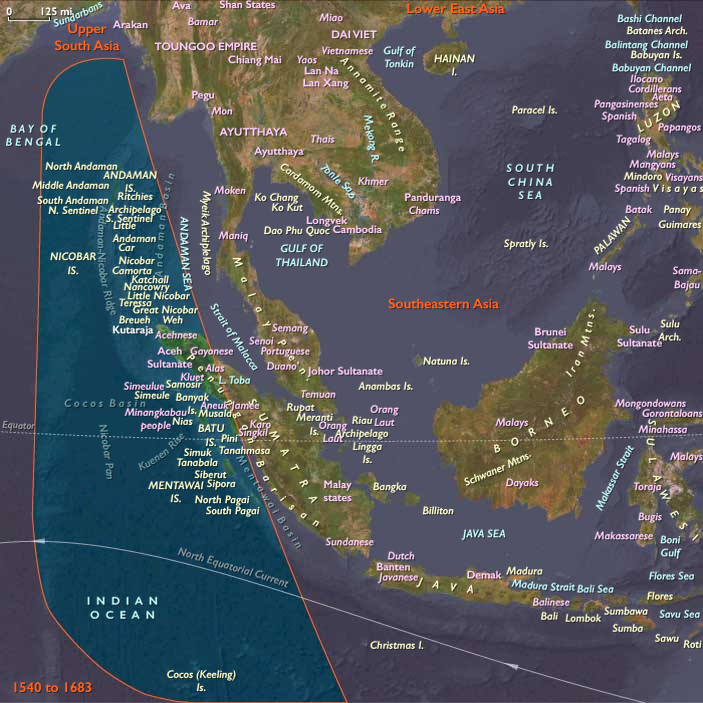
Throughout the seventeenth century, both indigenous and foreign powers in the Southeast Asian archipelago engage in a complex struggle for control over maritime trade.
The rapidly rising profits from this trade fuel the expansion of ambitious regional states, the most prominent being Aceh (northern Sumatra), Banten (western Java), Makassar (southern Sulawesi), and Mataram (central and eastern Java).
The most formidable external power in this contest is the Dutch-run United East Indies Company (VOC), whose influence steadily grows across the region.
Each indigenous state follows a distinct trajectory during this period, but the broader struggle unfolds between two competing trade models:
- A heavily state-controlled system, where rulers consolidate economic power, and
- A more oligarchic structure, where the orang kaya (merchant elite), often allied with religious and traditional leaders, maintain significant economic and political influence.
This dynamic battle for dominance over Southeast Asia’s lucrative trade networks reshapes the region’s political and economic landscape, setting the stage for future conflicts and transformations.
Groups
- Javanese people
- Acehnese people
- Dutch people
- Portuguese people
- Tidore, Sultanate of
- Aceh, or Atjeh, Sultanate
- Ternate, Sultanate of
- Portugal, Avizan (Joannine) Kingdom of
- Makassar people
- Spaniards (Latins)
- Spain, Habsburg Kingdom of
- Banten Sultanate
- Mataram, Sultanate of
- Netherlands, United Provinces of the (Dutch Republic)
- Dutch East India Company (Vereenigde Oostindische Compagnie or VOC in Dutch, literally "United East Indies Company")
Topics
Commodoties
Subjects
Regions
Subregions
Years: 1540 - 1683
Groups
- Javanese people
- Acehnese people
- Dutch people
- Portuguese people
- Tidore, Sultanate of
- Aceh, or Atjeh, Sultanate
- Ternate, Sultanate of
- Portugal, Avizan (Joannine) Kingdom of
- Makassar people
- Spaniards (Latins)
- Spain, Habsburg Kingdom of
- Banten Sultanate
- Mataram, Sultanate of
- Netherlands, United Provinces of the (Dutch Republic)
- Dutch East India Company (Vereenigde Oostindische Compagnie or VOC in Dutch, literally "United East Indies Company")
Topics
Commodoties
Subjects
Regions
Subregions