Wellesley’s Return and the Expulsion of Soult…
May 1809 CE
Wellesley’s Return and the Expulsion of Soult from Portugal (April–May 1809)
In April 1809, Sir Arthur Wellesley returned to Portugal to assume command of the British army, reinforcing it with Portuguese regiments newly trained by General William Carr Beresford. With these reorganized forces, Wellesley swiftly went on the offensive, driving Marshal Nicolas Soult’s French army out of Portugal in a series of decisive battles.
The Battle of Grijó (May 10–11, 1809) – The First Blow Against Soult
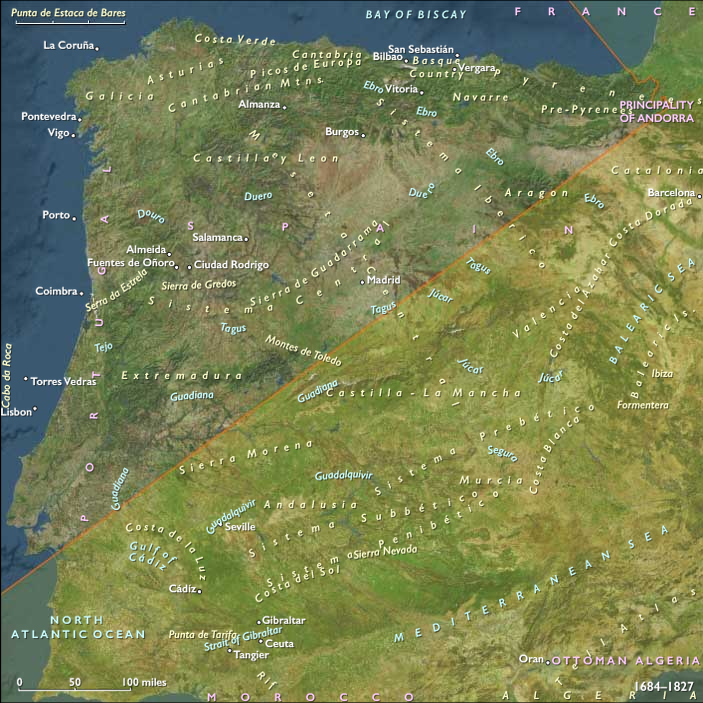
- As Wellesley advanced northward toward Porto, his Anglo-Portuguese army encountered Soult’s rearguard at Grijó, about 20 km (12 miles) south of Porto.
- French forces, outnumbered and poorly positioned, were forced to retreat after two days of fighting.
- Wellesley’s victory at Grijó left the road to Porto open, setting the stage for the final battle for Portugal’s second city.
The Second Battle of Porto (May 12, 1809) – Wellesley’s Daring River Crossing
- Soult had fortified Porto, expecting a direct assault, but Wellesley outmaneuvered him.
- Using Portuguese boats, Wellesley’s forces executed a surprise river crossing of the Douro River, landing behind French defenses.
- Caught off guard, the French position collapsed, forcing Soult into a hasty retreat.
- Wellesley recaptured Porto, liberating Portugal’s second-largest city and dealing a crushing defeat to Soult’s army.
The French Retreat and the Liberation of Northern Portugal
- With Porto lost and Wellesley pursuing him aggressively, Soult had no choice but to flee northward into Spain.
- General Francisco da Silveira, leading Portuguese militia and regular forces, took advantage of the retreat to recapture northern cities that had fallen to the French earlier in the campaign.
- By the end of May 1809, the Second French Invasion of Portugal was completely defeated, ensuring that Portugal would remain free of French control for the rest of the war.
Conclusion – A Turning Point in the Peninsular War
- Wellesley’s victories at Grijó and Porto marked the definitive expulsion of Soult’s army from Portugal.
- The success of the newly trained Portuguese forces under Beresford demonstrated that Portugal could now field an effective army alongside the British.
- With Portugal secured, Wellesley was free to take the fight into Spain, where the Peninsular War would intensify against Napoleon’s forces.
These victories cemented Wellesley’s reputation as a brilliant commander and positioned him as the leading figure in the Allied fight against Napoleon in Iberia.
Locations
Groups
Commodities
Subjects
Regions
Southwest Europe
View →Subregions