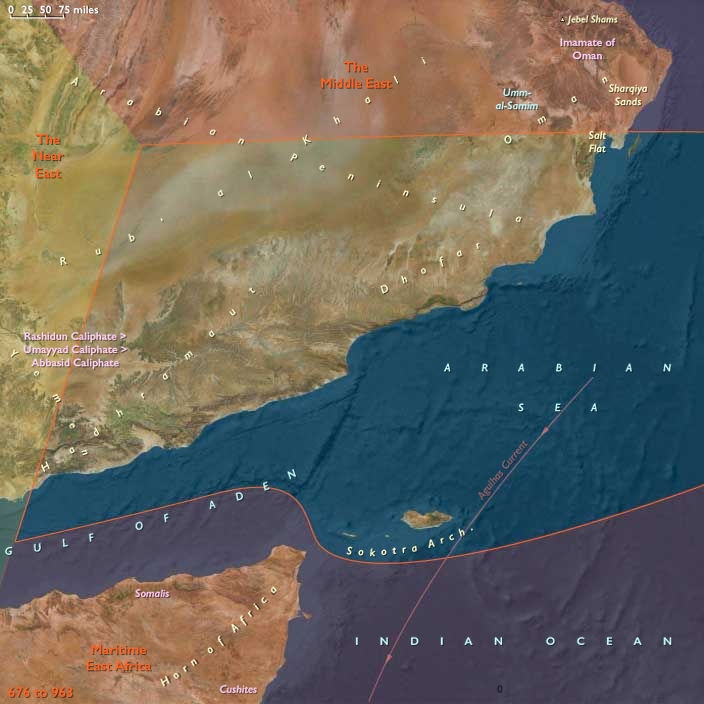
Southeast Arabia (909 BCE – 819 CE)…
909 BCE to 819 CE
Southeast Arabia (909 BCE – 819 CE) Antiquity — Incense Kingdom Seeds and Gulf/Red Sea Integration
Geographic and Environmental Context
Southeast Arabia covers the southern and eastern margins of the Arabian Peninsula:-
Eastern Yemen (Hadhramaut, eastern Aden interior, al-Mahra).
-
Southern Oman (Dhofar Highlands with the khareef monsoon, al-Wusta gravel plains, Sharqiyah Desert fringes).
-
The Empty Quarter (Rubʿ al-Khālī) margins in adjoining Saudi territory.
-
The offshore island of Socotra in the Arabian Sea.
-
Anchors: Wādī Ḥaḍramawt–Shibam–Tarim, Dhofar escarpments (Ẓafār/Al-Balīd, Mirbat), al-Mahra dunes, al-Wusta plains, Sharqiyah sands, Socotra’s Hagghier Mountains and dragon’s-blood groves.
-
Dhofar incense terraces, Hadhramaut wadis, Socotra resin groves.
Climate & Environmental Shifts
-
Aridity deepened inland; coastal fog-belt sustained agriculture.
Societies & Political Developments
-
Proto-polities in Dhofar incense uplands; Hadhramaut valley towns; Socotra as resin outlier.
-
Linked to Sabaean–Qataban–Himyarite systems in Yemen.
Economy & Trade
-
Frankincense, myrrh, dragon’s-blood resin; goats, camels, dried fish.
-
Coastal entrepôts tied to Gulf and Red Sea; incense moved to Mediterranean and India.
Technology & Material Culture
-
Iron tools; terrace walls; cisterns; dhows with lateen precursors.
Belief & Symbolism
-
Incense integral to ritual; ancestral veneration persisted; cross-links with Sabaean deities.
Environmental Adaptation & Resilience
-
Terrace irrigation + incense trade ensured survival; coastal fisheries buffered shortfalls.
Transition
By 819 CE, Southeast Arabia was a specialized incense frontier, integrated into global Red Sea–Indian Ocean circuits — ready for its role in the Islamic and medieval ages to come.
Groups
Topics
Commodities
Subjects
Regions
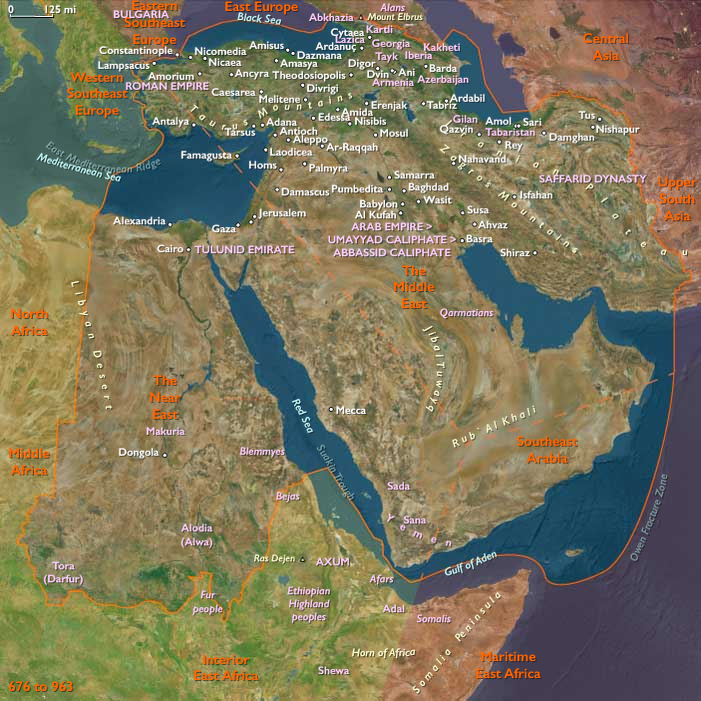
The Near and Middle East
View →Subregions