Event
Southeast Arabia (7,821–6,094 BCE): Monsoon Lakes, Wadi…
Southeast Arabia (7,821–6,094 BCE): Monsoon Lakes, Wadi Foragers, and the Greener Arabian South.
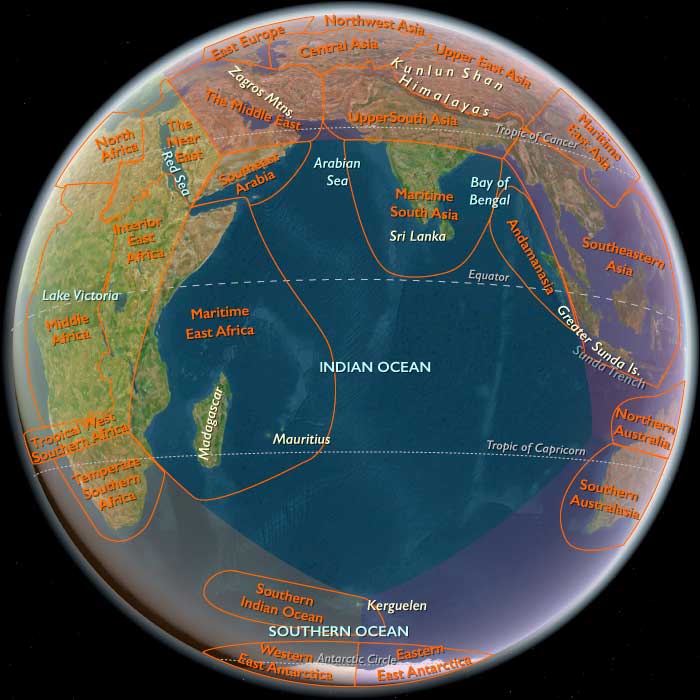
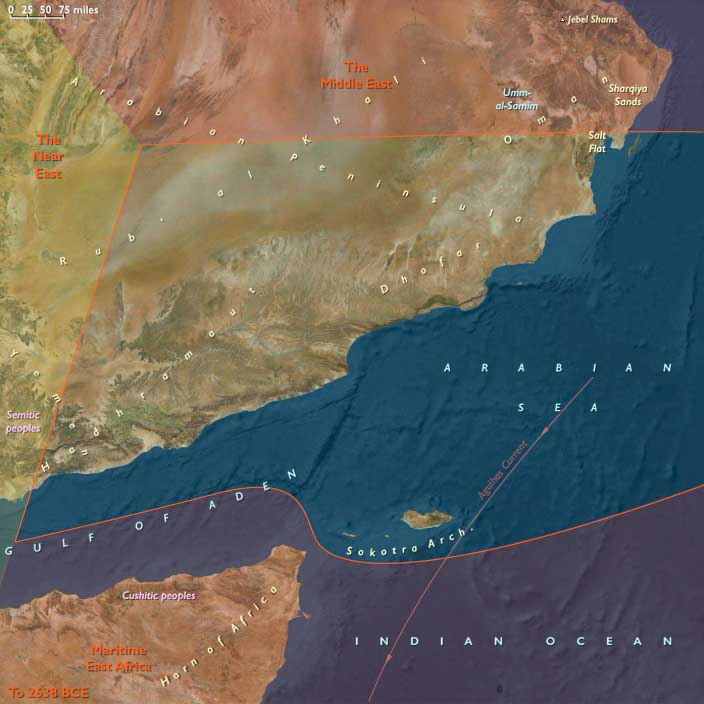
During the Early Holocene, Southeast Arabia extended across eastern Yemen, the Hadhramaut, al-Mahra, Dhofar and southern Oman, the margins of the Rubʿ al-Khālī and the island of Socotra. The region was substantially wetter than in later historical times. Stronger Indian Ocean monsoon rainfall fed springs and wadis, filled lakes in lowland deserts and supported grassland, scrub and wetland habitats across places that would later become intensely arid.
In the lowlands of Yemen and Oman, freshwater lakes occupied some desert basins during much of the period. Marshy margins and seasonally flowing channels supported wild plants, birds and grazing animals, while dunes and gravel plains remained nearby. Human communities moved repeatedly through these water-rich patches rather than occupying a uniformly green landscape.
Across the Hadhramaut, springs and wadi systems formed the principal centers of human activity. Hunter-gatherers used rockshelters and terraces overlooking drainage channels, hunting wild game and exploiting plant foods available in landscapes much better watered than those of later millennia. Camps could be revisited repeatedly as long as springs, pools and seasonal vegetation remained dependable.
The highlands of Dhofar experienced especially strong Early Holocene humidity. In the Jebel Qara, groundwater recharge, wetter soils and abundant vegetation supported land snails as well as larger terrestrial resources. Hunter-gatherers occupied rock shelters and accumulated substantial deposits of land shells during the opening part of the age.
As monsoon strength reached its Early Holocene maximum and then began gradually declining, patterns of land use changed. Some inland shelter zones became less attractive, while the Arabian Sea coast offered increasingly important alternatives. Estuaries, mangrove margins, lagoons and tidal flats supported fish, shellfish, birds and other coastal foods.
The Arabian Sea shoreline was itself still shifting under postglacial sea-level rise. Low coastal plains were inundated, lagoons migrated and mangrove belts changed position. Human groups used these evolving littoral environments without forming the dense coastal settlements characteristic of later Neolithic periods.
Farther inland, the margins of the Rubʿ al-Khālī remained a mosaic of dunes, interdunal basins, seasonal wetlands and grassier margins. Early Holocene lakes transformed some depressions into temporary concentrations of water and wildlife. These wet phases did not eliminate the desert but created corridors through which people and animals could move.
Stone projectile points, cutting implements and other flaked tools accompanied flexible hunting and gathering. Organic equipment of wood, fiber and hide would have been equally important but survives less often. Pottery, irrigation and permanent agricultural villages had not yet become characteristic of the region.
Domestic livestock likewise did not yet define Southeast Arabian life. The communities securely documented through most of the period remained hunters and gatherers. In parts of southern Yemen, the first adoption of cattle and caprines approached around the end of this age or immediately afterward, while secure pastoral occupation in Dhofar belongs substantially later.
There were no agricultural terraces, cereal fields, date plantations or irrigation networks. The later pastoral and farming landscapes of southern Arabia developed through subsequent millennia as declining rainfall changed the value of springs, wadis, grazing lands and cultivated soils.
Socotra followed an entirely separate history. Its limestone plateaus, mountains, dry woodlands and endemic plant communities developed without human occupation during this period. The island's later settlers, livestock and distinctive exploitation of plant products belonged thousands of years in the future.
Near the end of the age, climatic variability increased as the Early Holocene humid optimum began to wane. The brief disturbance around 6,200 BCE formed part of a wider southward retreat and weakening of the monsoon system. Lakes and wetlands did not vanish everywhere at once, but the long transition toward a drier Arabian landscape had begun.
Legacy of the Age
By 6,094 BCE, Southeast Arabia remained principally a world of mobile hunter-gatherers living within environments far wetter than those of later Arabia. Lakes and marshes occupied some lowland desert basins, springs and wadis concentrated settlement in Hadhramaut, and the Dhofar highlands supported exceptionally humid landscapes before monsoon strength began to decline. Coastal lagoons and mangroves were becoming increasingly important as inland conditions changed. The first limited adoption of domestic livestock may have approached along parts of the Yemeni frontier, but pastoralism had not yet become the defining regional economy, and agriculture remained absent. Socotra remained entirely unpeopled. The defining history of the age was the exploitation of the Arabian Humid Period's lakes, grasslands, wadis and coasts just before the long transition toward greater aridity.

-
{# Image navigates to the detail page; the magnifying-glass chip is the only Fancybox lightbox trigger (kept a separate sibling — anchors can't nest). #}
 The Indian Ocean Lands
World
-
{# Image navigates to the detail page; the magnifying-glass chip is the only Fancybox lightbox trigger (kept a separate sibling — anchors can't nest). #}
 The Near and Middle East
Region
-
{# Image navigates to the detail page; the magnifying-glass chip is the only Fancybox lightbox trigger (kept a separate sibling — anchors can't nest). #}
 Southeast Arabia
Subregion