
Southern Indian Ocean (7,821 – 6,094 …
Years: 7821BCE - 6094BCE
Southern Indian Ocean (7,821 – 6,094 BCE): Early Holocene — Peat Beginnings, Storm Belts, and Rookery Worlds
Geographic & Environmental Context
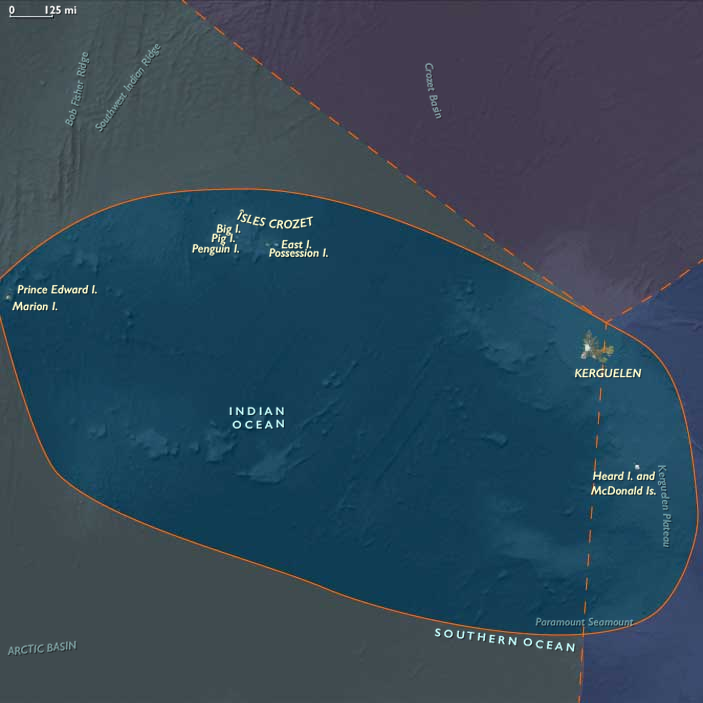
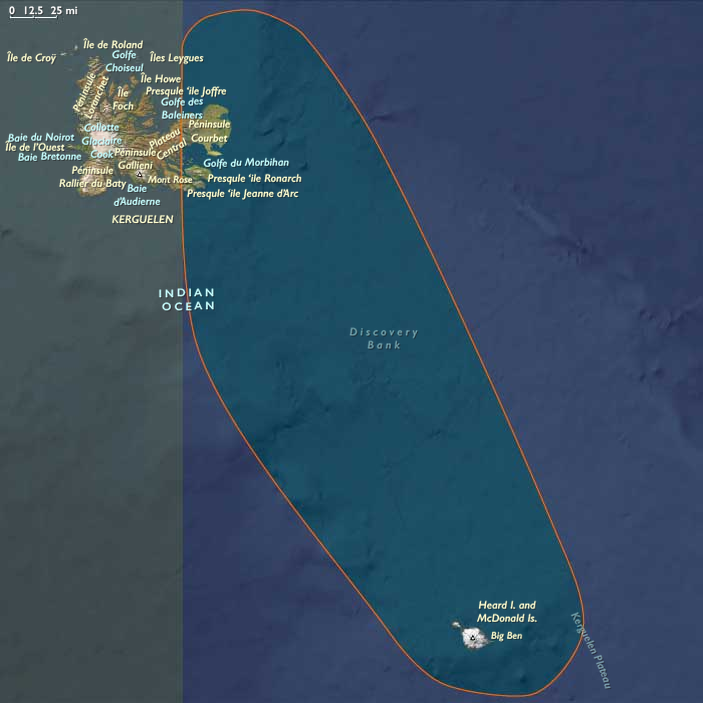
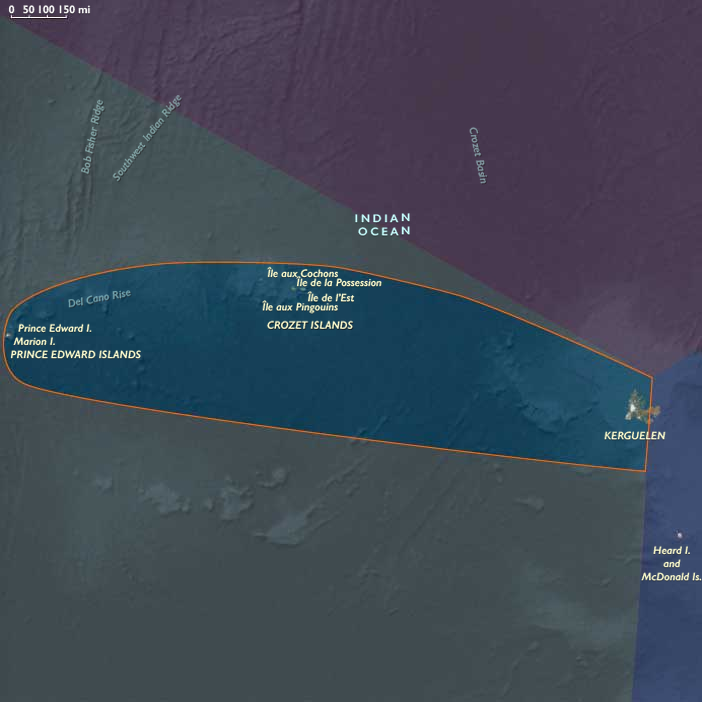
The Southern Indian Ocean encompasses two subantarctic island arcs—Kerguelen–Heard–McDonald to the east and Crozet–Prince Edward–Marion to the west—spread across the westerly wind belt of the high southern latitudes.
These islands, volcanic in origin and set within the Antarctic Circumpolar Current (ACC), formed a discontinuous chain of tundra plateaus, ice-capped domes, and cliffed coasts. By the Early Holocene, glaciers had retreated far upslope, revealing fjord-like embayments, peaty basins, and wave-battered beaches alive with seals and seabirds.
Climate & Environmental Shifts
The Holocene thermal maximum brought modestly warmer, wetter, and more stable conditions than the late glacial:
-
Kerguelen: ice restricted to high cirques; deglaciated valleys supported grass–moss tundra.
-
Heard and McDonald Islands: Big Ben volcano remained glaciated but with expanding ice-free coastal fringes.
-
Crozet–Prince Edward–Marion: frequent gales but longer ice-free summers; steady rainfall encouraged blanket peat initiation.
Sea level neared modern elevations; the ACC and westerlies maintained continuous upwelling and nutrient circulation, ensuring rich marine productivity.
Subsistence & Settlement
No human presence yet reached these latitudes. Instead, ecosystems flourished under pure ecological succession:
-
Vegetation: cushion heaths, moss carpets, lichens, and graminoids stabilized on deglaciated soils; peat accumulated in saturated hollows.
-
Fauna: dense penguin colonies, petrel and albatross nesting cliffs, and seal haul-outs spread across beaches and headlands.
-
Food-webs: guano fertilized tundra soils, supporting arthropods and invertebrate communities that recycled nutrients.
These processes laid the foundation for self-sustaining biogenic landscapes.
Technology & Material Culture
No human artifacts are known. While microlithic and ceramic traditions advanced contemporaneously on continental shores (Africa, India, Australia), the southern islands remained beyond human navigation and survival thresholds.
Movement & Interaction Corridors
Only biological corridors connected these islands:
-
ACC jets and fronts concentrated plankton, krill, and squid, feeding whale migrations and pelagic birds.
-
Wide-ranging seabirds (albatrosses, petrels) linked Kerguelen, Crozet, and Marion in a single metapopulation network, carrying nutrients between continents and Antarctica.
-
Volcanic dust and pumice rafts drifted eastward, occasionally seeding new habitats.
Cultural & Symbolic Expressions
None human, yet natural rhythms created ecological symbolism:
-
Annual breeding cycles of penguins and seals;
-
Molting and migration seasons of seabirds;
-
Glacial surges and volcanic ashfalls marking time in sediment and ice—nature’s own calendar of renewal.
Environmental Adaptation & Resilience
The subantarctic ecosystem achieved resilience through flexibility and recolonization:
-
Peatlands buffered moisture and nutrients, retaining fertility through storms and droughts.
-
Seabird colonies relocated as shorelines shifted; plants reestablished rapidly after frost or ash disturbance.
-
Marine productivity remained stable under the constant upwelling regime of the ACC.
These systems were robust, self-renewing, and fully autonomous from human disturbance.
Long-Term Significance
By 6,094 BCE, the Southern Indian Ocean islands had reached ecological maturity: glaciers confined to summits, peat widespread in lee basins, and vast colonies of seabirds and seals sustained by one of the planet’s most productive ocean systems.
Still unseen by humankind, these remote lands stood as autonomous laboratories of adaptation—proving that even at the edge of the habitable world, life had engineered stability, resilience, and abundance long before human discovery.
Topics
Commodoties
Subjects
Regions
Subregions
Years: 7821BCE - 6094BCE
Topics
Commodoties
Subjects
Regions
Subregions