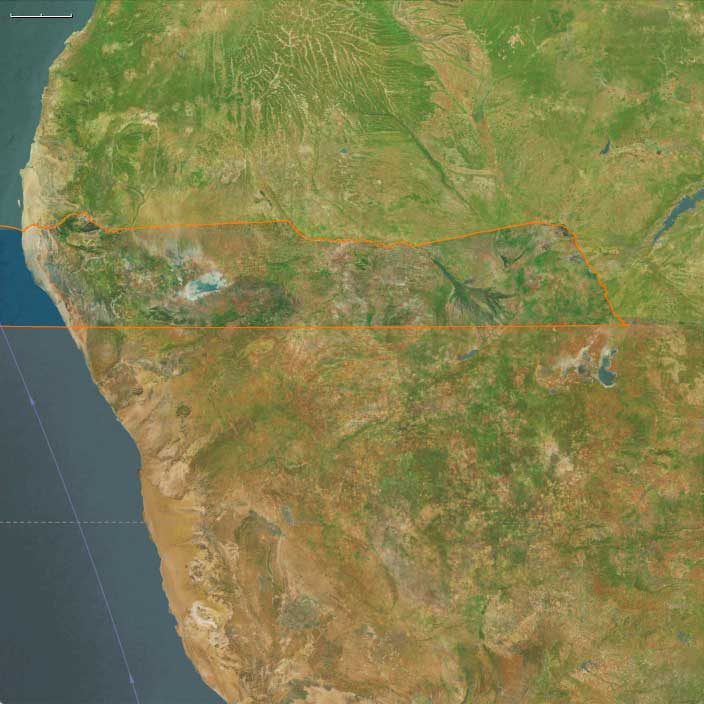
Tropical West Southern Africa (28,577 – 7,822…
28577 BCE to 7822 BCE
Tropical West Southern Africa (28,577 – 7,822 BCE) Upper Pleistocene II — Deglaciation, Larger Floods, and Pan-Woodland Mosaics
Geographic and Environmental Context:
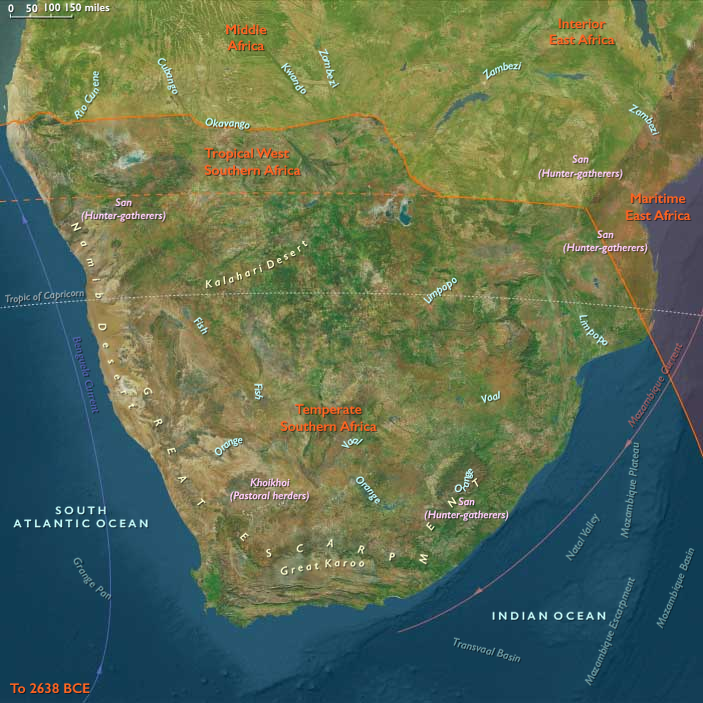
Tropical West Southern Africa includes the far-northern zones of Botswana and Namibia, including the Okavango Delta, the Zambezi–Chobe–Caprivi Strip wetlands, the Etosha Pan basin and surrounding thornveld, and the Namib’s Skeleton Coast fringe.
Anchors: Okavango Delta (Boro–Thamalakane–Khwai distributaries), Zambezi–Chobe–Cuando/ Kwando–Linyanti–Caprivi channels and floodplains, Etosha Pan (Oshigambo–Oshivelo margins, Ekuma–Omuramba inlets), Owambo/ Cuvelai seasonal rivers, and the Skeleton Coast (surf-battered gravel plains, fog-fed lichen fields, seal rookeries).
-
Rising rainfall during interstadials enlarged Okavango inundations and Caprivi wetlands; woodland belts thickened around Etosha and the Owambo/ Cuvelai drains.
Climate & Environmental Shifts
-
Bølling–Allerød: increased summer rains boosted channel floods, island growth, and riparian mast;
-
Younger Dryas: drought pulse contracted marsh edges;
-
Early Holocene: warming and stronger ITCZ rains stabilized flood regimes.
Subsistence & Settlement
-
Semi-recurrent floodplain camps exploited fish runs (catfish/ tilapia), flood-recession grazing antelope, and riparian fruits;
-
Etosha margin hunts targeted springbok, zebra, oryx near permanent water;
-
Caprivi supported large wet-season encampments on levees;
-
Skeleton Coast remained a short-visit zone for carrion/ shellfish.
Technology & Material Culture
-
Microlithic bladelets & backed segments; bone harpoons/ gorges; woven fish-baskets; OES water flasks & beads; grindstones for geophytes/ seeds.
Movement & Interaction Corridors
-
Seasonal Okavango distributaries (Thamalakane–Boro–Khwai) and Caprivi levee paths let groups circulate with flood pulse timing;
-
Etosha access via Omuramba saddles.
Cultural & Symbolic Expressions
-
Bead strings and pigment caches deposited at long-lived island groves and pan-edge shelters; first engravings on calcrete/ dolomite slabs near Etosha implied.
Environmental Adaptation & Resilience
-
Pulse-following mobility and broad-spectrum diets blunted drought stress of the Younger Dryas.
Transition
By 7,822 BCE, people were tuning lifeways to flood pulses — a forager hallmark of this aquatic-savanna frontier.
Images

Tropical West Southern Africa in the Upper Paleolithic II
Groups
Topics
Commodities
Regions
Southern Africa
View →Subregions