
Maritime South Asia (1252 – 1395 CE): …
Years: 1252 - 1395
Maritime South Asia (1252 – 1395 CE): Bahmani–Vijayanagara Rivalry, Pandyan Decline, and Maritime Networks
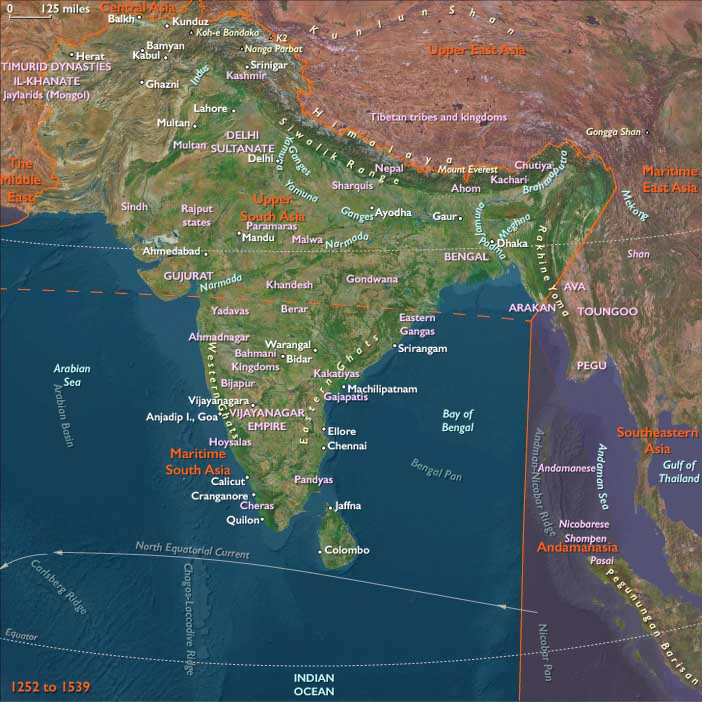
Maritime South Asia includes peninsular India south of the Narmada River (Tamil Nadu, Kerala, Karnataka, Andhra Pradesh, Telangana, Maharashtra, Goa, Dadra and Nagar Haveli and Daman and Diu, southern Odisha, southern Chhattisgarh), Sri Lanka, Lakshadweep, the Maldives, and the Chagos Archipelago.
-
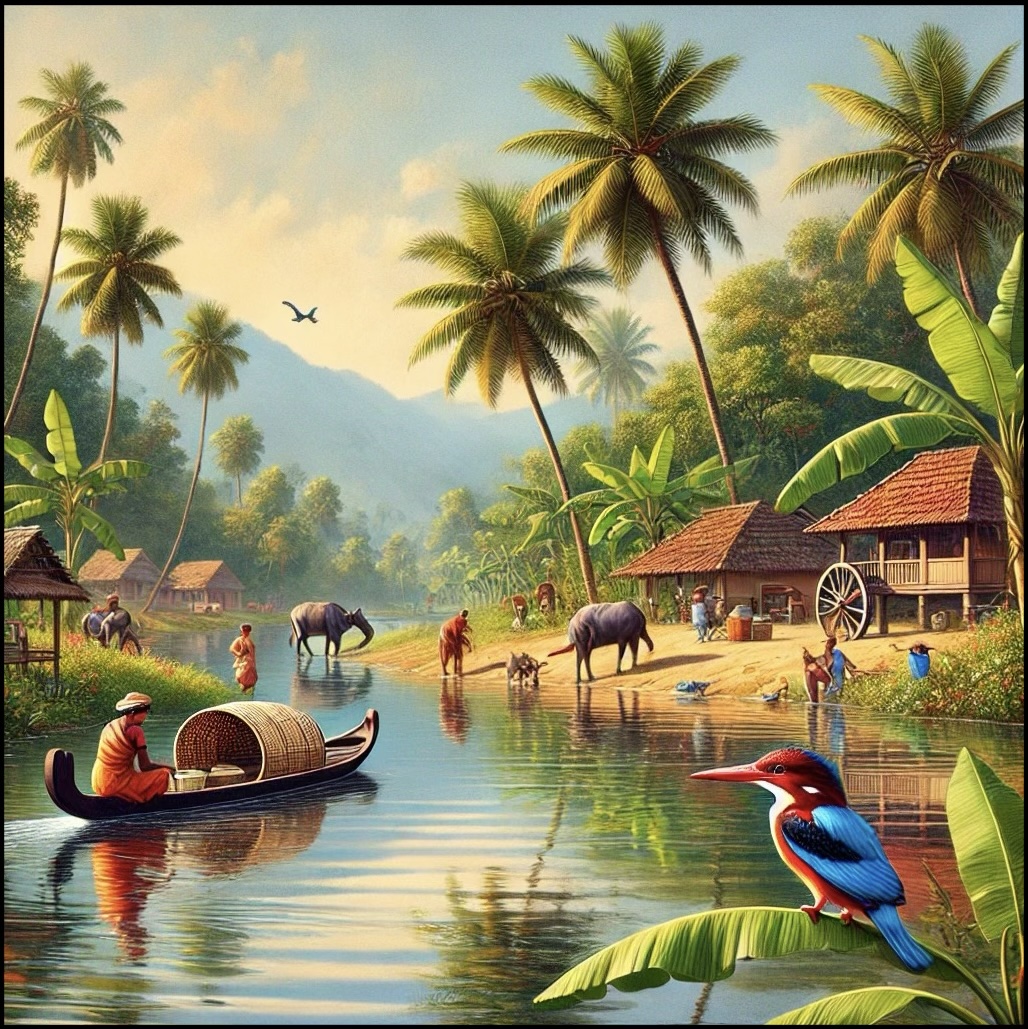
Anchors: the Tamil plains, Deccan plateau, Kerala backwaters, Sri Lanka’s dry and wet zones, and the Maldives–Chagos island chains.
Climate and Environmental Shifts
-
The onset of the Little Ice Age (~1300) brought greater rainfall variability, including occasional monsoon failures and drier Deccan interiors.
-
Coastal Kerala and Tamil Nadu remained stable rice-and-spice producers, buffered by maritime trade.
-
Sri Lanka experienced decline in large-scale irrigation as the Polonnaruwa system fell into disrepair, with highland and coastal polities relying more on rainfall-fed fields.
-
Maldives thrived as a cowrie-exporting hub despite fragile freshwater conditions; Lakshadweep integrated more deeply into Malabar’s pepper trade; Chagos continued as uninhabited atolls used incidentally by passing mariners.
Societies and Political Developments
-
Delhi Sultanate campaigns (14th c.): Alauddin Khalji and Muhammad bin Tughluq invaded Deccan, weakening Yadavas, Hoysalas, and Kakatiyas.
-
Bahmani Sultanate (founded 1347): ruled from Gulbarga, later Bidar; rivaled Vijayanagara.
-
Vijayanagara Empire (founded 1336): by Harihara I and Bukka Raya I, became bulwark of Hindu rule, centered at Hampi.
-
Pandyas: waned, replaced by Madurai Sultanate (1335–1378), then absorbed into Vijayanagara.
-
Sri Lanka: fractured between Sinhalese highland polities (Gampola, Kotte) and Tamil Jaffna kingdom.
-
Maldives: Islamic sultanate flourished; cowries, tuna, coir exported.
-
Lakshadweep & Chagos: sparsely populated, integrated into Malabar–Hormuz circuits.
Economy and Trade
-
Rice, millet, pulses farmed inland; irrigation tanks vital.
-
Pepper, cardamom, cinnamon, pearls, elephants, horses dominated commerce.
-
Cowries (Maldives) used as global currency; exported to Bengal, East Africa.
-
Ports: Calicut rose as premier Indian Ocean hub; Quilon, Goa, and Nagapattinam important.
-
Chinese merchants arrived under Yuan–early Ming demand.
Belief and Symbolism
-
Hinduism: Vijayanagara temples (Virupaksha at Hampi) monumentalized kingship.
-
Islam: Bahmani mosques, Sufi shrines; Maldives consolidated Muslim identity.
-
Buddhism: persisted in Sri Lanka but weakened under Tamil and regional wars.
Long-Term Significance
By 1395, Maritime South Asia was divided between Bahmani and Vijayanagara, with Sri Lanka fragmented, Maldives firmly Islamic, and the Lakshadweep–Maldives–Chagos arc firmly embedded in Indian Ocean currency and spice networks.
Southern South Asia (with civilization) ©2024-25 Electric Prism, Inc.
People
Groups
- Hinduism
- Tamil people
- Jainism
- Sinhalese people
- Buddhism
- Pandyan Dynasty
- Buddhists, Theravada
- Maldives (Maldive Islands)
- Seuna Yadavas of Devagiri
- Hoysalas, Kingdom of the
- Polonnaruwa, Kingdom of
- Kakatiya dynasty
- Hoysala Empire
- Jaffna, or Aryacakravarti, Tamil Kingdom of
- Delhi, Sultanate of (Tughluq Dynasty)
- Madurai Sultanate
- Vijayanagara, Kingdom of
- Bahmani, Sultanate of
Topics
Commodoties
- Gem materials
- Domestic animals
- Grains and produce
- Textiles
- Strategic metals
- Sweeteners
- Money
- Aroma compounds
- Spices
Subjects
Regions
Subregions

Related Events
Showing 10 events out of 16 total
Years: 1252 - 1395
Southern South Asia (with civilization) ©2024-25 Electric Prism, Inc.
People
Groups
- Hinduism
- Tamil people
- Jainism
- Sinhalese people
- Buddhism
- Pandyan Dynasty
- Buddhists, Theravada
- Maldives (Maldive Islands)
- Seuna Yadavas of Devagiri
- Hoysalas, Kingdom of the
- Polonnaruwa, Kingdom of
- Kakatiya dynasty
- Hoysala Empire
- Jaffna, or Aryacakravarti, Tamil Kingdom of
- Delhi, Sultanate of (Tughluq Dynasty)
- Madurai Sultanate
- Vijayanagara, Kingdom of
- Bahmani, Sultanate of
Topics
Commodoties
- Gem materials
- Domestic animals
- Grains and produce
- Textiles
- Strategic metals
- Sweeteners
- Money
- Aroma compounds
- Spices
Subjects
Regions
Subregions