
Maritime South Asia (1108 – 1251 CE): …
Years: 1108 - 1251
Maritime South Asia (1108 – 1251 CE): Chola Resilience, Pandyan Resurgence, and Polonnaruwa’s Culmination
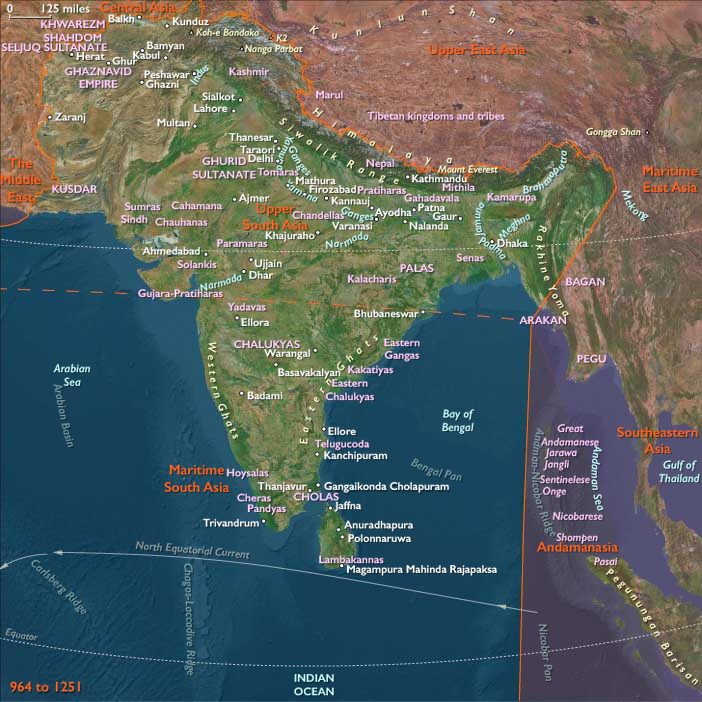
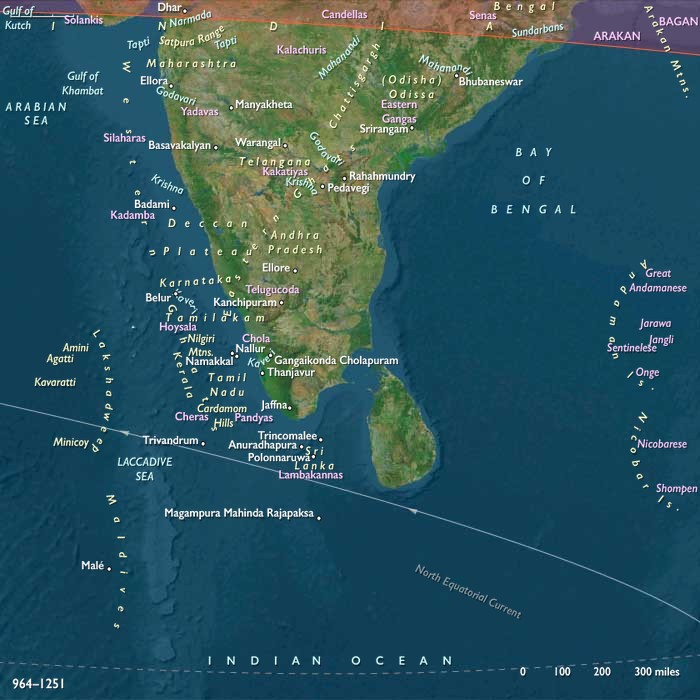
Maritime South Asia includes peninsular India south of the Narmada River (Tamil Nadu, Kerala, Karnataka, Andhra Pradesh, Telangana, Maharashtra, Goa, Dadra and Nagar Haveli and Daman and Diu, southern Odisha, southern Chhattisgarh), Sri Lanka, Lakshadweep, the Maldives, and the Chagos Archipelago.
-
Anchors: the Tamil plains, Deccan plateau, Kerala backwaters, Sri Lanka’s dry and wet zones, and the Maldives–Chagos island chains.
Climate and Environmental Shifts
-
Early signs of monsoon variability appeared, with drier years challenging Deccan agriculture, while coastal Kerala and Tamil plains remained fertile.
-
Sri Lanka’s Polonnaruwa kingdom, especially under Parakramabahu I (r. 1153–1186), expanded irrigation tanks and reservoirs, epitomized in the maxim “not even a drop of rainwater should flow to the sea unused.”
-
The Maldives, now an Islamic sultanate (from 1153), faced freshwater scarcity but adapted with cisterns and integrated fully into Indian Ocean trade.
-
Lakshadweep was tied into Malabar spice ports, while Chagos remained sparsely inhabited but on sailing lanes.
Societies and Political Developments
-
Cholas: retained Tamil core but waned under Kulottunga I (r. 1070–1122) and successors; regional powers pressed.
-
Pandyas (Madurai): resurged in 12th–13th c., contesting Cholas.
-
Hoysalas (Karnataka): patronized temples (Belur, Halebidu).
-
Sri Lanka:
-
The Polonnaruwa kingdom thrived under Parakramabahu I (r. 1153–1186), expanding irrigation, unifying the island.
-
Later fragmentation weakened resistance to South Indian incursions.
-
-
Maldives: converted to Islam (1153) under Sultan Dhovemi; sultanate established.
-
Lakshadweep & Chagos: remained small-scale, oriented to Malabar trade.
Economy and Trade
-
Rice and irrigation tank networks expanded.
-
Pepper, cinnamon, pearls, elephants exported to Red Sea and Southeast Asia.
-
Maldives: cowries became a pan-Indian Ocean currency.
-
Ports (Calicut, Quilon, Nagapattinam): entrepôts for Arab and Chinese trade.
Belief and Symbolism
-
Hinduism: Chola and Pandya Shaiva temples flourished.
-
Buddhism: Polonnaruwa’s monasteries thrived until decline.
-
Islam: took root in Maldives and on Kerala’s coast.
Long-Term Significance
By 1251, South India was a contested mosaic: waning Cholas, rising Pandyas, Hoysalas strong, Polonnaruwa mature, Maldives Islamic, and island chains integral to currency flows.

Southern South Asia (with civilization) ©2024-25 Electric Prism, Inc.
People
Groups
- Hinduism
- Tamil people
- Jainism
- Sinhalese people
- Buddhism
- Pandyan Dynasty
- Buddhists, Theravada
- Chola Empire
- Hoysalas, Kingdom of the
- Polonnaruwa, Kingdom of
- Kakatiya dynasty
- Hoysala Empire
Topics
Commodoties
- Gem materials
- Domestic animals
- Grains and produce
- Textiles
- Strategic metals
- Sweeteners
- Money
- Aroma compounds
- Spices
Subjects
Regions
Subregions
Related Events
Showing 5 events out of 5 total
Years: 1108 - 1251
Southern South Asia (with civilization) ©2024-25 Electric Prism, Inc.
People
Groups
- Hinduism
- Tamil people
- Jainism
- Sinhalese people
- Buddhism
- Pandyan Dynasty
- Buddhists, Theravada
- Chola Empire
- Hoysalas, Kingdom of the
- Polonnaruwa, Kingdom of
- Kakatiya dynasty
- Hoysala Empire
Topics
Commodoties
- Gem materials
- Domestic animals
- Grains and produce
- Textiles
- Strategic metals
- Sweeteners
- Money
- Aroma compounds
- Spices
Subjects
Regions
Subregions