
The British have almost finished consolidating their …
Years: 1828 - 1839
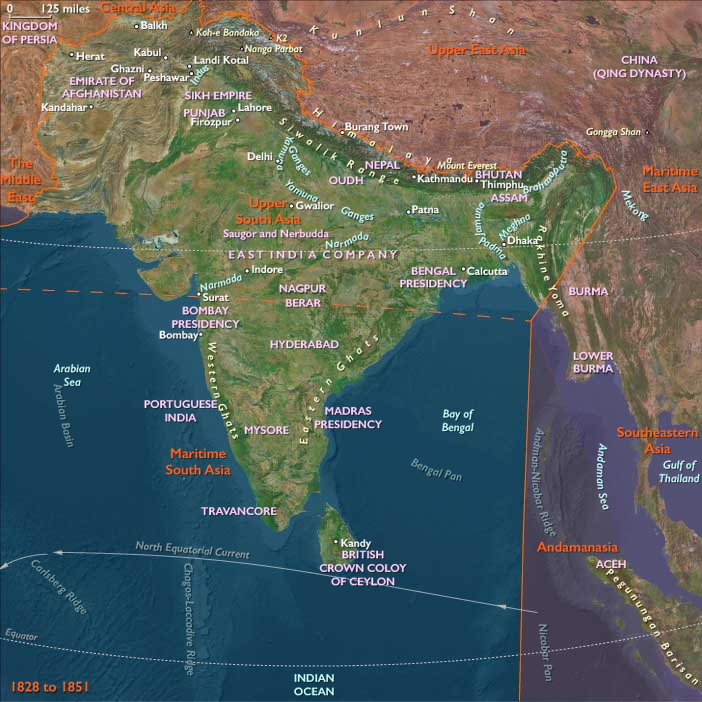
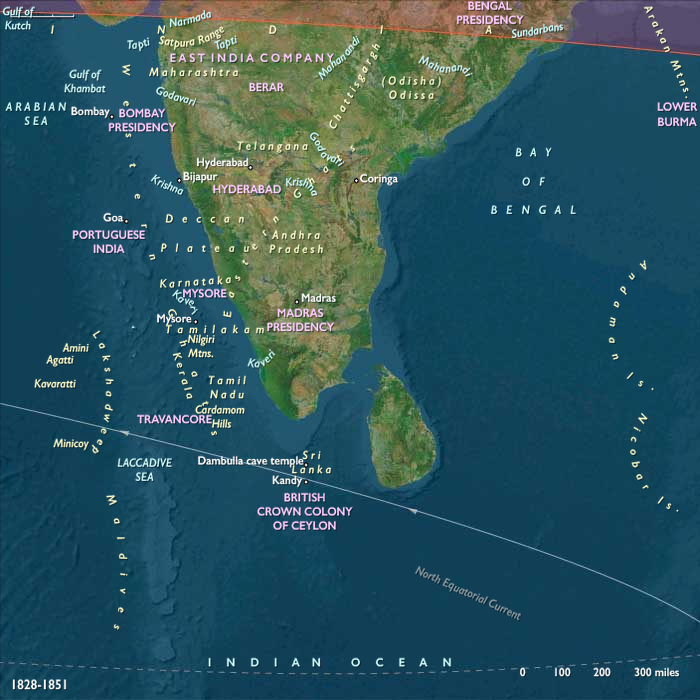
The British have almost finished consolidating their position in Ceylon by the early 1830s and begin to take more of an interest in securing the island's political stability and economic profitability.
A new wave of thought, influenced by the reformist political ideology articulated by Jeremy Bentham and James Mill, promises to change fundamentally Britain's relationship to its colonies.
Known as utilitarianism, and later as philosophical radicalism, it promotes the idea of democracy and individual liberty.
This philosophy sponsors the idea of the trusteeship, i.e., that new territories will be considered trusts and will receive all the benefits of British liberalism.
These philosophical abstractions are put into practical use with the recommendations of a commission led by W.M.G. Colebrooke and C.H. Cameron.
Their Colebrooke Report (1831-32) is an important document in the history of the island.
G.C. Mendis, considered by many to be the doyen of modern Sri Lankan history, considers the Colebrooke-Cameron reforms to be the dividing line between the past and present in Sri Lanka.
People
Groups
- East India Company, British (United Company of Merchants of England Trading to the East Indies)
- Britain (United Kingdom of Great Britain and Ireland)
- Ceylon, British Crown Colony of
Topics
Commodoties
Subjects
Regions
Subregions
Years: 1828 - 1839
People
Groups
- East India Company, British (United Company of Merchants of England Trading to the East Indies)
- Britain (United Kingdom of Great Britain and Ireland)
- Ceylon, British Crown Colony of
Topics
Commodoties
Subjects
Regions
Subregions