
Stephen administers his kingdom through a system …
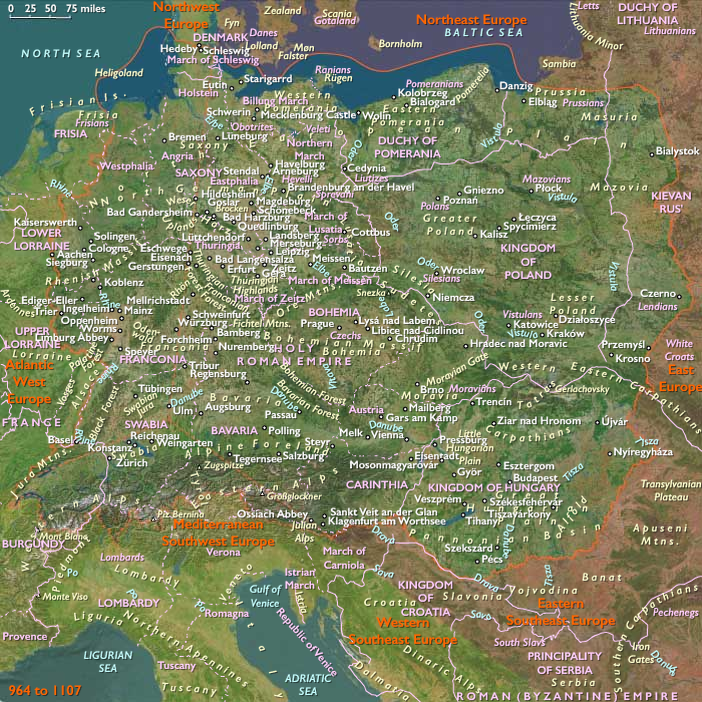
Years: 964 - 1107
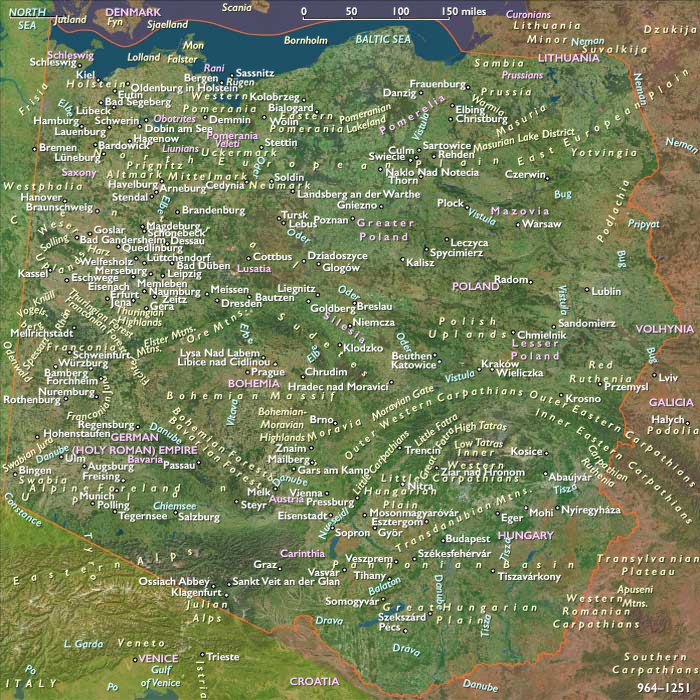
Stephen administers his kingdom through a system of counties, each governed by an ispán, or magistrate, appointed by the king.
In Stephen's time, Magyar society has two classes: the freemen nobles and the unfree.
The nobles are descended in the male line from the Magyars who had either migrated into the Pannonian Basin or had received their tide of nobility from the king.
Only nobles can hold office or present grievances to the king.
They pay tithes and owe the crown military service but are exempt from taxes.
The unfree—who have no political voice—are slaves, freed slaves, immigrants, or nobles stripped of their privileges.
Most are serfs who pay taxes to the king and a part of each harvest to their lord for use of his land.
The king has direct control of the unfree, thus checking the nobles' power.
Clan lands, crown lands, and former crown lands make up the realm.
Clan lands belong to nobles, who can will the lands to family members or the church; if a noble dies without an heir, his land reverts to his clan.
Crown lands consist of Stephen's patrimony, lands seized from disloyal nobles, conquered lands, and unoccupied parts of the kingdom.
Former crown lands are properties granted by the king to the church or to individuals.
Locations
People
Groups
- Polytheism (“paganism”)
- Hungarian people
- Slavs, West
- Hungary, Principality of
- Slovaks (West Slavs)
- Hungary, Kingdom of
- Christians, Roman Catholic
Commodoties
Subjects
Regions
Subregions
Years: 964 - 1107
Locations
People
Groups
- Polytheism (“paganism”)
- Hungarian people
- Slavs, West
- Hungary, Principality of
- Slovaks (West Slavs)
- Hungary, Kingdom of
- Christians, Roman Catholic
Commodoties
Subjects
Regions
Subregions