
Filters:
The former Consul to Tunis, William Eaton …
Years: 1805 - 1805
April
The former Consul to Tunis, William Eaton (1764-1811), who had returned in 1804 to the Mediterranean Sea with the title of Naval Agent to the Barbary States, had been granted permission from the United States government and third President Thomas Jefferson (1743-1826, served 1801-1809), to back the claim of Hamet Karamanli, the rightful heir to the throne of Tripoli, who had been deposed by his brother Yusuf Karamanli.
Yusuf, who had assassinated his older brother by shooting him in front of his mother, was out of the country at the time and decided to remain away, in exile.
Upon his return to the area, Eaton had sought out Hamet Karamanli, who was in exile in Egypt.
Upon locating him, Eaton made a proposal to reinstate him on the throne.
The exile had agreed to Eaton's plan.
Commodore Samuel Barron, (1765-1810), the new naval commander in the Mediterranean Sea, has provided Eaton with naval support from several small warships of the U.S. Navy's Mediterranean squadron: USS Nautilus, commanded by Oliver Hazard Perry (1785-1819), USS Hornet, under Samuel Evans (c.1785-1824), and USS Argus, captained by Isaac Hull (1773-1843).
A small detachment of seven U.S. Marines has been given to Consul Eaton commanded by First Lieutenant Presley Neville O'Bannon, USMC, (1776-1850).
Eaton and O'Bannon had based their operations at Alexandria, Egypt, and with the help of Hamet Karamanli, had recruited about four hundred Arab, Turkish and Greek mercenaries.
Eaton had become self-appointed general and commander-in-chief of the combined multi-national force.
On March 6, 1805, Lieutenant Eaton (as self-designated general and commander in chief) began to lead his forces on a five hundred miles (eight hundred kilometer) trek westward across the Libyan North African desert from Egypt.
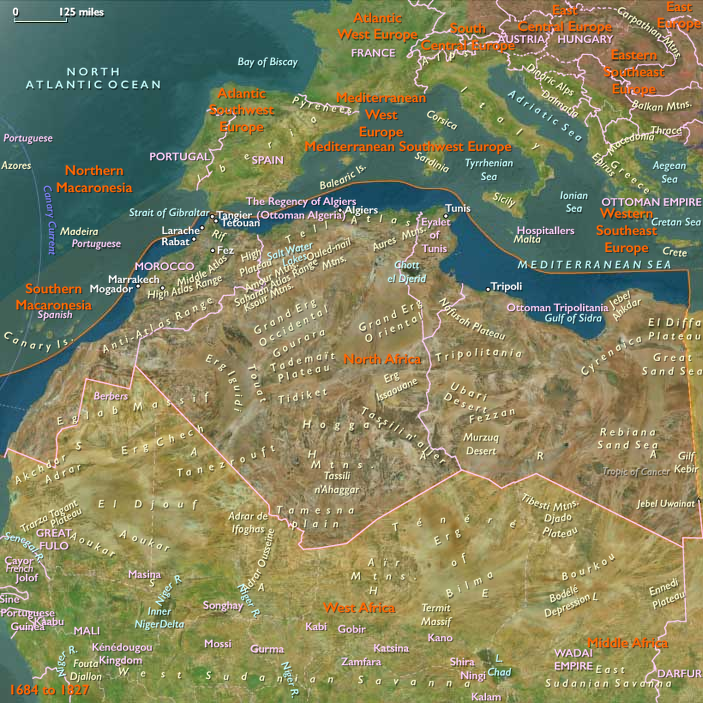
Their objective wis the port city of Derne, capital of the Ottoman Empire province of Cyrenaica (in eastern modern Libya).
The mercenary forces have been promised supplies and money when they reach the city.
During the fifty-day trek, Eaton had become worried over the strained relationship between the Greek Orthodox/Christian Greeks and the roughly two hundred to three hundred Muslim Arab and Turkish mercenaries.
The expedition's supplies were dwindling with Eaton reporting in 1805 that, "Our only provisions [are] a handful of rice and two biscuits a day."
At one point, some of the Arabs in the expedition had made a desperate attempt to raid the supply wagon, but were beaten back by the Marines and a few Greek artilleryman, who used the expedition's lone cannon
Mutiny had continuously threatened the success of the expedition on several occasions.
Between March 10 and March 18, several Arab camel drivers mutinied before reaching the sanctuary of the Massouah Castle.
From March 22 to March 30, several Arab mercenaries under the command of Sheik el Tahib staged mutinies.
By April 8, when he crossed the border into Libya / Tripoli, Eaton had quelled the Arab mutinies.
In late April, his army finally had reached the port city of Bomba, on the Gulf of Bomba, some miles up the coast from Derne, where U.S. Navy warships Argus, Nautilus and Hornet, with Commodore Barron and Captain Hull, were waiting for him.
Eaton had received fresh supplies and the money to pay his mercenaries.
On the morning of April 26, Eaton sends a letter to Mustafa Bey, the governor of Derne, asking for safe passage through the city and additional supplies, though Eaton realizes the governor probably will not agree.
Mustafa reportedly writes back, "My head or yours!".
Yusuf, who had assassinated his older brother by shooting him in front of his mother, was out of the country at the time and decided to remain away, in exile.
Upon his return to the area, Eaton had sought out Hamet Karamanli, who was in exile in Egypt.
Upon locating him, Eaton made a proposal to reinstate him on the throne.
The exile had agreed to Eaton's plan.
Commodore Samuel Barron, (1765-1810), the new naval commander in the Mediterranean Sea, has provided Eaton with naval support from several small warships of the U.S. Navy's Mediterranean squadron: USS Nautilus, commanded by Oliver Hazard Perry (1785-1819), USS Hornet, under Samuel Evans (c.1785-1824), and USS Argus, captained by Isaac Hull (1773-1843).
A small detachment of seven U.S. Marines has been given to Consul Eaton commanded by First Lieutenant Presley Neville O'Bannon, USMC, (1776-1850).
Eaton and O'Bannon had based their operations at Alexandria, Egypt, and with the help of Hamet Karamanli, had recruited about four hundred Arab, Turkish and Greek mercenaries.
Eaton had become self-appointed general and commander-in-chief of the combined multi-national force.
On March 6, 1805, Lieutenant Eaton (as self-designated general and commander in chief) began to lead his forces on a five hundred miles (eight hundred kilometer) trek westward across the Libyan North African desert from Egypt.
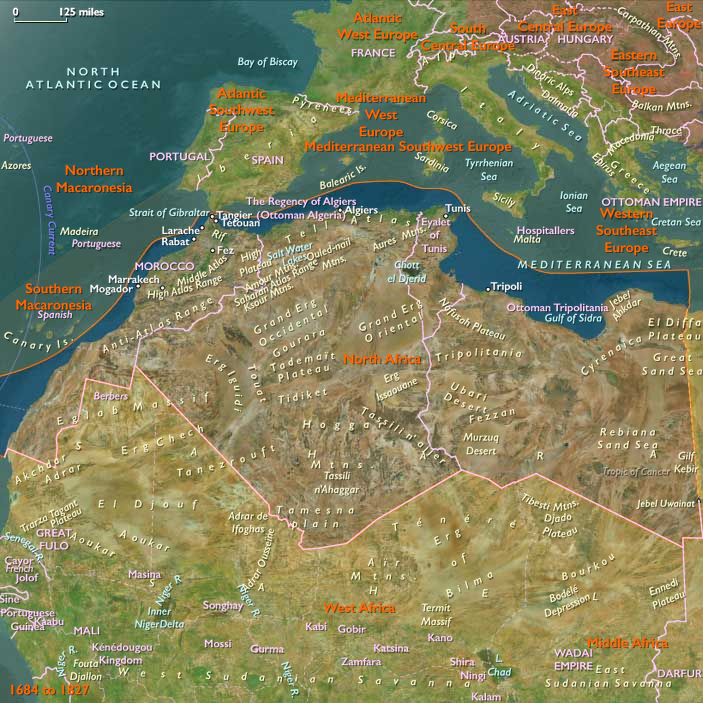
Their objective wis the port city of Derne, capital of the Ottoman Empire province of Cyrenaica (in eastern modern Libya).
The mercenary forces have been promised supplies and money when they reach the city.
During the fifty-day trek, Eaton had become worried over the strained relationship between the Greek Orthodox/Christian Greeks and the roughly two hundred to three hundred Muslim Arab and Turkish mercenaries.
The expedition's supplies were dwindling with Eaton reporting in 1805 that, "Our only provisions [are] a handful of rice and two biscuits a day."
At one point, some of the Arabs in the expedition had made a desperate attempt to raid the supply wagon, but were beaten back by the Marines and a few Greek artilleryman, who used the expedition's lone cannon
Mutiny had continuously threatened the success of the expedition on several occasions.
Between March 10 and March 18, several Arab camel drivers mutinied before reaching the sanctuary of the Massouah Castle.
From March 22 to March 30, several Arab mercenaries under the command of Sheik el Tahib staged mutinies.
By April 8, when he crossed the border into Libya / Tripoli, Eaton had quelled the Arab mutinies.
In late April, his army finally had reached the port city of Bomba, on the Gulf of Bomba, some miles up the coast from Derne, where U.S. Navy warships Argus, Nautilus and Hornet, with Commodore Barron and Captain Hull, were waiting for him.
Eaton had received fresh supplies and the money to pay his mercenaries.
On the morning of April 26, Eaton sends a letter to Mustafa Bey, the governor of Derne, asking for safe passage through the city and additional supplies, though Eaton realizes the governor probably will not agree.
Mustafa reportedly writes back, "My head or yours!".
Locations
People
Groups
- Arab people
- Berber people (also called Amazigh people or Imazighen, "free men", singular Amazigh)
- Turkish people
- Greeks (Modern)
- Ottoman Algeria
- Tripolitania (Regency of Tripoli, Tripoli-in-the-West), Ottoman eyalet of
- Americans
- United States of America (US, USA) (Washington DC)
Topics
Subjects
Regions
Subregions
Years: 1805 - 1805
April
Locations
People
Groups
- Arab people
- Berber people (also called Amazigh people or Imazighen, "free men", singular Amazigh)
- Turkish people
- Greeks (Modern)
- Ottoman Algeria
- Tripolitania (Regency of Tripoli, Tripoli-in-the-West), Ottoman eyalet of
- Americans
- United States of America (US, USA) (Washington DC)
Topics
Subjects
Regions
Subregions