
The Accademia dei Lincei (literally the "Academy …
Years: 1603 - 1603
The Accademia dei Lincei (literally the "Academy of the Lynx-Eyed", but also known as the Lincean Academy), located at the Palazzo Corsini on the Via della Lungara in Rome, is founded in 1603 by Federico Cesi, an aristocrat from Umbria (the son of Duke of Acquasparta and a member of an important family from Rome) who is passionately interested in natural history, particularly botany.
The academy replaces the first scientific community ever, Giambattista della Porta's Academia Secretorum Naturae in Naples, which the Inquisition had closed.
Cesi founds the Accademia dei Lincei with three friends: the Dutch physician Johannes Van Heeck (italianized to Giovanni Ecchio) and two fellow Umbrians, mathematician Francesco Stelluti and polymath Anastasio de Filiis.
Cesi and his friends aim to understand all of the natural sciences.
This emphasis sets the Lincei apart from the host of sixteenth- and seventeenth-century Italian Academies that are mostly literary and antiquarian.
Cesi envisions a program of free experiment that is respectful of tradition yet unfettered by blind obedience to any authority, even that of Aristotle and Ptolemy whose theories the new science is calling into question.
The four men choose the name "Lincei" (lynx) from Giambattista della Porta's book "Magia Naturalis", which had an illustration of the fabled cat on the cover and the words "...with lynx like eyes, examining those things which manifest themselves, so that having observed them, he may zealously use them".
Accademia dei Lincei's symbols are both a lynx and an eagle; animals with keen sight.
The academy's motto, chosen by Cesi, is: "Take care of small things if you want to obtain the greatest results" (minima cura si maxima vis).
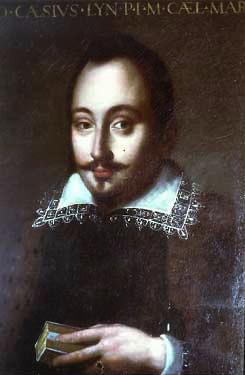
Pietro Fachetti: Federico Angelo Cesi
Locations
People
Groups
Topics
Subjects
Regions
Subregions
Related Events
Showing 10 events out of 33830 total
Years: 1603 - 1603
Pietro Fachetti: Federico Angelo Cesi
Locations
People
Groups
Topics
Subjects
Regions
Subregions