
Filters:
Muhammad Ali and the Egyptians had been …
Years: 1828 - 1839
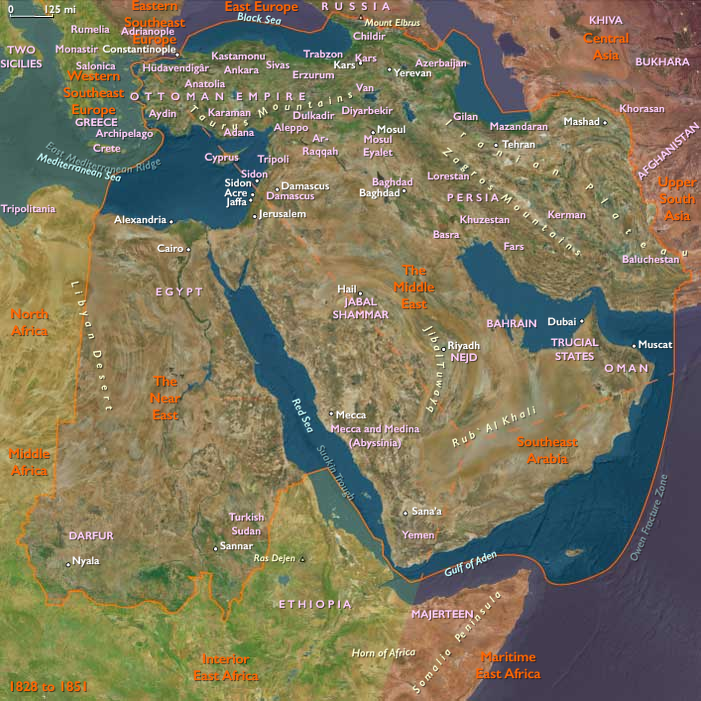
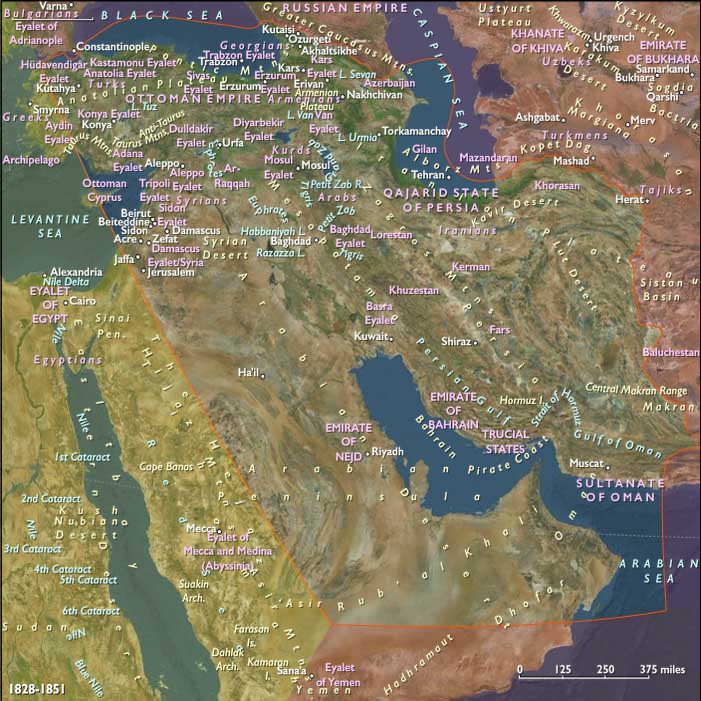
Muhammad Ali and the Egyptians had been severely weakened after the British and French defeated their fleet off the coast of Greece in 1827.
This action had prevented the Egyptians from exerting much influence in Arabia, but it left the Al Saud with the problem of the Ottomans, whose ultimate authority Turki had eventually acknowledged.
Because the challenge to the sultan had helped end the first Al Saud empire in 1818, later rulers choose to accommodate the Ottomans as much as they can.
The Al Saud eventually become of considerable financial importance to the Ottomans because they collect tribute from the rich trading state of Oman and forward much of this to the ashraf in Mecca, who relays it to the sultan.
In return, the Ottomans recognize the Al Saud authority and leave them alone for the most part.
This action had prevented the Egyptians from exerting much influence in Arabia, but it left the Al Saud with the problem of the Ottomans, whose ultimate authority Turki had eventually acknowledged.
Because the challenge to the sultan had helped end the first Al Saud empire in 1818, later rulers choose to accommodate the Ottomans as much as they can.
The Al Saud eventually become of considerable financial importance to the Ottomans because they collect tribute from the rich trading state of Oman and forward much of this to the ashraf in Mecca, who relays it to the sultan.
In return, the Ottomans recognize the Al Saud authority and leave them alone for the most part.
Locations
People
Groups
- Islam
- Ottoman Empire
- Al-Hasa, Ottoman eyalet of
- Wahhabism
- Oman, Sultanate of
- Egypt, (Ottoman) Viceroyalty of
- Nejd, Emirate of
Topics
Subjects
Regions
Subregions
Years: 1828 - 1839
Locations
People
Groups
- Islam
- Ottoman Empire
- Al-Hasa, Ottoman eyalet of
- Wahhabism
- Oman, Sultanate of
- Egypt, (Ottoman) Viceroyalty of
- Nejd, Emirate of
Topics
Subjects
Regions
Subregions