
Paracelsus's new concept of disease emphasizes its…
September 1541 CE
Paracelsus's new concept of disease emphasizes its causes to be external agents that attack the body, contrary to the traditional idea of disease as an internal upset of the balance of the body's humors.
Therapy, according to Paracelsus, is to be directed against these agents of disease, and for this, he advocates the use of chemicals rather than herbs.
Alchemy becomes the means of preparing such chemicals; in this way, Paracelsus redirects the emphasis of alchemy from making gold to making medicines.
Sometimes called the father of toxicology, Paracelsus creates controversy because of his wholesale condemnation of traditional science and medicine, and he has never obtained a secure academic position or permanent employment.
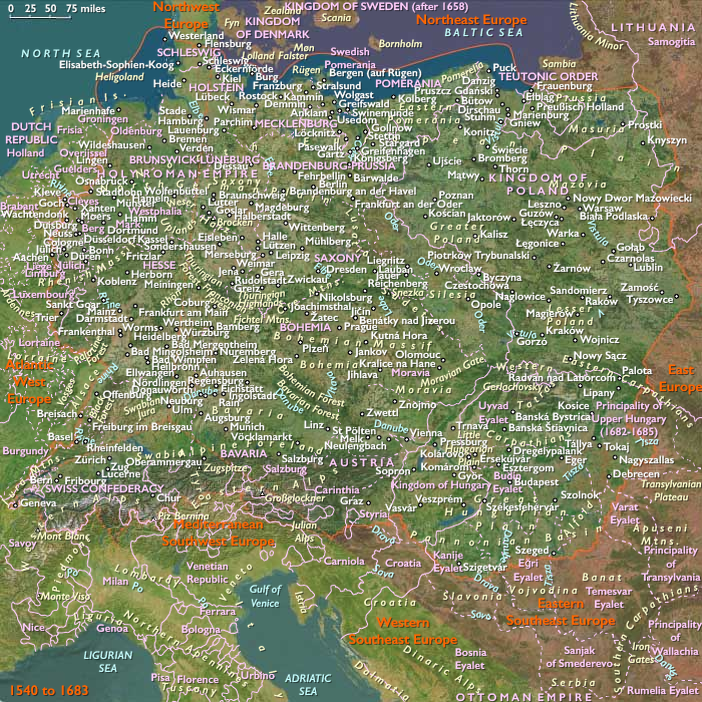
Paracelsus—alchemist, physician, astrologer, and general occultist, as well as a difficult personality—dies in mysterious circumstances on September 24, 1541, it the White Horse Inn in Salzburg, where he had taken up an appointment under the prince-archbishop, Duke Ernest of Bavaria.
He is forty-eight.
Although it has been said that Paracelsus’ books were placed on the Index Expurgatorius, he appears to remain a Catholic to his death.
After his death, many wishing to subvert the traditional Galenic physics will seize upon the movement of Paracelsianism, and thus will his therapies become more widely known and used.
Locations
People
Subjects
Regions
Central Europe
View →Subregions
