
Congress passes the Interstate Commerce Act, which…
February 1887 CE
Congress passes the Interstate Commerce Act, which is signed into law by President Grover Cleveland on February 4, 1887.
The act works to keep rates and railroad revenue up on routes where competition exists.
It does this by attempting to force publicity about rates and make rebates and discrimination illegal. ('Discrimination' means lower rates for certain customers, e.g., politicians, large customers, sharp bargainers, long haul shippers, shippers in competitive markets, low season travelers.)
Railroads see that competition makes it hard to pay their stockholders and bondholders the amount of money promised them, and competition is therefore "bad.”
The act also creates the Interstate Commerce Commission (ICC), the first independent regulatory agency of the U.S. government.
As part of its mission, the ICC is to hear complaints against the railroads and issue cease and desist orders to combat unfair practices.
While the ICC is empowered to investigate and prosecute railroads and other transportation companies that were alleged to have violated the Act, its jurisdiction is limited to companies that operate across state lines.
The American public is increasingly concerned with the growing power and wealth of corporations, particularly railroads, during the late nineteenth century.
Railroads have become the principal form of transportation for both people and goods, and the prices they charge and the practices they adopt greatly influence individuals and businesses.
In some cases, the railroads are perceived to have abused their power as a result of too little competition.
Railroads have also banded together to form pools and trusts that fix rates at higher levels than they could otherwise command.
Responding to a widespread public outcry, states have passed numerous pieces of legislation.
Through the 1870s, various constituencies, notably the Grange movement representing farmers, had lobbied Congress to regulate railroads, but Congress had declined to step in.
However, in a decision in 1886, Wabash, St. Louis & Pacific Railway Company v. Illinois, the U.S. Supreme Court had ruled that state laws regulating interstate railroads are unconstitutional because they violate the Commerce Clause of the Constitution, which gives Congress the exclusive power "to regulate Commerce with foreign nations, and among the several States, and with the Indian Tribes."
People
Topics
Regions
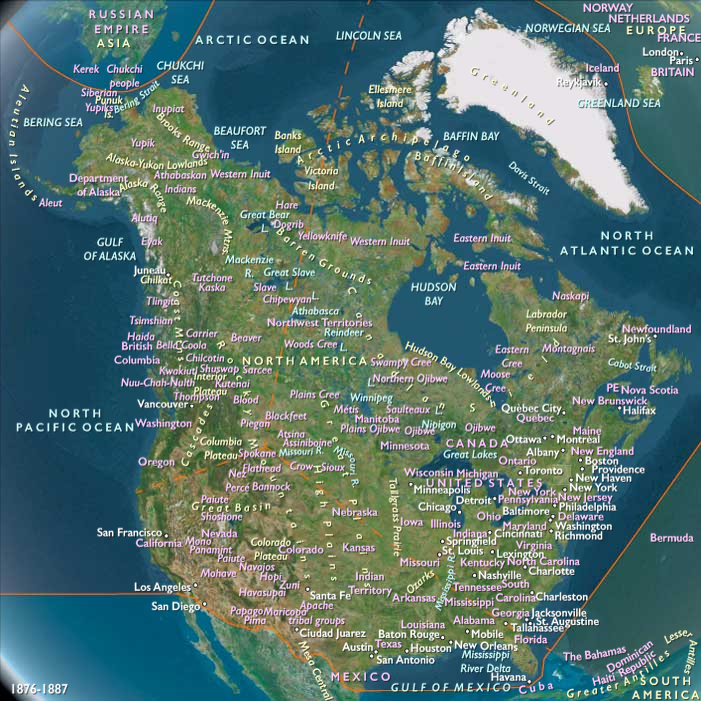
Northern North America
View →Subregions
