
The Arakanese armies now press on toward …
Years: 1532 - 1532
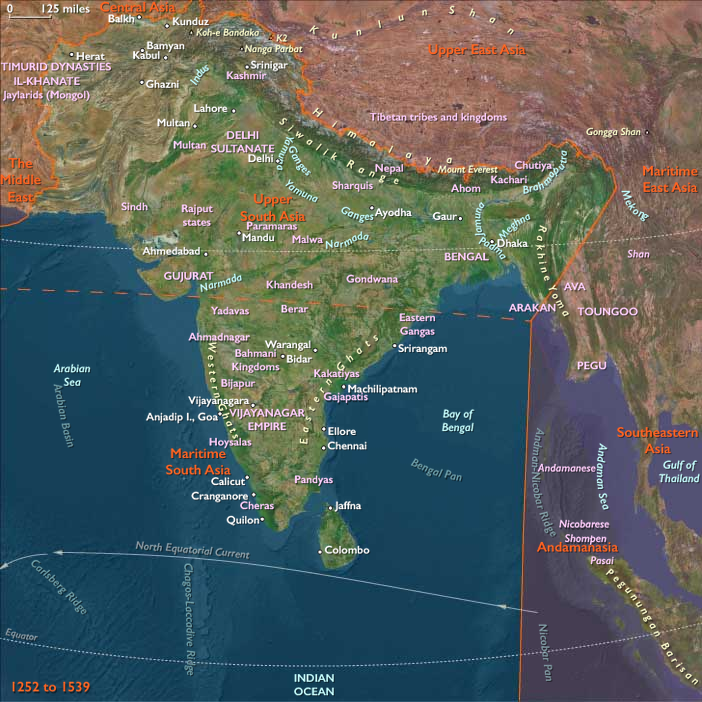
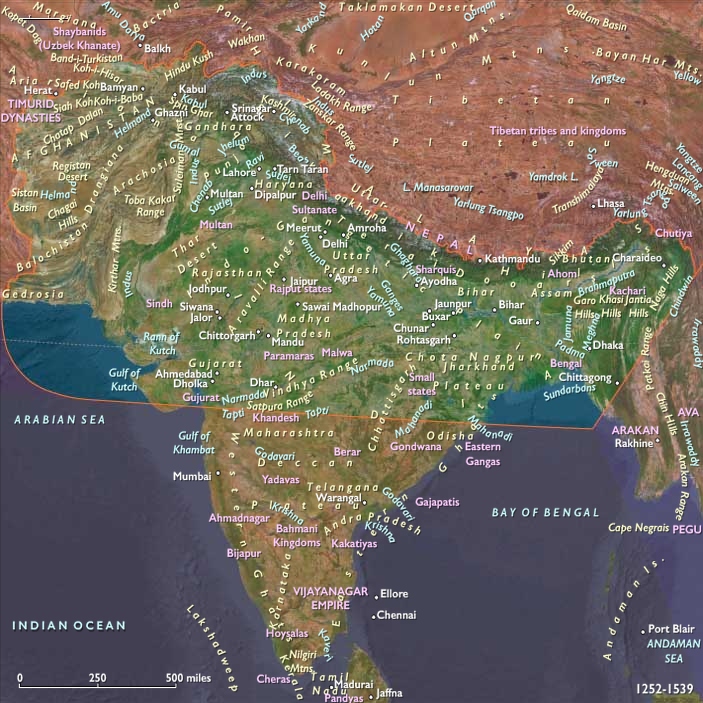
The Arakanese armies now press on toward Dhaka on December 1, 1532.
The Bengal army makes a last stand outside Dhaka but is defeated.
The sultan's defenses collapse afterwards, and Arakanese forces enter Dhaka on December 11, 1532, without a fight.
Locations
People
Groups
- Rakhine State (Arakanese Kingdom)
- Bamar or Burmans
- Rakhine (Arakanese) people
- Ahom Kingdom (Kingdom of Assam)
- Bengal, Sultanate of
- Portugal, Avizan (Joannine) Kingdom of
- Portuguese Empire
- Mrauk U, Arakanese (Rakhine) Kingdom of
- Prome Kingdom
- Toungoo Empire, First
- Portuguese Malacca
Topics
- India, Medieval
- Age of Discovery
- Colonization of Asia, Portuguese
- Portuguese Conquests in India and the East Indies
Commodoties
Subjects
Regions
Subregions
Related Events
Showing 10 events out of 37914 total
Years: 1532 - 1532
Locations
People
Groups
- Rakhine State (Arakanese Kingdom)
- Bamar or Burmans
- Rakhine (Arakanese) people
- Ahom Kingdom (Kingdom of Assam)
- Bengal, Sultanate of
- Portugal, Avizan (Joannine) Kingdom of
- Portuguese Empire
- Mrauk U, Arakanese (Rakhine) Kingdom of
- Prome Kingdom
- Toungoo Empire, First
- Portuguese Malacca
Topics
- India, Medieval
- Age of Discovery
- Colonization of Asia, Portuguese
- Portuguese Conquests in India and the East Indies
Commodoties
Subjects
Regions
Subregions