
Filters:
Chilperic I: The Archetypal Merovingian Sovereign and …
Years: 579 - 579
Chilperic I: The Archetypal Merovingian Sovereign and His Quest for Absolute Power
Chilperic I of Neustria embodies the stereotypical Merovingian king, relentlessly seeking to expand royal authority through taxation, fiscal reforms, and centralization of power. However, his greedy financial policies provoke widespread unrest, culminating in a major sedition at Limoges in 579 CE.
1. Chilperic’s Efforts to Strengthen Royal Power
- Chilperic is obsessed with enhancing the monarchy's control, consolidating both secular and ecclesiastical power under his rule.
- He seeks to undermine the nobility and Church, which traditionally wielded great autonomy in Frankish governance.
- His rule is marked by heavy taxation and increased levies, which he justifies as necessary to expand the royal treasury and fund military campaigns.
2. Excessive Taxation and Unrest in Limoges (579 CE)
- Chilperic’s greedy fiscal measures include new taxes, fines, and confiscations, disproportionately affecting the local population.
- His tax officials and administrators, implementing these burdensome policies, provoke outrage in the city of Limoges, leading to open sedition in 579 CE.
- The rebellion at Limoges demonstrates the limits of royal authority, as excessive demands lead to violent resistance rather than obedience.
3. The Consequences of Chilperic’s Rule
- While his taxation policies enrich the royal treasury, they alienate both the nobility and the peasantry.
- His heavy-handed rule contributes to his reputation as a tyrant, further reinforced by Gregory of Tours, who portrays him as an oppressive, power-hungry king.
- Despite his ambition, his reign is ultimately overshadowed by internal strife, and his assassination in 584 CE suggests that his authoritarian rule had made him many enemies.
Conclusion: Chilperic as the Quintessential Merovingian Ruler
Chilperic I is the archetypal Merovingian sovereign, blending ruthless ambition, economic policies, and centralized rule with heavy taxation and oppression. His uncompromising fiscal measures lead to popular uprisings, demonstrating the fragile nature of royal power in the early Frankish kingdom.
Locations
People
Groups
- Franks
- Goths (East Germanic tribe)
- Visigothic Kingdom of Spain
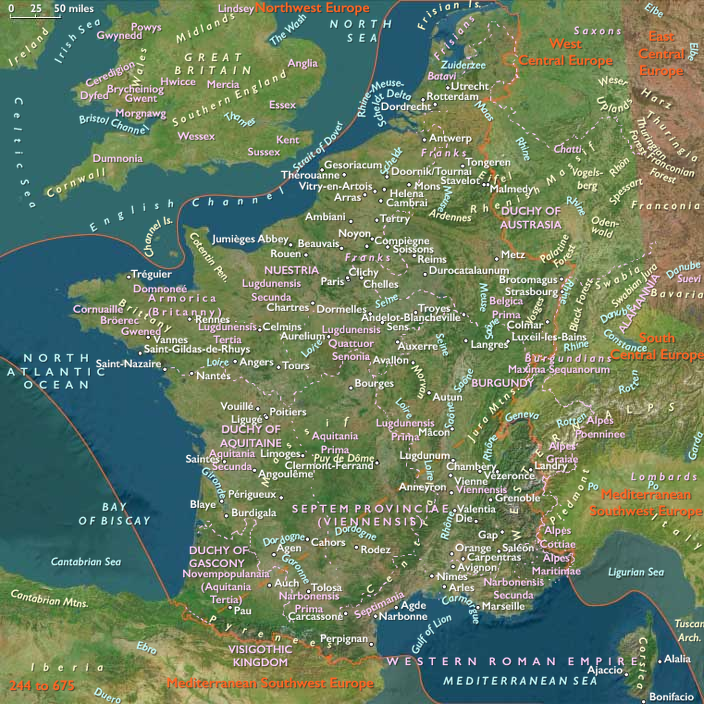
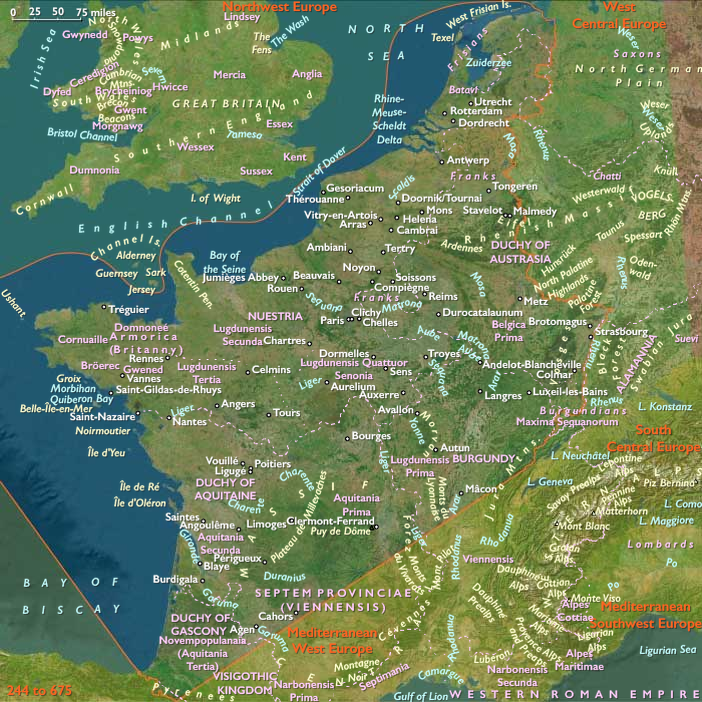
- Soissons (eventually Neustria), Frankish Kingdom of
- Paris, Frankish Kingdom of
- Orléans (eventually Burgundy), Frankish Kingdom of
- Reims and Metz (eventually Austrasia), Frankish Kingdom of
Topics
Commodoties
Subjects
Regions
Subregions
Related Events
Showing 10 events out of 39 total
Years: 579 - 579
Locations
People
Groups
- Franks
- Goths (East Germanic tribe)
- Visigothic Kingdom of Spain
- Soissons (eventually Neustria), Frankish Kingdom of
- Paris, Frankish Kingdom of
- Orléans (eventually Burgundy), Frankish Kingdom of
- Reims and Metz (eventually Austrasia), Frankish Kingdom of
Topics
Commodoties
Subjects
Regions
Subregions