The Liberty Bell, an iconic symbol of…
February 1846 CE
may have acquired its distinctive crack while being rung for George Washington's birthday, on February 26, 1846.
The bell was commissioned in 1752 by the Pennsylvania Provincial Assembly from the London firm of Lester and Pack (known subsequently as the Whitechapel Bell Foundry), and was cast with the lettering "Proclaim LIBERTY Throughout all the Land unto all the Inhabitants Thereof", a Biblical reference from the Book of Leviticus (25:10).
The bell first cracked when rung after its arrival in Philadelphia, and was twice recast by local workmen John Pass and John Stow, whose last names appear on the bell.
In its early years the bell was used to summon lawmakers to legislative sessions and to alert citizens about public meetings and proclamations.
Although no immediate announcement was made of the Second Continental Congress's vote for independence, and so the bell could not have rung on July 4, 1776, related to that vote, bells were rung on July 8 to mark the reading of the Declaration of Independence.
While there is no contemporary account of the Liberty Bell ringing, most historians believe it was one of the bells rung.
After American independence was secured, the bell fell into relative obscurity until, in the 1830s, the bell was adopted as a symbol by abolitionist societies, who dubbed it the "Liberty Bell".
The bell acquired its distinctive large crack some time in the early nineteenth century—a widespread story claims it cracked while ringing after the death of Chief Justice John Marshall in 1835.
Groups
Commodities
Subjects
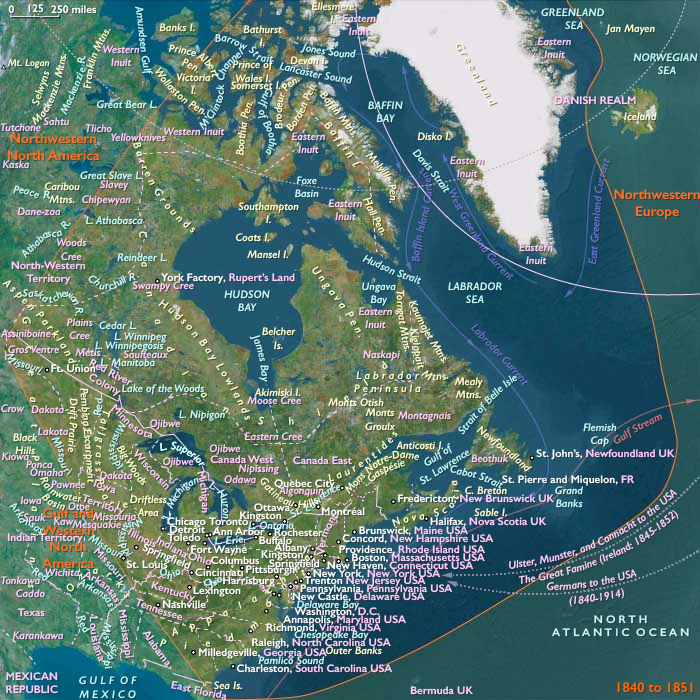
Regions
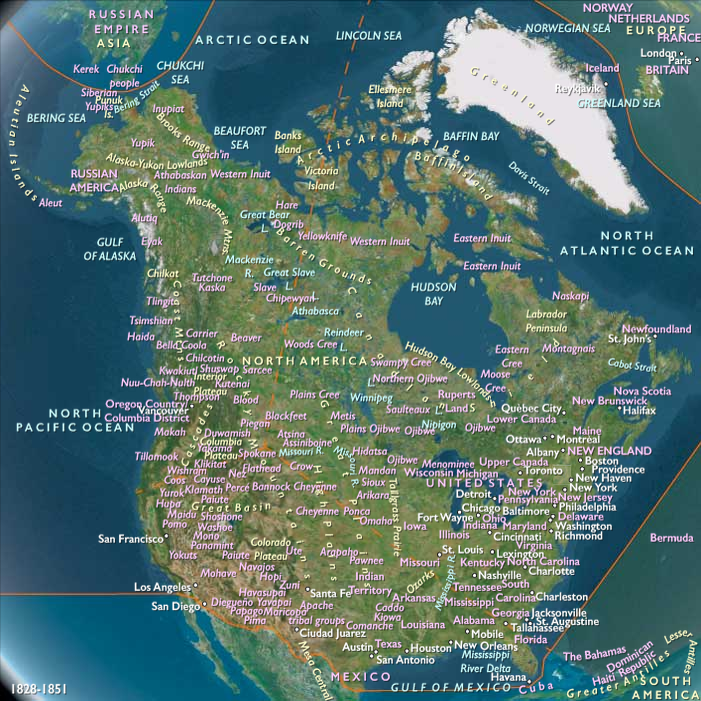
Northern North America
View →Subregions