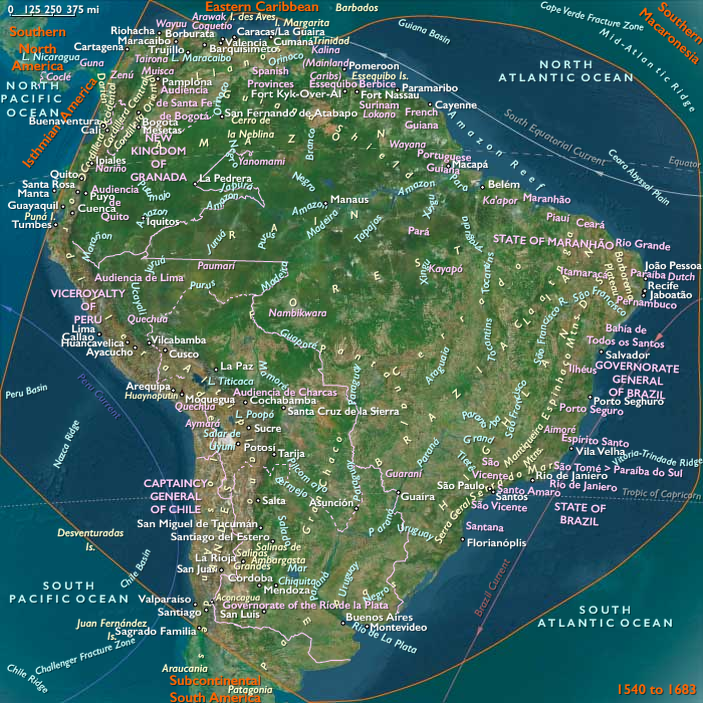
The peace that had prevailed under Domingo…
1540 CE to 1551 CE
Cabeza de Vaca had arrived in Asunción after having lived for ten years among the natives of Florida.
Almost immediately, however, the Río de la Plata Province—now consisting of eight hundred Europeans—had split into two warring factions.
Cabeza de Vaca's enemies had accused him of cronyism and opposed his efforts to protect the interests of the natives.
Cabeza de Vaca had tried to placate his enemies by launching an expedition into the Chaco in search of a route to Peru.
This move disrupted the Chaco tribes so much that they had unleashed a two-year war against the colony, thus threatening its existence.
In the colony's first of many revolts against the crown, the settlers had seized Cabeza de Vaca, sent him back to Spain in irons, and returned the governorship to Irala.
Irala rules without further interruption until his death in 1556.
In many ways, his governorship is one of the most humane in the Spanish New World at this time, and it marks the transition among the settlers from conquerors to landowners.
Irala keeps up good relations with the Guaraní, pacifies hostile natives, makes further explorations of the Chaco, and begins trade relations with Peru.
This Basque soldier of fortune sees the beginnings of a textile industry and the introduction of cattle, which flourish in the country's fertile hills and meadows.
The arrival of Father Pedro Fernandez de la Torre on April 2, 1556, as the first bishop of Asunción marks the establishment of the Roman Catholic Church in Paraguay.
Irala presides over the construction of a cathedral, two churches, three convents, and two schools.
Irala eventually antagonizes the natives, however.
In the last years of his life, he yields to pressure from settlers and establishes the encomienda.
Under this system, settlers receive estates of land along with the right to the labor and produce of the natives living on those estates.
Although encomenderos are expected to care for the spiritual and material needs of the natives, the system quickly degenerates into virtual slavery.
In Paraguay twenty thousand natives are divided among three hundred and twenty encomenderos.
This action will help spark a full- scale native revolt in 1560 and 1561.
Political instability begins troubling the colony and revolts become commonplace.
Also, given his limited resources and manpower, Irala can do little to check the raids of Portuguese marauders along his eastern borders.
Still, Irala leaves Paraguay prosperous and relatively at peace.
Although he has found no El Dorado to equal those of Hernán Cortés in Mexico and Pizarro in Peru, he is loved by his people, who lament his passing.
Locations
People
Groups
Tupi people (Amerind tribe)
View →
Germans
View →
Guaraní (Amerind tribe)
View →
Portuguese people
View →
French people (Latins)
View →
English people
View →
Italians (Latins)
View →
Querandí
View →
Spain, Habsburg Kingdom of
View →
Spaniards (Latins)
View →
Neo-Inca State
View →
Brazil, Colonial
View →
Río de la Plata, Governorate of the
View →
Charcas, Real Audiencia of (Upper Peru)
View →
Spain, Habsburg Kingdom of
View →
Topics
Regions
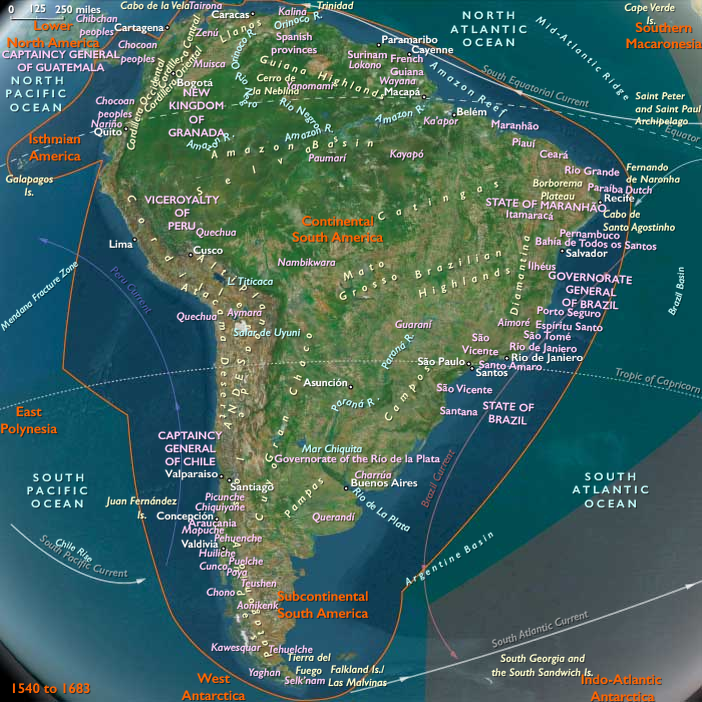
South America
View →Subregions