The French Retreat from Portugal and Ney’s…
March 1811 CE
The French Retreat from Portugal and Ney’s Rearguard Action (March–April 1811)
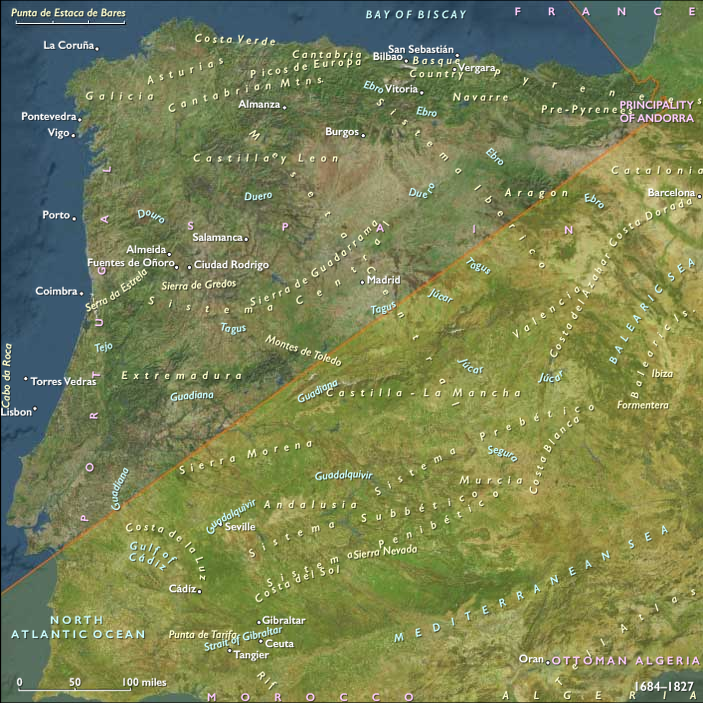
After six months of starvation, exhaustion, and failure to breach Wellington’s Lines of Torres Vedras, Marshal André Masséna’s French invasion forces were forced to retreat from Portugal in March 1811. However, the retreat was not a rout—instead, it became a fierce and well-executed rearguard action, led by Marshal Michel Ney, one of Napoleon’s most skilled battlefield commanders.
The French Retreat from Portugal (March 1811)
- Masséna, realizing that his army could no longer sustain itself, ordered a general retreat toward Spain.
- His troops were starving, demoralized, and suffering from constant attacks by British forces and Portuguese guerrillas.
- Wellington immediately pursued the French, eager to inflict further damage and accelerate their withdrawal.
Ney’s Masterful Rearguard Campaign
- Marshal Michel Ney, commanding the French rearguard, executed one of the most effective defensive campaigns of the Peninsular War.
- As Wellington pursued the retreating French, Ney’s forces conducted a series of well-planned delaying actions, allowing Masséna’s main army to escape in good order.
- At every river crossing, mountain pass, and defensible position, Ney’s troops skillfully repelled British advances, inflicting a series of tactical setbacks on Wellington.
- His defensive tactics and disciplined counterattacks frustrated the British, slowing their pursuit and preventing a total French disaster.
Strategic Impact – A Fighting Withdrawal
- While the French invasion of Portugal had failed, Ney’s rearguard action ensured that Masséna’s army was not completely destroyed.
- Ney’s defensive operations won him admiration, even from his enemies, and were later studied as examples of effective rearguard tactics.
- Though Wellington succeeded in expelling the French from Portugal, Ney’s efforts denied him a decisive final victory.
Conclusion – A Tactical Success in a Strategic Failure
- Masséna’s retreat marked the definitive failure of the third French invasion of Portugal, securing British and Portuguese control over the country.
- However, Ney’s skillful defense prevented the French withdrawal from turning into a complete rout, allowing the French forces to regroup in Spain.
- With Portugal now secured, Wellington shifted his focus toward the next phase of the Peninsular War—taking the fight into Spain and liberating key cities such as Ciudad Rodrigo and Badajoz.
Despite the strategic failure of Masséna’s invasion, Ney’s masterful rearguard actions demonstrated that Napoleon’s army remained a formidable force, ensuring that the war in Iberia was far from over.
Locations
Groups
Commodities
Subjects
Regions
Southwest Europe
View →Subregions