
Filters:
The Bagratid Princes of Armenia are known …
Years: 886 - 886
The Bagratid Princes of Armenia are known as early as the first century BCE, when they served under the Artaxiad Dynasty.
Unlike most noble families on Armenia they hold only strips of land, as opposed to the Mamikonians, who hold a unified land territory.
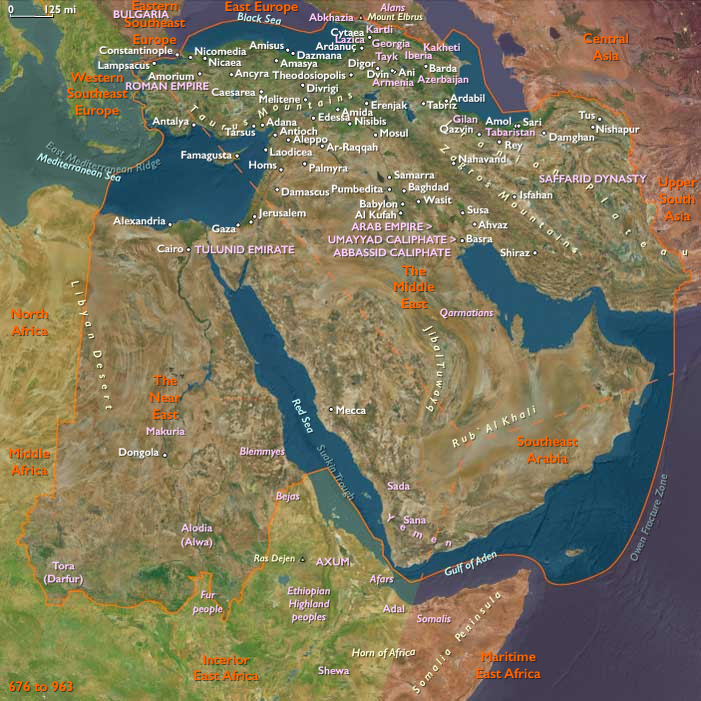
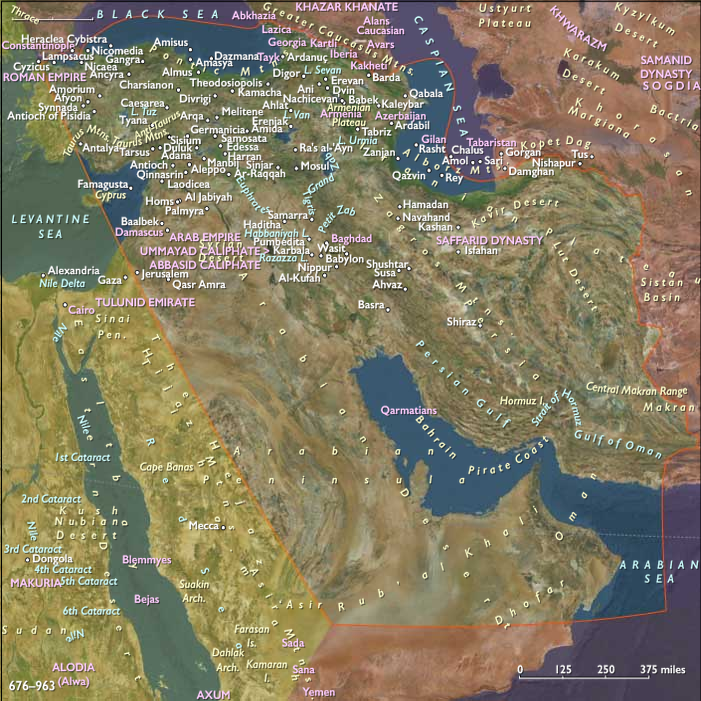
Ashot I, the first Bagratid king, the founder of the royal dynasty, had been recognized as prince of princes by the court at Baghdad in 861, which provoked war with local Arab emirs.
Ashot had won the war, and had gained recognized as King of the Armenians by Baghdad in 885.
Recognition from Constantinople follows in 886.
Locations
People
Groups
- Arab people
- Armenian people
- Greeks, Medieval (Byzantines)
- Abbasid Caliphate (Samarra)
- Roman Empire, Eastern: Macedonian dynasty
- Armenia, Bagratid
Subjects
Regions
Subregions
Related Events
Showing 6 events out of 6 total
Years: 886 - 886
Locations
People
Groups
- Arab people
- Armenian people
- Greeks, Medieval (Byzantines)
- Abbasid Caliphate (Samarra)
- Roman Empire, Eastern: Macedonian dynasty
- Armenia, Bagratid
Subjects
Regions
Subregions