The 1850s witness the introduction of the…
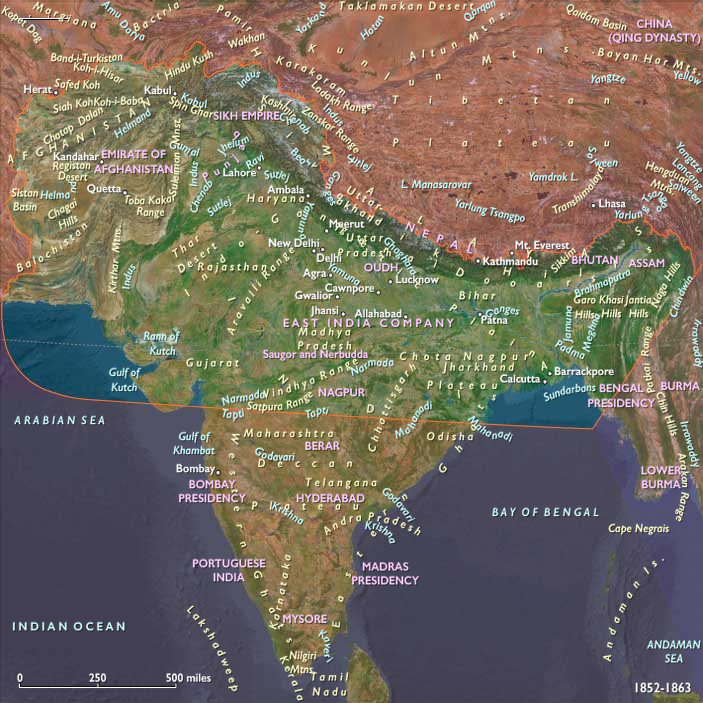
1852 CE to 1863 CE
The 1850s witness the introduction of the three "engines of social improvement" that heighten the British illusion of permanence in India.
They are the railroads, the telegraph, and the uniform postal service, inaugurated during the tenure of Dalhousie as governor-general.
The first railroad lines had been built in 1850 from Howrah (Haora, across the Hughli River from Calcutta) inland to the coalfields at Raniganj, Bihar, a distance of two hundred and forty kilometers.
In 1851 the first electric telegraph line had been laid in Bengal and soon links Agra, Bombay, Calcutta, Lahore, Varanasi, and other cities.
The three different presidency or regional postal systems merge in 1854 to facilitate uniform methods of communication at an all-India level.
With uniform postal rates for letters and newspapers—one-half anna and one anna, respectively (sixteen annas equal one rupee)—communication between the rural and the metropolitan areas becomes easier and faster.
The increased ease of communication and the opening of highways and waterways accelerates the movement of troops, the transportation of raw materials and goods to and from the interior, and the exchange of commercial information.
Groups
Commodities
Regions