Jean-François de Galaup was born near Albi,…
February 1785 CE
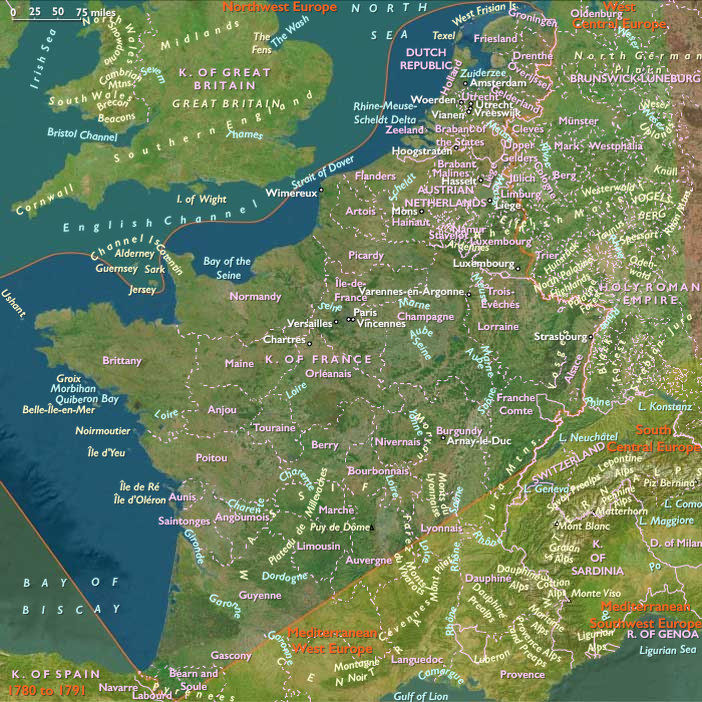
Jean-François de Galaup was born near Albi, France; Lapérouse is the name of a family property that he adds to his name.
He had studied in a Jesuit college and entered the naval college in Brest when he was fifteen.
In 1757 he was posted to Célèbre and participated in a supply expedition to the fort of Louisbourg in New France.
Lapérouse also took part in a second supply expedition in 1758 to Louisbourg, but as this was in the early years of the Seven Years' War, the fort was under siege and the expedition was forced to make a circuitous route around Newfoundland to avoid British patrols.
In 1759, Lapérouse was wounded in the Battle of Quiberon Bay, where he was serving aboard Formidable.
He was captured and briefly imprisoned before being paroled back to France; he was formally exchanged in December 1760.
He had participated in a 1762 attempt by the French to gain control of Newfoundland, escaping with the fleet when the British arrived in force to drive them out.
Following the Franco-American alliance, Lapérouse had fought against the Royal Navy off the American coast, and victoriously led the frigate L'Astrée in the Naval battle of Louisbourg, July 21, 1781.
Promoted to the rank of commodore when he defeated the English frigate Ariel in the West Indies, he then escorted a convoy to the West Indies in December 1781, participated in the attack on St. Kitts in February 1782, then fought in the defeat at the Battle of the Saintes against the squadron of Admiral Rodney.
In August 1782 he made his name by capturing two English forts (Prince of Wales Fort and York Fort) on the coast of Hudson Bay, but allowed the survivors, including Governor Samuel Hearne of Prince of Wales Fort, to sail off to England in exchange for a promise to release French prisoners held in England.
The next year, his family finally consented to his marriage to Louise-Eléonore Broudou, a young creole of modest origins whom he had met on Île de France (present-day Mauritius) eight years earlier.
Lapérouse is appointed in 1785 by Louis XVI and by the Secretary of State of the Navy, the Marquis de Castries, to lead an expedition around the world.
Locations
People
Regions
West Europe
View →Subregions