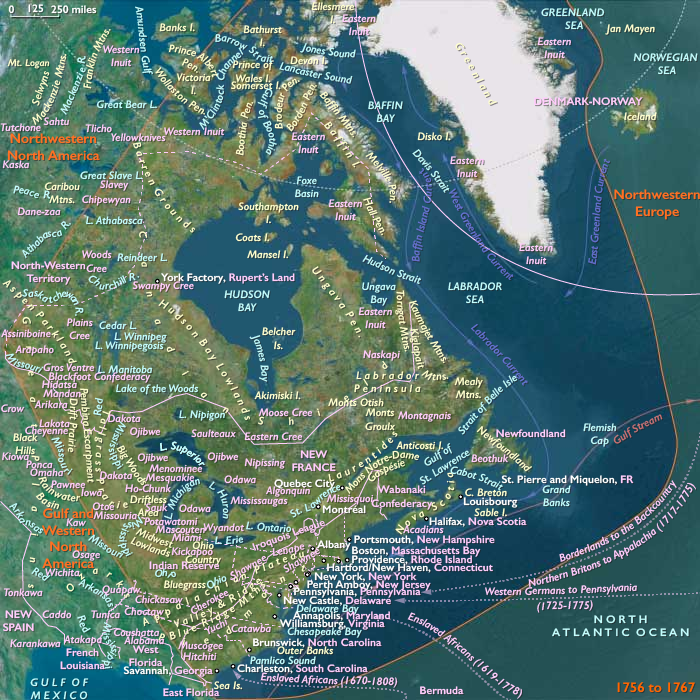
The French and Indian War, which had…
1759 CE
The British had been successful in capturing Louisbourg and Fort Frontenac in 1758.
The only significant French victory in 1758 had come when a large British army commanded by James Abercrombie was defeated by a smaller French force in the Battle of Carillon.
During the winter, French commanders withdraw most of the garrison from Fort Carillon (called Ticonderoga by the British) to defend Quebec City, Montreal and French-controlled forts on the Great Lakes and the Saint Lawrence River.
Carillon, located near the southern end of Lake Champlain, occupies a place that was strategic in importance even before Samuel de Champlain discovered it in 1609, controlling access to a key portage trail between Champlain and Lake George along the main travel route between the Hudson River valley and the Saint Lawrence River.
When the war began, the area was part of the frontier between the British province of New York and the French province of Canada, and the British had stopped French advances further south in the 1755 Battle of Lake George.
People
Groups
Iroquois (Haudenosaunee, also known as the League of Peace and Power, Five Nations, or Six Nations)
View →
New France (French Colony)
View →
France, (Bourbon) Kingdom of
View →
Friends, Religious Society of (Quakers)
View →
Connecticut (English Crown Colony)
View →
New York, Province of (English Colony)
View →
Pennsylvania, Province of (English Colony)
View →
Massachusetts, Province of (English Crown Colony)
View →
New Jersey (English Colony)
View →
Britain, Kingdom of Great
View →
Rogers' Rangers
View →
Topics
Regions
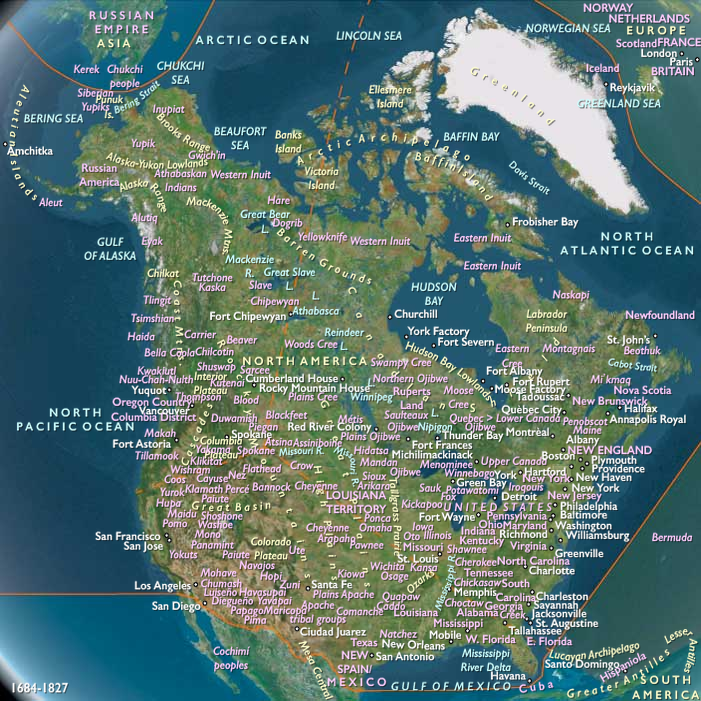
Northern North America
View →Subregions