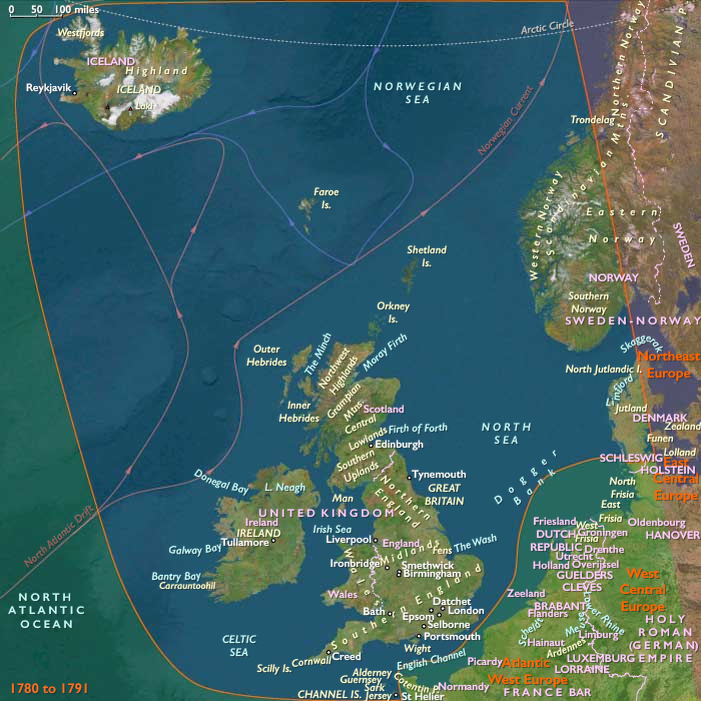
Britain has been shocked by the loss…
1784 CE
The war had revealed the limitations of Britain's fiscal-military state when they discovered that they suddenly faced powerful enemies with no allies, and they were dependent on extended and vulnerable transatlantic lines of communication.
The defeat has heightened dissension and escalated political antagonism to the King's ministers.
Inside parliament, the primary concern changes from fears of an over-mighty monarch to the issues of representation, parliamentary reform, and government retrenchment.
Reformers seek to destroy what they see as widespread institutional corruption.
The result had been a powerful crisis from 1776 to 1783.
The peace in 1783 had left France financially prostrate, while the British economy booms thanks to the return of American business.
The crisis will end after 1784 thanks to the King's shrewdness in outwitting Charles James Fox (the leader of the Fox-North Coalition), and renewed confidence in the system engendered by the leadership of the new Prime Minister William Pitt.
Historians will conclude that loss of the American colonies enabled Britain to deal with the French Revolution with more unity and better organization than would otherwise have been the case.
Britain will turn towards Asia, the Pacific and later Africa with subsequent exploration leading to the rise of the Second British Empire.
Locations
Groups
Regions
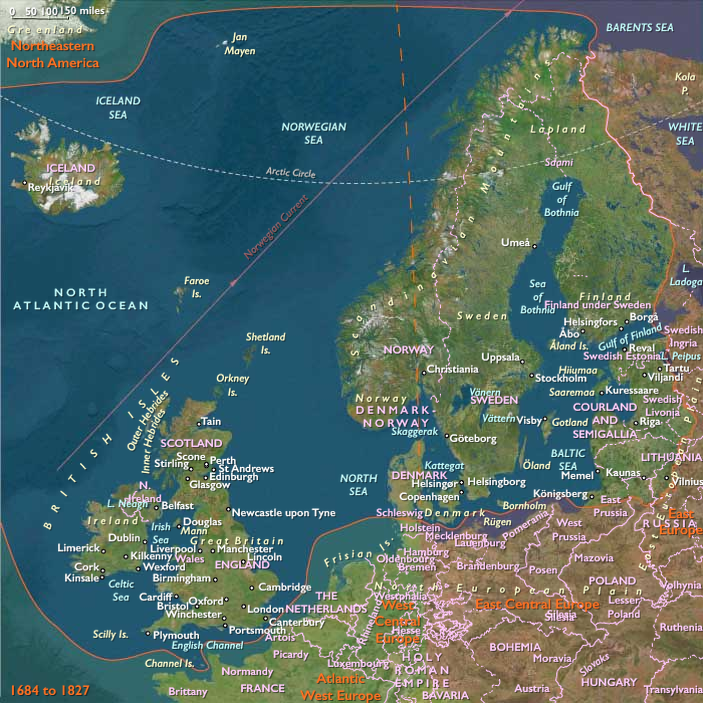
North Europe
View →Subregions