
John Harrison, a man of many skills,…
1720 CE to 1731 CE
He invents the gridiron pendulum, consisting of alternating brass and iron rods assembled so that the thermal expansions and contractions essentially cancel each other out.
Another example of his inventive genius is the grasshopper escapement—a control device for the step-by-step release of a clock's driving power.
Developed from the anchor escapement, it is almost frictionless, requiring no lubrication because the pallets were made from wood. This was an important advantage at a time when lubricants and their degradation were little understood.
In his earlier work on sea clocks, Harrison had been continually assisted, both financially and in many other ways, by George Graham, the watchmaker and instrument maker.
Harrison had been introduced to Graham by the Astronomer Royal Edmond Halley, who champions Harrison and his work.
This support is important to Harrison, as he is supposed to have found it difficult to communicate his ideas in a coherent manner.
Harrison was born in Foulby, near Wakefield in the West Riding of Yorkshire, the first of five children in his family.
His father worked as a carpenter at the nearby Nostell Priory estate.
In around 1700, the Harrison family moved to the Lincolnshire village of Barrow upon Humber.
Following his father's trade as a carpenter, Harrison built and repaired clocks in his spare time.
Legend has it that at the age of six, while in bed with smallpox, he was given a watch to amuse himself and he spent hours listening to it and studying its moving parts.
He also had a fascination for music, eventually becoming choirmaster for Barrow parish church.
Harrison built his first longcase clock in 1713, at the age of twenty.
The mechanism was made entirely of wood, which was a natural choice of material for a joiner.
In the early 1720s, Harrison is commissioned to make a new turret clock at Brocklesby Park, North Lincolnshire. (The clock still works, and like his previous clocks has a wooden movement of oak and lignum vitae. Unlike his early clocks, it incorporates some original features to improve timekeeping, for example the grasshopper escapement.)
Between 1725 and 1728, John and his brother James, also a skilled joiner, make at least three precision longcase clocks, again with the movements and longcase made of oak and lignum vitae.
These precision clocks, thought by some to have been the most accurate clocks in the world at the time, are the direct link to the Harrison's sea clocks.
People
Subjects
Regions
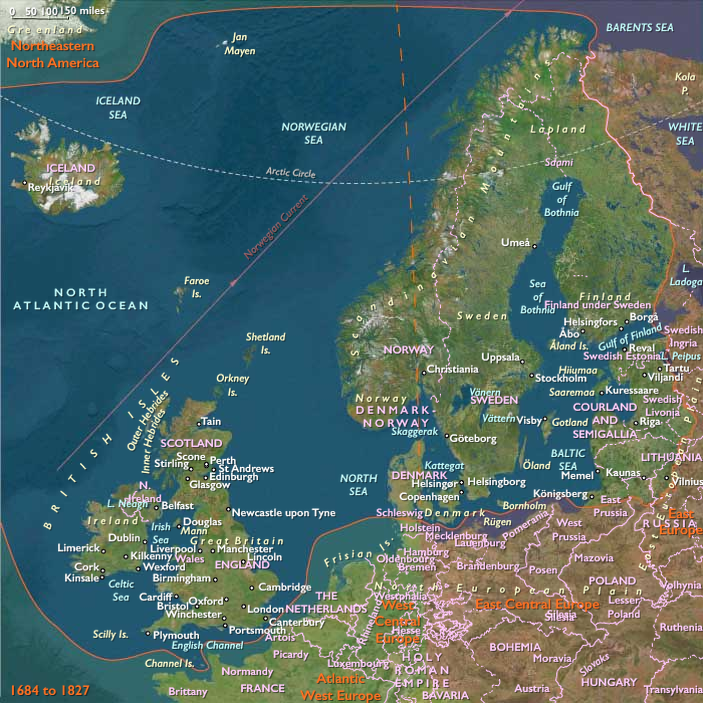
North Europe
View →Subregions
