
Ghent’s Resistance to Philip the Good and…
1449 CE
Ghent’s Resistance to Philip the Good and the Breakdown of Civic Order (1447–1449)
In 1447, tensions escalated sharply between the city of Ghent and Philip the Good, Duke of Burgundy, over issues of taxation and civic autonomy. After two years of contentious negotiations, Ghent’s city leaders decisively rejected Philip’s proposal for new indirect taxes and resisted his attempts to impose greater ducal control over civic appointments and finances.
In response to Ghent's defiance, Philip accused the city's influential guild leaders—the guild deacons—of obstructing ducal authority. He intensified pressure by publicly recalling the ducal bailiff twice, effectively suspending judicial functions and paralyzing the administration of justice within Ghent. The city's authorities reacted by further challenging Philip’s authority, deliberately appointing officials openly hostile to Burgundian control.
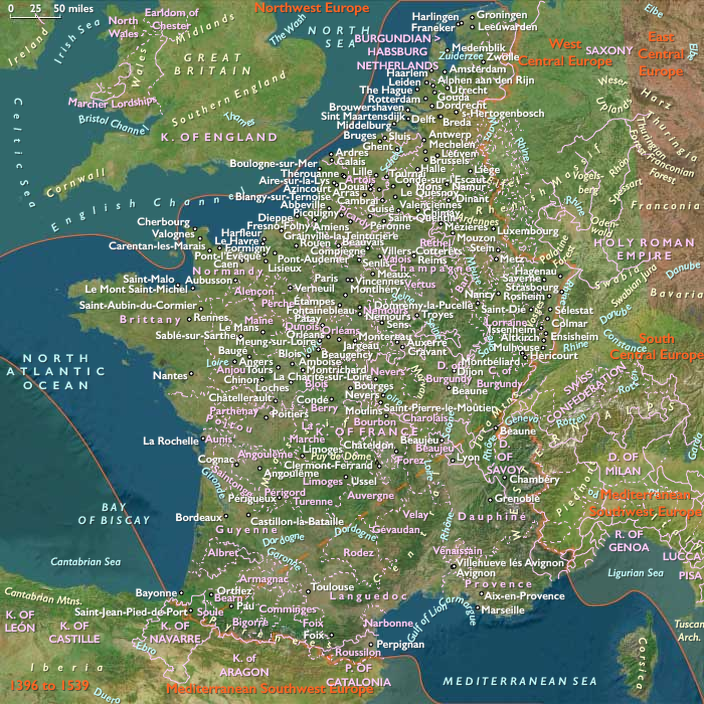
The escalation triggered a severe civic crisis, with judicial processes grinding to a halt and civic order disrupted. Ghent, renowned for its independence and wealth, saw its governance enter a volatile period, highlighting the broader struggle between the autonomy of prosperous Flemish cities and the centralizing ambitions of Burgundy. This breakdown marked a critical moment in the ongoing tensions between ducal authority and urban self-governance in Atlantic West Europe, foreshadowing future conflicts and the eventual forced submission of Ghent to Burgundian rule.
People
Topics
Commodities
Regions
West Europe
View →Subregions
