The United States began efforts in the…
1864 CE to 1875 CE
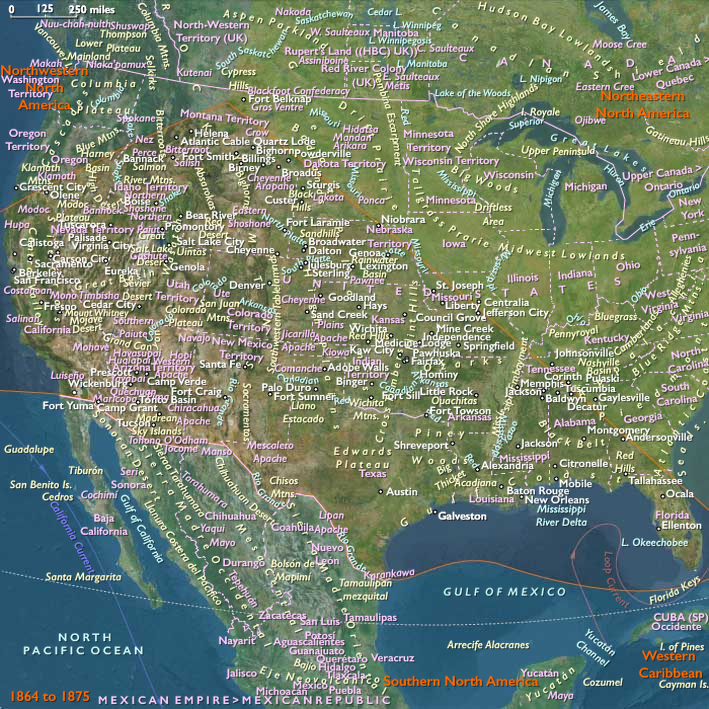
The government promises to stop the buffalo hunters, who are decimating the great herds of the Plains, provided that the Comanche, along with the Apaches, Kiowas, Cheyenne, and Arapahos, move to a reservation totaling less than five thousand square miles (thirteen thousand square kilometers) of land.
However, the government does not prevent the slaughtering of the herds.
The Comanche under Isa-tai (Coyote's Vagina) retaliates by attacking a group of hunters in the Texas Panhandle in the Second Battle of Adobe Walls (1874).
The attack is a disaster for the Comanche, and the U.S. army is called in during the Red River War to drive the remaining Comanche in the area into the reservation, culminating in the Battle of Palo Duro Canyon.
Within just ten years, the buffalo are on the verge of extinction, effectively ending the Comanche way of life as hunters.
In 1875, the last free band of Comanches, led by the Quahada warrior Quanah Parker, surrender and move to the Fort Sill reservation in Oklahoma.
The last independent Kiowa and Kiowa Apache had also surrendered
Groups
Topics
Commodities
Regions
Northern North America
View →Subregions