
East Central Europe (2,637 – 910 …
Years: 2637BCE - 910BCE
East Central Europe (2,637 – 910 BCE) Bronze and Early Iron — Urnfields, Hallstatt Precursors, Steppe Neighbors
Geographic and Environmental Context
East Central Europe includes Turkey-in-Europe (Thrace); Greece’s Thrace; Bulgaria (except its southwest); Romania & Moldova; northeastern Serbia; northeastern Croatia; extreme northeastern Bosnia & Herzegovina.
-
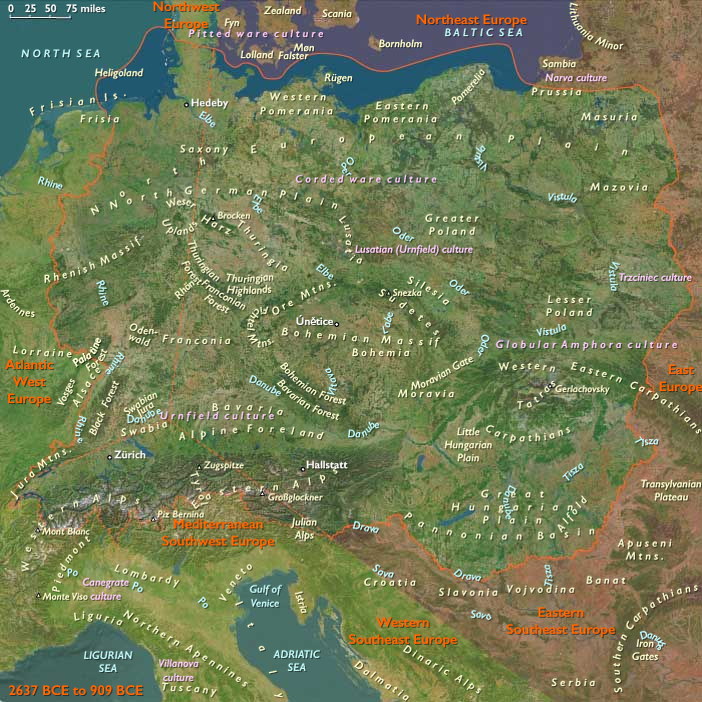
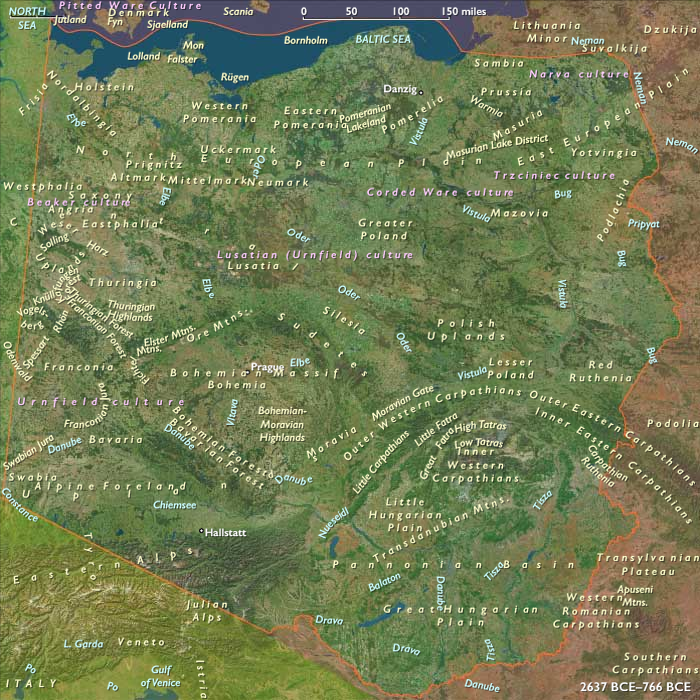
Anchors: Carpathian Basin (Tumulus/Urnfield), Bohemian–Bavarian hillforts, Polish Lusatian culture, Early Hallstatt in Austria.
Climate & Environmental Shifts
-
Variable rainfall; wetter conditions late in 2nd millennium BCE.
Subsistence & Settlement
-
Intensified cereal agriculture, vineyards/orchards; sheep/goat wool production.
-
Hillforts and fortified villages proliferated.
Technology & Material Culture
-
Bronze swords, sickles, ornaments; socketed axes; iron tools late.
-
Urnfield cremation cemeteries spread.
Movement & Interaction Corridors
-
Amber trade tied Baltic to Hallstatt and Mediterranean.
-
Steppe cultures (Srubnaya, Cimmerians) intruded into Carpathian Basin.
Cultural & Symbolic Expressions
-
Warrior aristocracy, solar symbols, wagon burials.
Groups
- Corded Ware culture
- Bell-Beaker, or beaker, culture
- Unetice culture
- Tumulus culture
- Urnfield culture
- Lusatian culture
Topics
- Neolithic Europe
- Subboreal Period
- Abrolhos Transgression
- 4.2 kiloyear BP aridification event
- Rottnest Transgression
- Younger Subboreal Period
- Iron Age Europe
Commodoties
Subjects
Regions
Subregions
Years: 2637BCE - 910BCE
Groups
- Corded Ware culture
- Bell-Beaker, or beaker, culture
- Unetice culture
- Tumulus culture
- Urnfield culture
- Lusatian culture
Topics
- Neolithic Europe
- Subboreal Period
- Abrolhos Transgression
- 4.2 kiloyear BP aridification event
- Rottnest Transgression
- Younger Subboreal Period
- Iron Age Europe
Commodoties
Subjects
Regions
Subregions