
The cultural flowering of Nuremberg in the …
Years: 1525 - 1525
The cultural flowering of Nuremberg in the fifteenth and sixteenth centuries has made it the center of the German Renaissance.
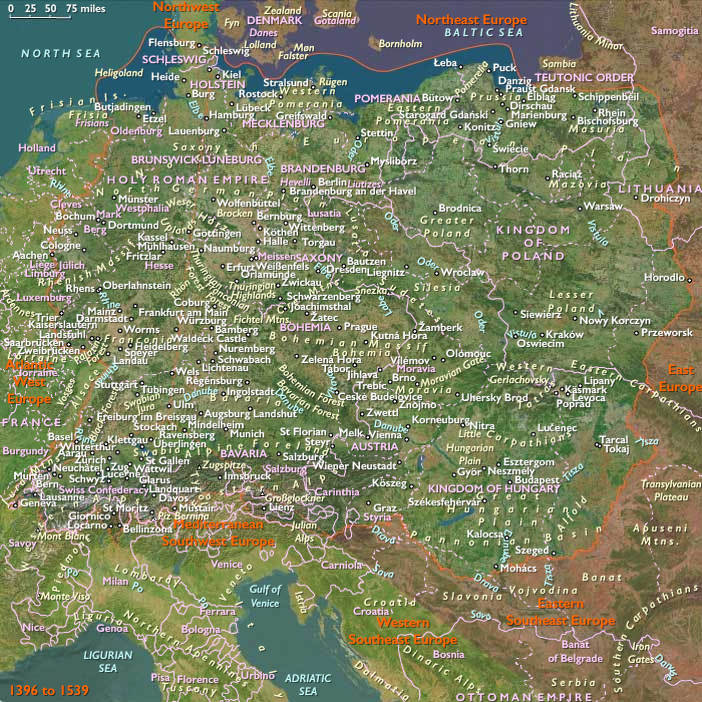
The brothers Hans Sebald Beham and Bartel Beham, along with Pencz, the so-called "godless painters", are expelled from Nuremberg in 1525 for spreading the radical views of Thomas Müntzer by asserting disbelief in baptism, Christ and transubstantiation, and not recognizing the authority of the City council.
The accusations against Pencz and the Behams are connected with their Lutheran beliefs, the city authorities at this time being Catholic, although they adopt Lutheranism as the city's official religion only two months later.
The three artists are soon allowed to return to Nuremberg and form the group known as the "Little Masters" because of their tiny, intricate and influential prints.
The Kleinmeisters will issue numerous editions of prints, often in small formats, on a vast range of subjects and widely popularize Renaissance forms outside Italy.
Pencz, who was probably born in Westheim near Bad Windsheim/Franconia, had traveled to Nuremberg in 1523 and joined Albrecht Dürer’s atelier.
Like Dürer, he visits Italy and is profoundly influenced by Venetian art; it is believed he worked with Marcantonio Raimondi.
Sebald, whose early works are characterized by exaggerated imitation of Dürer's sculpturesque style in the graphic arts, will produce about fifteen hundred engravings, etchings, and woodcuts.
Bartel, learning his art from his elder brother, and from Dürer, is particularly active as an engraver during the 1520s, creating tiny works of magnificent detail.
He is also fascinated with antiquity and he, too, may have worked with Raimondi in Bologna and Rome at some point in his career.
Locations
People
Groups
- Christians, Roman Catholic
- Venice, (Most Serene) Republic of
- Nuremberg, Free Imperial City of
- Holy Roman Empire
- Lutheranism
- Protestantism
Topics
- Portraits, Renaissance
- Renaissance, Italian
- Renaissance, German
- Western Art: 1516 to 1528
- Protestant Reformation
Subjects
Regions
Subregions

Years: 1525 - 1525
Locations
People
Groups
- Christians, Roman Catholic
- Venice, (Most Serene) Republic of
- Nuremberg, Free Imperial City of
- Holy Roman Empire
- Lutheranism
- Protestantism
Topics
- Portraits, Renaissance
- Renaissance, Italian
- Renaissance, German
- Western Art: 1516 to 1528
- Protestant Reformation
Subjects
Regions
Subregions