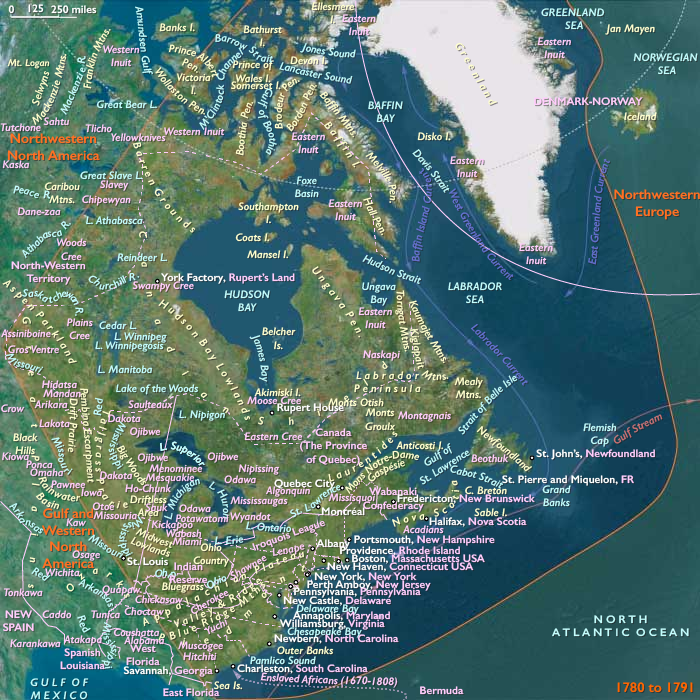
New England's Dark Day refers to an…
May 1780 CE
The primary cause of the event is believed to have been a combination of smoke from forest fires, a thick fog, and cloud cover.
The darkness is so complete that candles are required from noon on.
It does not disperse until the middle of the next night.
For several days before the Dark Day, the Sun as viewed from New England appeared to be red, and the sky appeared yellow.
While the darkness is present, soot is observed to have collected in rivers and in rain water, suggesting the presence of smoke.
Also, when the night really comes in, observers see the Moon colored red.
For portions of New England, the morning of May 19, 1780 is characterized by rain, indicating that cloud cover is present.
Since communications technology of the day was primitive, most people found the darkness to be baffling and inexplicable. Many applied religious interpretations to the event.[8]
In Connecticut, a member of the Governor's council (it will be renamed Connecticut State Senate in 1818), Abraham Davenport, will become most famous for his response to his colleagues' fears that it is the Day of Judgment:
I am against adjournment. The day of judgment is either approaching, or it is not. If it is not, there is no cause for an adjournment; if it is, I choose to be found doing my duty. I wish therefore that candles may be brought.
Davenport's courage will be commemorated in the poem "Abraham Davenport" by John Greenleaf Whittier, also by Edwin Markham in his poem "A Judgement Hour", found in 'The Gates of Paradise and Other Poems' by Edwin Markham. (Doubleday 1928 Page 36.)
The likely cause of the Dark Day is smoke from extensive forest fires.
When a fire does not kill a tree and the tree later grows, scar marks are left in the growth rings.
This makes it possible to approximate the date of a past fire.
Researchers examining the scar damage in Ontario, Canada, will attribute the Dark Day to a large fire in the area that is today occupied by Algonquin Provincial Park.
Groups
Commodities
Regions
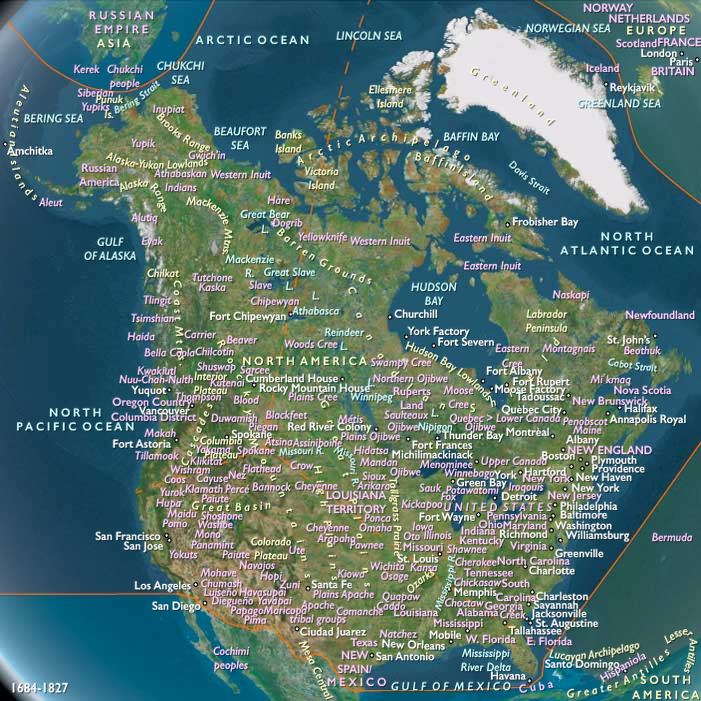
Northern North America
View →Subregions