The Danish army, after a number of…
December 1676 CE
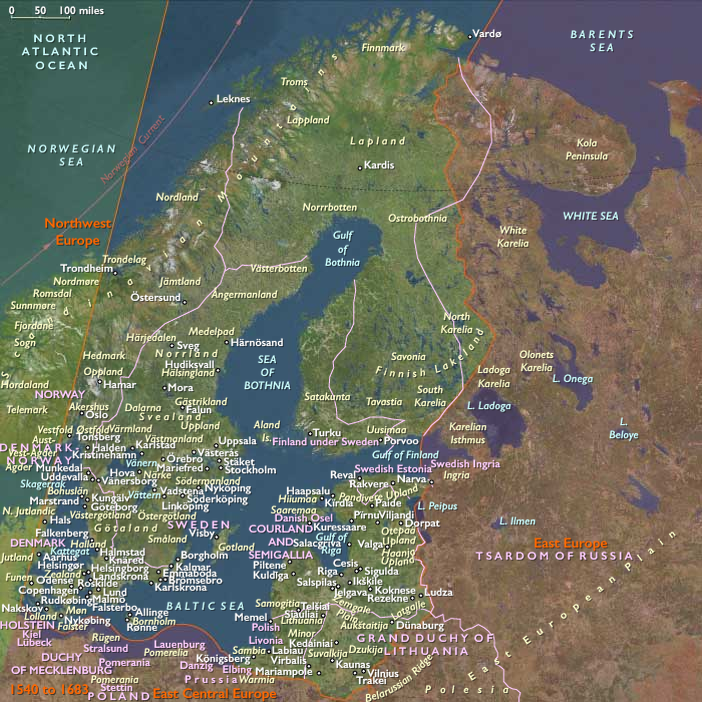
The Danish army, after a number of skirmishes, is badly beaten at the Battle of Lund on December 4, 1677.
Although the bodies are counted the next day, the original notes have been lost and the exact death toll is unknown.
Contemporary Swedish sources indicate between eighty-three hundred and nine thousand bodies on the battlefield, excluding the Danish that drowned and all the soldiers that died from their wounds the following weeks.
One Danish contemporary source records a total of nine thousand three hundred dead.
Considering the size of the armies, these losses are very high on both sides.
The Dutch marines were exceptionally unfortunate; according to various sources only several dozens out of the thirteen hundred survived.
The Battle of Lund, which has severely crippled both armies, is known as one of the bloodiest in the history of Scandinavia.
The Swedish victory is often attributed to the composition of their army, as it contained far fewer mercenaries.
The Swedish habit of mixing cavalry and infantry also made it possible for the Swedes to mount swift counter attacks as soon as a friendly infantry unit buckled.
The Danish on the other hand, still used the caracole tactic, undermining the speed and agility of their cavalry.
The victory at Lund serves as an immense morale boost to the Swedish army.
Charles XI is criticized for getting carried away by his success on the right flank, but the battle has nonetheless made him popular with his own troops.
The remaining Danish forces are forced to retreat to the fortress of Landskrona.
Reinforced by their Austrian and German allies, they will once again meet the Swedish army at the Battle of Landskrona.
Locations
People
Groups
Commodities
Subjects
Regions
North Europe
View →Subregions