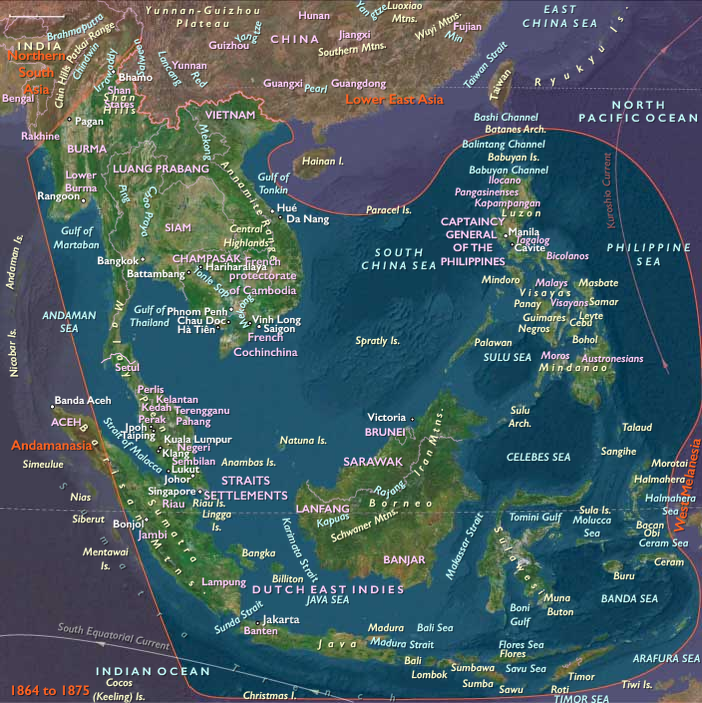
When Mongkut dies, his eldest son, Chulalongkorn…
1864 CE to 1875 CE
When Mongkut dies, his eldest son, Chulalongkorn (Rama V, 1868-1910), a minor at the time, succeeds him.
Under his father's direction, Chulalongkorn had received a thorough education by European tutors.
During the regency that precedes his coming of age, the young king visits Java and India in order to witness European colonial administration.
Thus he is the first Chakkri monarch to leave the country.
At his coronation in 1873, he announces the abolition of the ancient practice of prostrating before the monarch, which he regards as unsuitable for a modern nation.
A number of reform decrees follow, designed to modernize the judiciary, state finances, and political structure.
The reforms, however, provoke a revolt by conservatives under Prince Wichaichan in December 1874.
Although the revolt is suppressed, it obliges Chulalongkorn to abandon "radicalism" and proceed more carefully with reforms.
It is more than a decade before the king and his associates are in a position to enact more significant changes.
Groups
Regions
Southeast Asia
View →Subregions