
Event
Britain and France, the House of Orleans…
Britain and France, the House of Orleans having replaced that of Bourbon, intervene and recognize Belgian independence before the Dutch can suppress the rebellion.
On December 20, the London Conference of 1830, which has brought together five major European powers,—Austria, Britain, France, Prussia and Russia—declares the Kingdom of the Netherlands dissolved.
Britain agrees to uphold Belgian neutrality as a struggle for reforms rages in England.
At first the European powers had been divided over the Belgian cry for independence.
The Napoleonic Wars are still fresh in the memories of Europeans, so when the French, under the recently installed July Monarchy, supported Belgian independence, the other powers had unsurprisingly supported the continued union of the Provinces of the Netherlands.
Russia, Prussia, Austria, and Great Britain all supported the somewhat authoritarian Dutch king, many fearing the French would annex an independent Belgium.
However, in the end, none of the European powers had sent troops to aid the Dutch government, partly because of rebellions within some of their own borders (the Russians are occupied with the November Uprising in Poland and Prussia is saddled with war debt).
Britain has come to see the benefits of isolating France geographically.
-
{# Image navigates to the detail page; the magnifying-glass chip is the only Fancybox lightbox trigger (kept a separate sibling — anchors can't nest). #}
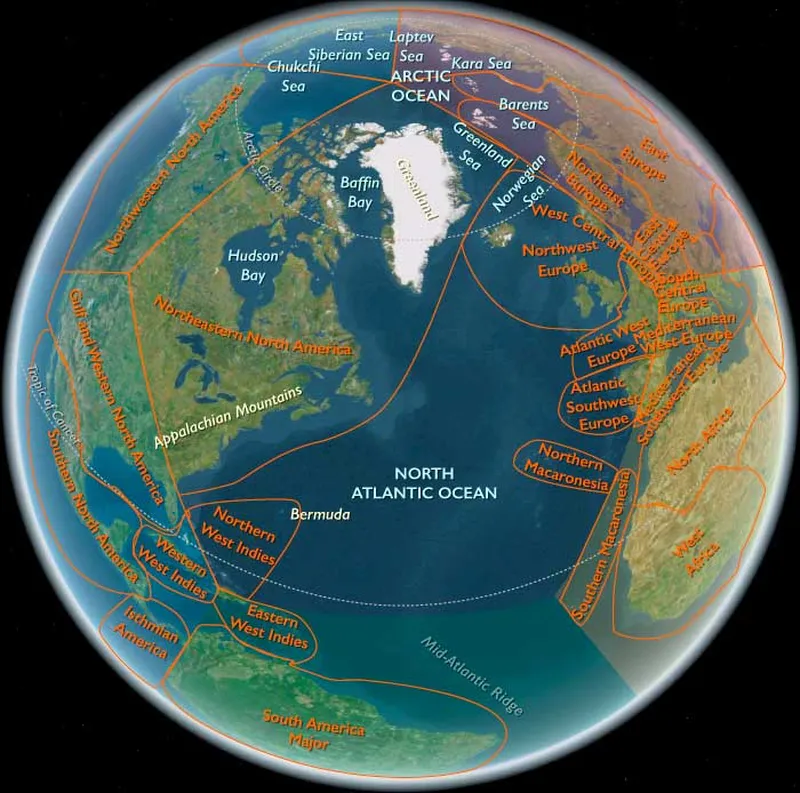 The Atlantic Lands
World
The Atlantic Lands
World
-
{# Image navigates to the detail page; the magnifying-glass chip is the only Fancybox lightbox trigger (kept a separate sibling — anchors can't nest). #}
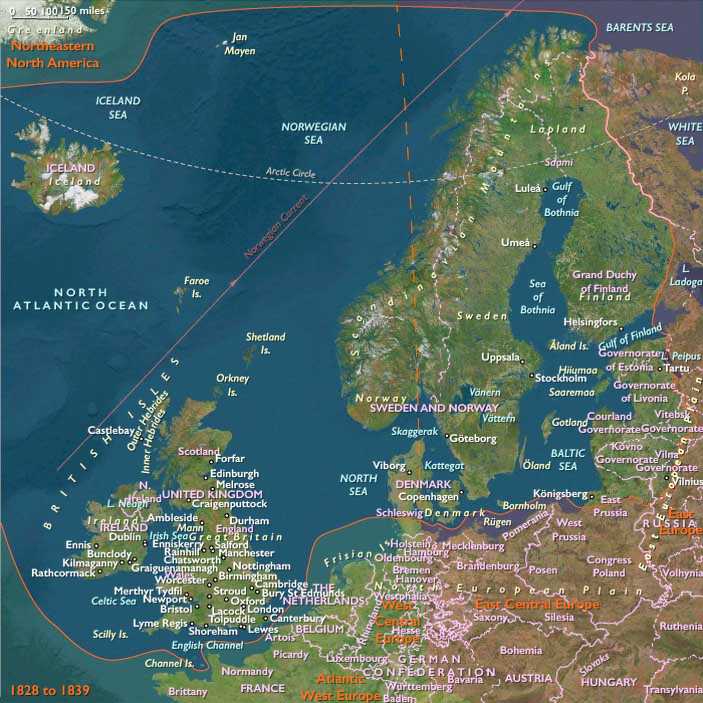 North Europe
Region
North Europe
Region
-
{# Image navigates to the detail page; the magnifying-glass chip is the only Fancybox lightbox trigger (kept a separate sibling — anchors can't nest). #}
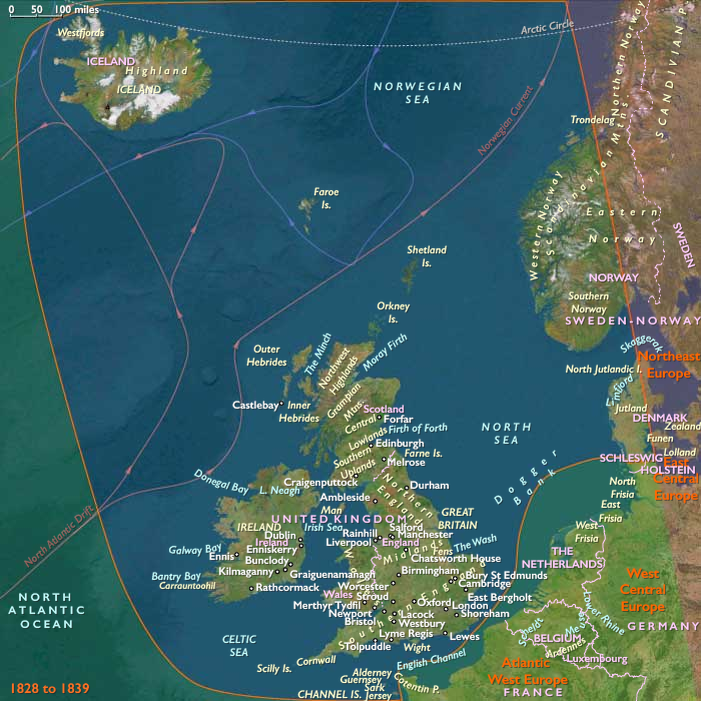 Northwest Europe
Subregion
Northwest Europe
Subregion
