Governor Lovelace's administration is terminated, despite his…
1673 CE
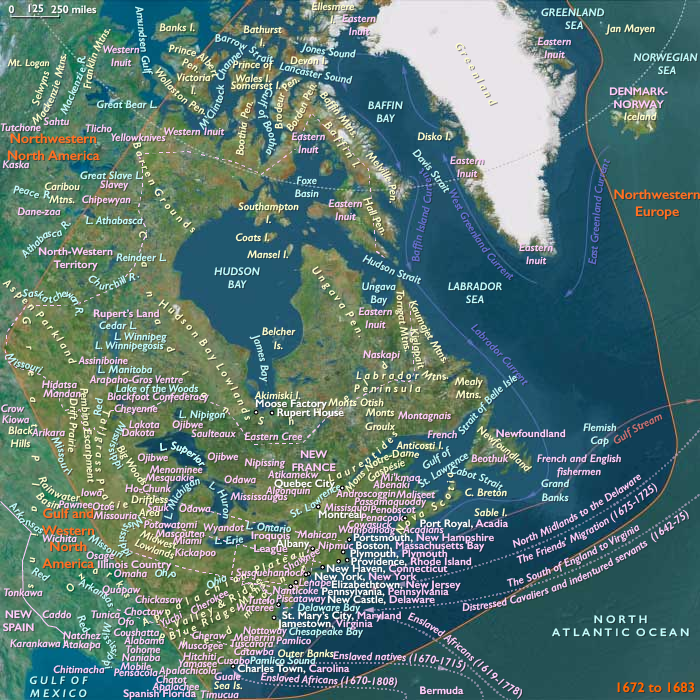
Governor Lovelace's administration is terminated, despite his defensive preparations, by the temporary re-capture of the colony by the Dutch in 1673 when, for a brief period the Dutch Admiral Cornelis Evertsen the youngest seizes New York City, to little opposition, and reestablishes Nieuw Amsterdam.
At the time of the invasion, Lovelace is out of the colony, meeting with the Governor of Connecticut, John Winthrop Jr. in Hartford, Connecticut, in the course of planning the first postal system from New York to Boston.
Lovelace, whose property in New York had been confiscated by the Dutch, is sent home in disgrace to England.
The Duke of York, blaming Lovelace for the loss of his namesake colony, confiscates his plantation on Staten Island and his English estates for a £7,000 debt.
In January 1675 he will be committed to the Tower of London, where he will be interrogated by commissioners.
His answers will be deemed unacceptable, but no further proceedings will be brought against him.
After contracting dropsy, he will be released in April because of his health, and go to live at Woodstock, Oxfordshire to die, in penury, by 22 December, 1675, when administration of his estate will be granted to his brother Dudley.
The third new Governor of New York after Francis Lovelace will be John Lovelace, 4th Baron Lovelace of Hurley—no kin to Francis of the Bethersden Lovelaces.
Early genealogists will confuseFrancis with an identically named son of Richard Lovelace, 1st Baron Lovelace of Hurley, due to a pamphlet issued at the time of his appointment mistakenly asserting that he was the brother of the said Richard.
The confusion will also spread to more modern historians.
Topics
Regions
Northern North America
View →Subregions