
The Empire's military position in the Balkans …
Years: 805 - 805
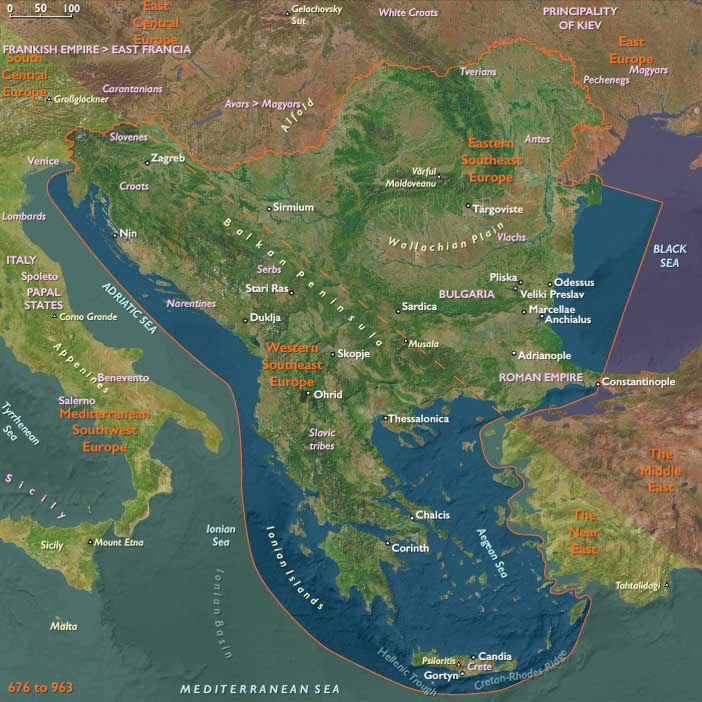
The Empire's military position in the Balkans had collapsed in the early seventh century as a result of disastrous military ventures against the Persians and then the Arabs in the East, which had forced the effective abandonment of the Danube limes and opened the way for large-scale penetration of the Balkan hinterland by various Slavic tribes.
The Slavs had raided as far as southern Greece and the coasts of Asia Minor, and settled across the Balkan peninsula.
Most of the region's cities had been sacked or abandoned and only a few, including Thessalonica, remained occupied and in imperial hands.
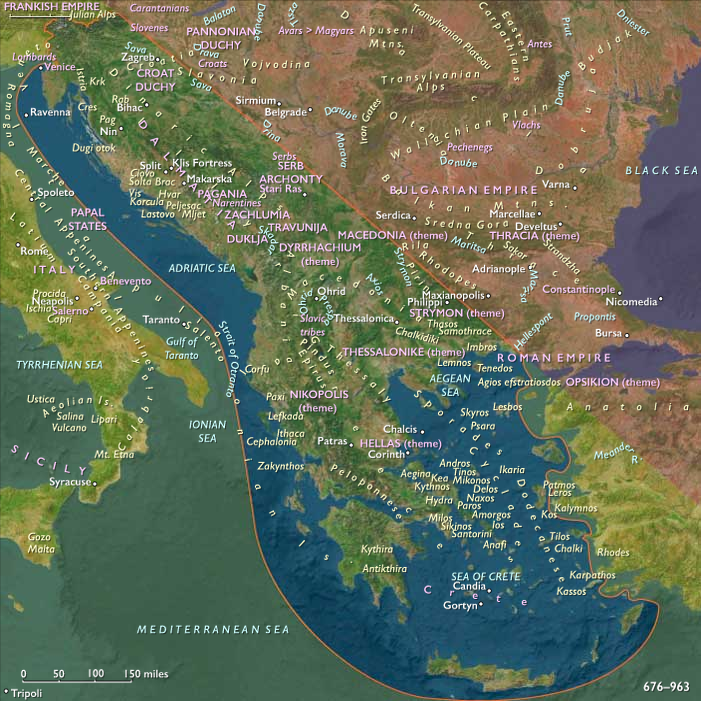
The eastern coasts of the Peloponnese and Central Greece had remained in imperial hands as the theme of Hellas, while in the interior, various Slavic groups had established themselves.
A large native Greek population probably also had remained in the land, either mixed with the Slavs or in its own autonomous communities.
As elsewhere in Greece, a mostly peaceful modus vivendi had soon emerged between the Slavs and the remaining imperial strongholds, with the mainly agricultural Slavs trading with the imperial coastal towns.
Further north n the Greek mainland, smaller Slavic districts or sclaviniae by the turn of the eighth century had emerged around the fringes of imperial territory, ruled by their own archons, who receive imperial titles and recognize some form of imperial suzerainty.
Imperial authority across Greece had been greatly strengthened by the 783 campaign of the logothete Staurakios, who had ventured from Constantinople overland to Thessalonica and from there south to the Peloponnese, subduing the Slavs of those regions.
Locations
People
Groups
- Arab people
- Slavs, South
- Christianity, Chalcedonian
- Greeks, Medieval (Byzantines)
- Hellas, Theme of
- Abbasid Caliphate (Baghdad)
- Peloponnese (theme)
- Roman Empire, Eastern: Nikephorian dynasty
Topics
Subjects
Regions
Subregions
Years: 805 - 805
Locations
People
Groups
- Arab people
- Slavs, South
- Christianity, Chalcedonian
- Greeks, Medieval (Byzantines)
- Hellas, Theme of
- Abbasid Caliphate (Baghdad)
- Peloponnese (theme)
- Roman Empire, Eastern: Nikephorian dynasty
Topics
Subjects
Regions
Subregions