
The Erie Canal, first proposed in 1807,…
October 1825 CE
The Erie Canal, first proposed in 1807, has been under construction from 1817 to 1825 and officially opens on October 26, 1825, providing passage from Albany, New York to Buffalo and Lake Erie.
The second longest canal in the world (after the Grand Canal in China), it will greatly affect the development and economy of New York, New York City, and the United States.
Denigrated by its political opponents as "Clinton's Folly" or "Clinton's Big Ditch", it is the first transportation system between the Eastern Seaboard and the western interior of the United States that does not require portage.
It is faster than carts pulled by draft animals and will cut transport costs by about ninety-five percent.
The canal gives New York City's port an incomparable advantage over all other U.S. port cities and will usher in the state's nineteenth century political and cultural ascendancy.
The canal will foster a population surge in western New York and open regions farther west to settlement.
The event is marked by a statewide "Grand Celebration," culminating in successive cannon shots along the length of the canal and the Hudson, a ninety-minute cannonade from Buffalo to New York City.
A flotilla of boats, led by Governor Dewitt Clinton aboard the Seneca Chief, sails from Buffalo to New York City in ten days.
Clinton then ceremonially pours Lake Erie water into New York Harbor to mark the "Wedding of the Waters."
On its return trip, the Seneca Chief brings a keg of Atlantic Ocean water back to Buffalo to be poured into Lake Erie by Buffalo's Judge Samuel Wilkeson, who will later become mayor.
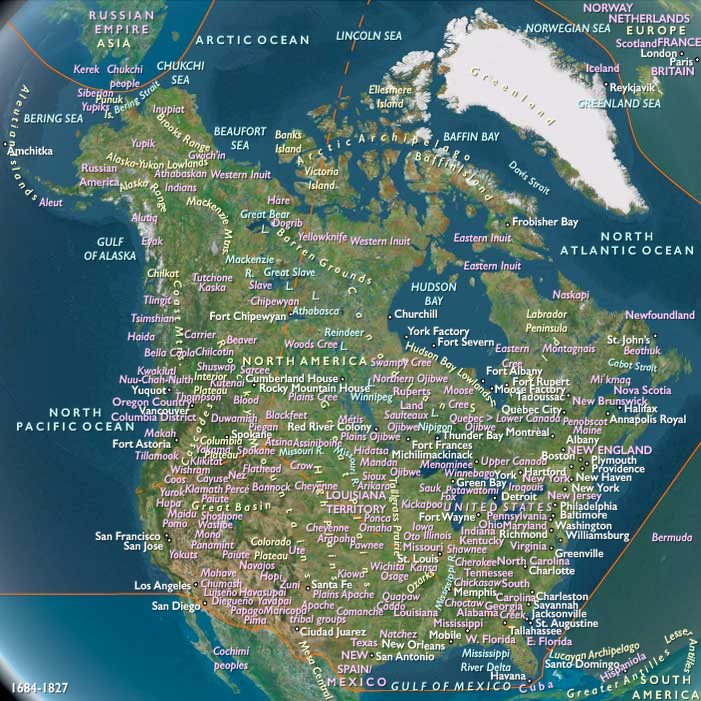
The Erie Canal makes use of the favorable conditions of New York's unique topography, providing this area with the only break in the Appalachians range south of the St. Lawrence River.
A major feature of New York is that the Hudson River below Glens Falls follows a valley formed by geologic forces, not erosion.
The Hudson is tidal to Troy and Albany is west of the Appalachians.
It allows for east-west navigation from the coast to the Great Lakes within U.S. territory.
The first direct commercial link in the United States between East and West, the Erie Canal has cost seven million dollars to construct and is acclaimed as one the greatest engineering marvels in the world.
People
Topics
Commodities
Regions
Northern North America
View →Subregions
