
The Evolution of the Chaperon as Elite…
1450 CE
The Evolution of the Chaperon as Elite Headwear (ca. 1450)
By the mid-fifteenth century, the chaperon, once a simple hooded garment, had evolved into a complex and fashionable headwear item, popular among upper- and middle-class males across northern Europe, especially in Atlantic West Europe and Burgundy. Originally practical, it now functioned primarily as an elaborate symbol of social status, prominently featured in numerous painted portraits of the period, including those of the Burgundian dukes.
The chaperon at this time typically consisted of significant quantities of rich cloth, usually dyed in a single, deep color, with silk being common among wealthier wearers. The increasingly exaggerated form included a substantial padded or hollow framework, the bourrelet, around which the cloth was artfully arranged. Evidence of this practice is found in contemporary drawings and surviving patterns, notably from Italy, that depict wooden blocks used as molds for shaping the bourrelet.
In Burgundian courtly fashion around 1445–1450, the chaperon reached its peak of grandeur. Portraits attributed to Rogier van der Weyden, notably his depiction of Philip the Good, Duke of Burgundy, demonstrate the size and complexity of these garments as symbolic markers of social rank and status. In such portraits, including Rogier's lost originals known through copies, the chaperon features an impressively voluminous bourrelet, with substantial lengths of fabric arranged meticulously around the head, reflecting the wearer's wealth, status, and authority.
Thus, the transformed chaperon illustrates broader social trends toward ostentatious display among elites, marking the increasingly visible intersection of fashion, social hierarchy, and artistic representation during the fifteenth century.
Images
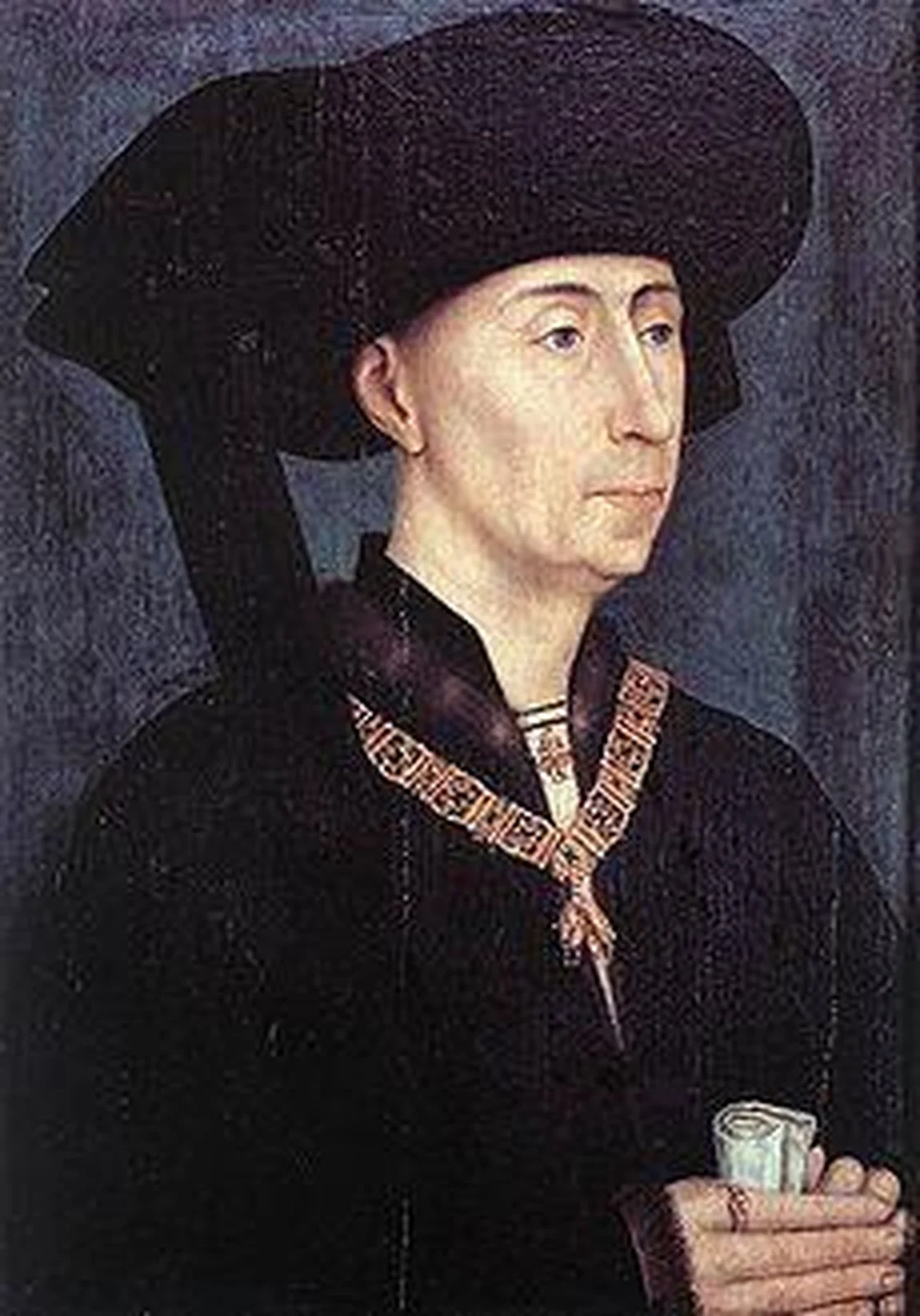
Philip the Good, wearing the collar of firesteels of the Order of the Golden Fleece he instituted, copy of a Roger van der Weyden of c.1450
Locations
Groups
Regions

West Europe
View →Subregions
