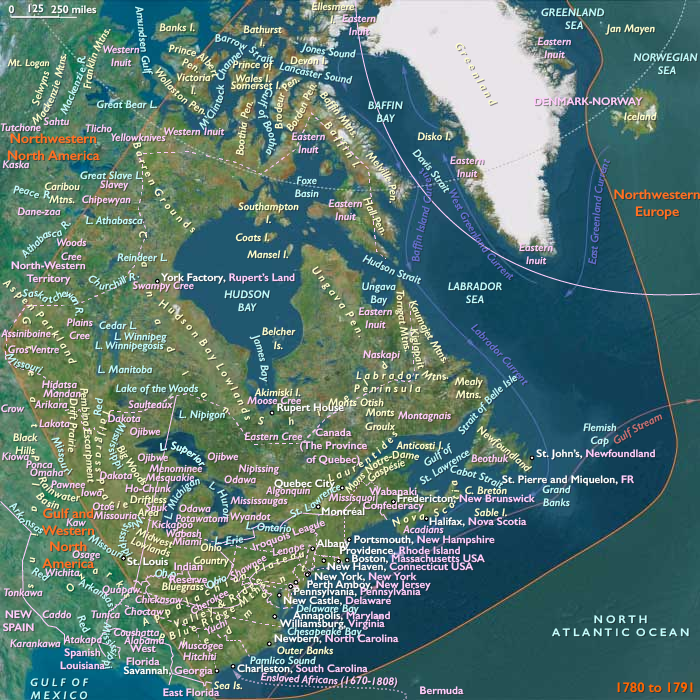
Oliver Ellsworth had joined the Constitutional Convention…
June 1787 CE
More than half of the fifty-five delegates are lawyers, eight of whom, including both Ellsworth and Sherman, have previous experience as judges conversant with legal discourse.
Ellsworth takes an active part in the proceedings beginning on June 20, when he proposes the use of the name the United States to identify the government under the authority of the Constitution.
The words "United States" had already been used in the Declaration of Independence and Articles of Confederation as well as Thomas Paine's The American Crisis.
It is Ellsworth's proposal to retain the earlier wording to sustain the emphasis on a federation rather than a single national entity.
Three weeks earlier, on May 30, 1787, Edmund Randolph of Virginia had moved to create a "national government" consisting of a supreme legislative, an executive and a judiciary.
Ellsworth accepts Randolph's notion of a threefold division, but moves to strike the phrase "national government."
From this day forward the "United States" is the official title used in the Convention to designate the government, and this usage will remain in effect ever since.
The complete name, "the United States of America," had already been featured by Paine, and its inclusion in the Constitution is the work of Gouverneur Morris when he makes the final editorial changes in the Constitution.
People
Groups
United States of America (US, USA) (Philadelphia PA)
View →
Rhode Island, State of (U.S.A.)
View →
New York, independent state of
View →
Pennsylvania, Commonwealth of (U.S.A.)
View →
Delaware, State of (U.S.A.)
View →
Maryland, State of (U.S.A.)
View →
Virginia, Commonwealth of (U.S.A.)
View →
North Carolina, State of (U.S.A.)
View →
South Carolina, State of (U.S.A.)
View →
New Hampshire, State of (U.S.A.)
View →
New Jersey, State of (U.S.A.)
View →
Connecticut, State of (U.S.A.)
View →
Georgia, State of (U.S.A.)
View →
Massachusetts, Commonwealth of (U.S.A.)
View →
Commodities
Subjects
Regions
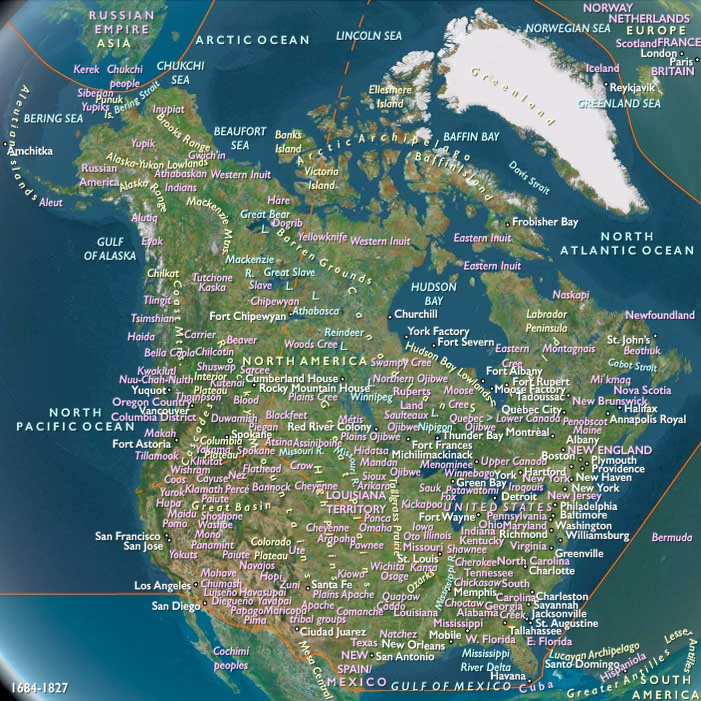
Northern North America
View →Subregions