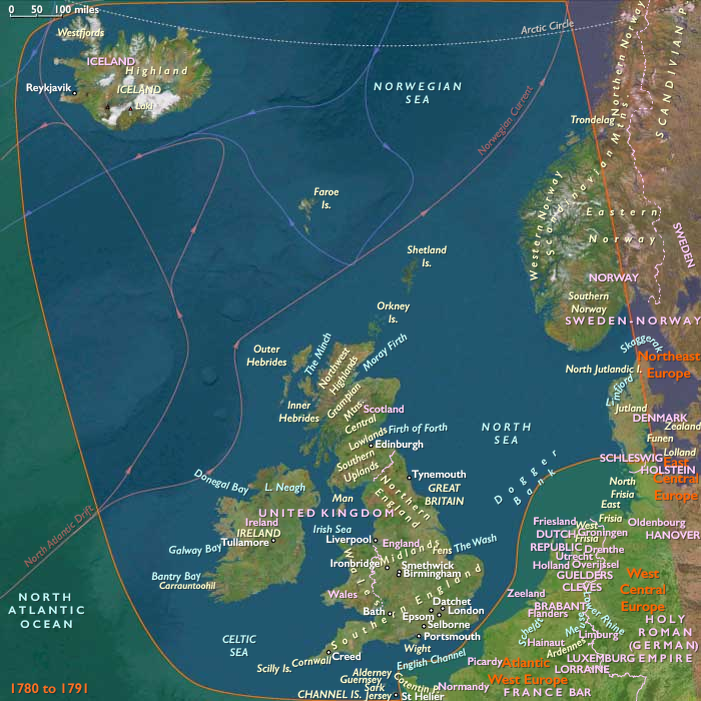
The first reports of the London Monster…
August 1790 CE
According to the victims (most of them from wealthier families), a large man had followed them, shouted obscenities and stabbed them in the buttocks.
Some reports claimed an attacker had knives fastened to his knees.
Other accounts reported that he would invite prospective victims to smell a fake nosegay and then stab them in the face with the spike hiding within the flowers.
In all cases the alleged assailant would escape before help arrived.
Some women were found with their clothes cut and others had substantial wounds.
In two years the number of reported victims amounts to more than fifty.
The press had soon named the maniac The Monster.
However, descriptions of the attacker vary greatly.
Some men have even founded a No Monster Club and have begun to wear club pins on their lapels to show that they are not the Monster.
Londoners were outraged when the Bow Street Runners, the London police force, fail to capture the man.
Philanthropist John Julius Angerstein promises a reward of £100 for capture of the perpetrator.
Armed vigilantes begin to patrol in the city.
Fashionable ladies begin to wear copper pans over their petticoats.
There are false accusations and attacks against suspicious people.
Local pickpockets and other criminals use the panic to their advantage; they pick someone's valuables, point at him, shout "Monster!", and escape during the resulting mayhem.
On June 13, 1790, Anne Porter claimed she had spotted her attacker in St. James's Park.
Her admirer, John Coleman, began a slow pursuit of the man, who realized he was being followed.
When Rhynwick Williams, an unemployed twenty-three-year-old, reached his house, Coleman confronted him, accusing him of insulting a lady, and challenged him to a duel.
He eventually took Williams to meet Porter, who fainted when she saw him.
Williams protested his innocence but, given the climate of panic, it was futile.
He admitted that he had once approached Porter but had an alibi for another of the attacks.
Magistrates charged Williams with defacing clothing—a crime that in the Bloody Code carries a harsher penalty than assault or attempted murder.
During the trial, spectators cheer the witnesses for the prosecution and insult those for the defense.
One of the claimed victims confessed that she had not been attacked at all.
Realizing the absurdity of the situation, the court grants Williams a retrial.
In the new trial Williams' defense lawyer is Irish poet Theophilus Swift, whose tactic is to accuse Porter of a scheme to collect the reward, Porter having married Coleman, who had received the reward money.
Despite the fact that a number of alleged victims give contradictory stories and that his employer and coworkers testify that he has an alibi for the most infamous attack, Williams is convicted on three counts and sentenced to two years each, for a total of six years in prison.
He will be released in December 1796.
Historians have speculated whether Williams was the culprit and have even questioned whether the London Monster existed at all beyond the hysteria.
Reports of Monster-like attacks will continue to be reported for many years, although they will lessen somewhat while Williams is imprisoned.
Locations
Subjects
Regions
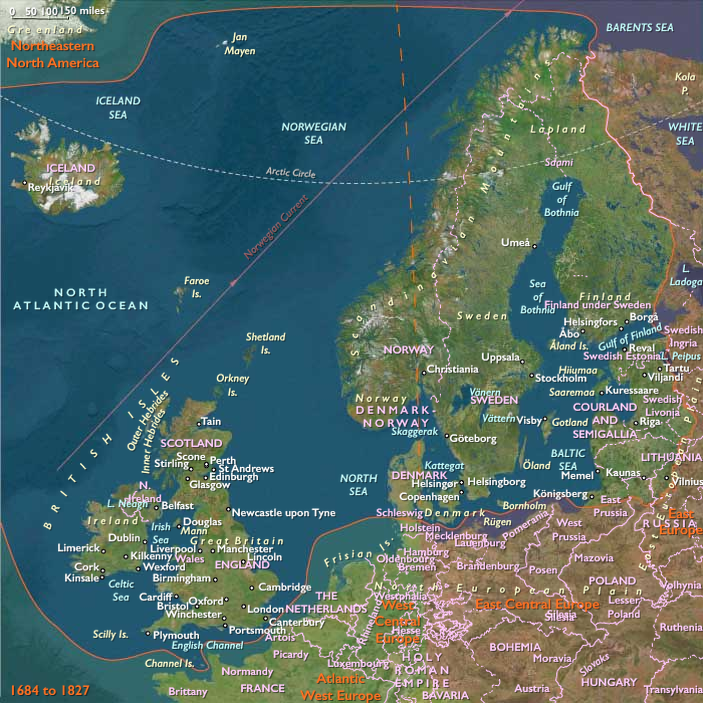
North Europe
View →Subregions