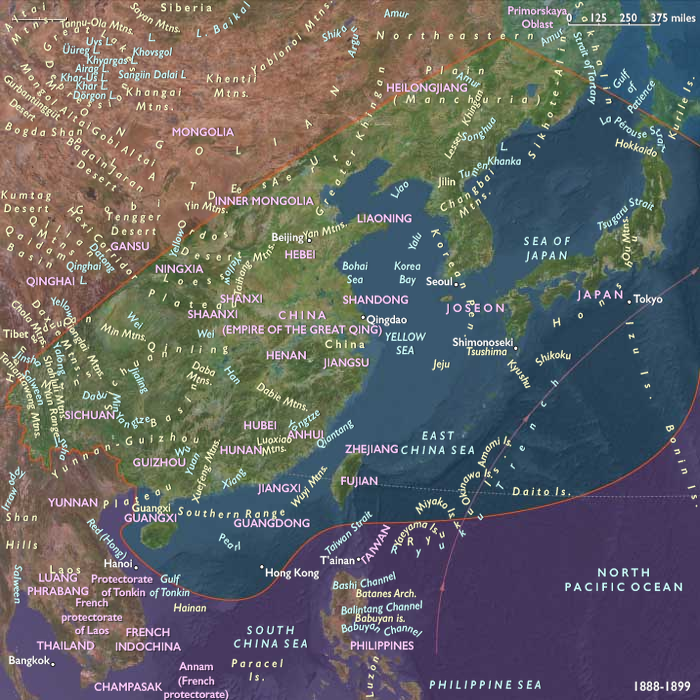
The strengths and weaknesses of the Meiji…
1888 CE to 1899 CE
The strengths and weaknesses of the Meiji Constitution are revealed in the early years of constitutional government.
A small clique of Satsuma and Choshu elite continues to rule Japan, becoming institutionalized as an extraconstitutional body of genro (elder statesmen).
Collectively, the genro make decisions reserved for the emperor, and the genro, not the emperor, control the government politically.
Throughout the period, however, political problems are usually solved through compromise, and political parties gradually increase their power over the government and hold an ever larger role in the political process as a result.
Between 1891 and 1895, Ito Hirobumi serves as prime minister with a cabinet composed mostly of genro who want to establish a government party to control the House of Representatives.
Although not fully realized, the trend toward party politics is well established.
Locations
Topics
Subjects
Regions
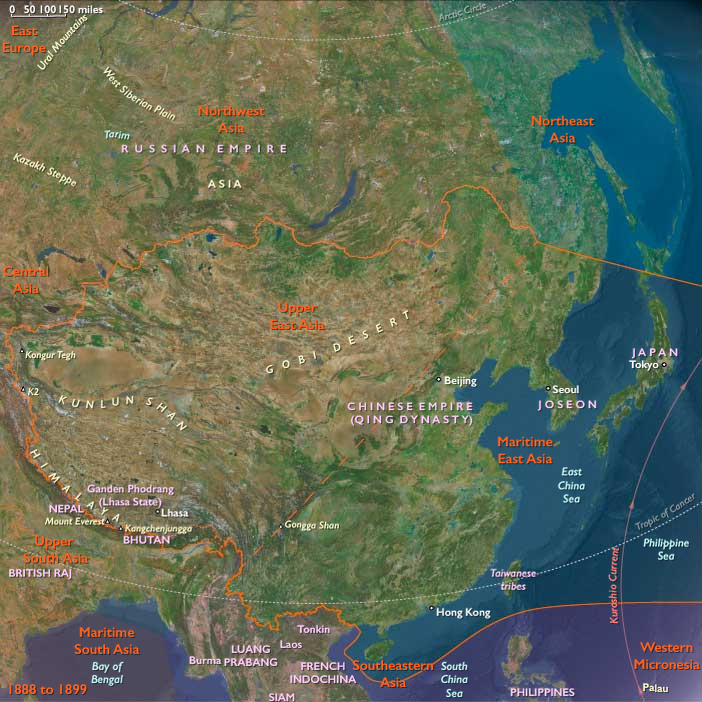
East Asia
View →Subregions