
The first purpose-built library known to have…
June 1603 CE
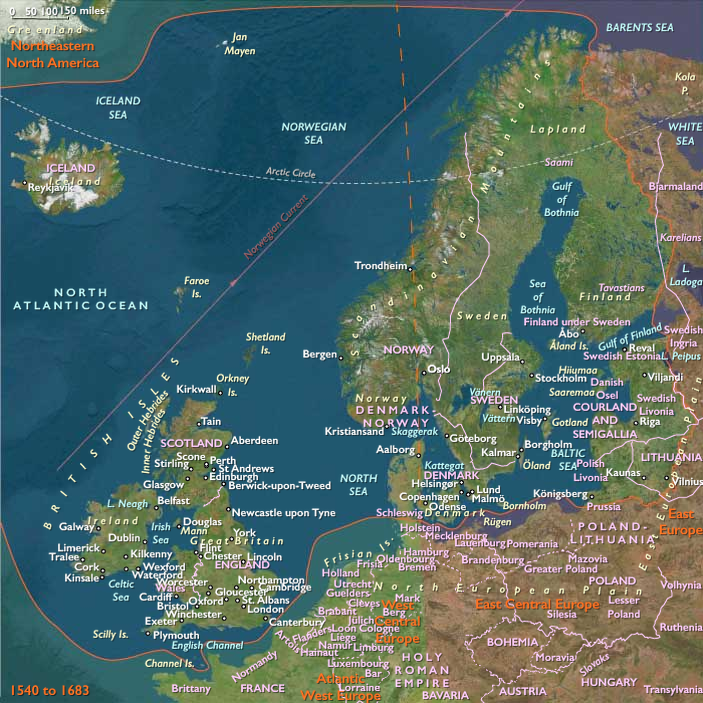
The first purpose-built library known to have existed in Oxford had been founded in the fourteenth century by Thomas Cobham, Bishop of Worcester.
This small collection of chained books was situated above the north side of the University Church of St. Mary the Virgin on the High Street.
This collection had continued to grow steadily, but when, between 1435 and 1437 Humphrey, Duke of Gloucester (brother of Henry V of England), donated a great collection of manuscripts, the space was deemed insufficient and a larger building was required.
A suitable room was finally built above the Divinity School, and completed in 1488.
This room continues to be known as Duke Humfrey’s Library.
The late sixteenth century had seen the library go through a period of decline (to the extent that the library’s furniture was sold, and only three of the original books belonging to Duke Humfrey remained in the collection).
It was not until 1598 that the library began to thrive once more, when Thomas Bodley (a former fellow of Merton College) wrote to the Vice Chancellor of the University offering to support the development of the library: "where there hath bin hertofore a publike library in Oxford: which you know is apparent by the rome it self remayning, and by your statute records I will take the charge and cost upon me, to reduce it again to his former use."
Duke Humfrey’s Library was refitted, and Bodley donated a number of his own books to furnish it.
The library is formally re-opened on November 8, 1602, under the name “Bodleian Library” (officially Bodley's Library).
Bodley’s collecting interests are varied; according to the library's historian Ian Philip, as early as June 1603 he is attempting to source manuscripts from Turkey, and it is during “the same year that the first Chinese book was acquired.”
Locations
Topics
Regions
North Europe
View →Subregions
