The Meiji government assures the foreign powers…
1864 CE to 1875 CE
The Meiji government assures the foreign powers that it will abide by the old treaties negotiated by the bakufu and announces that it will act in accordance with international law.
Mutsuhito, who is to reign until 1912, selects a new reign title—Meiji, or Enlightened Rule—to mark the beginning of a new era in Japanese history.
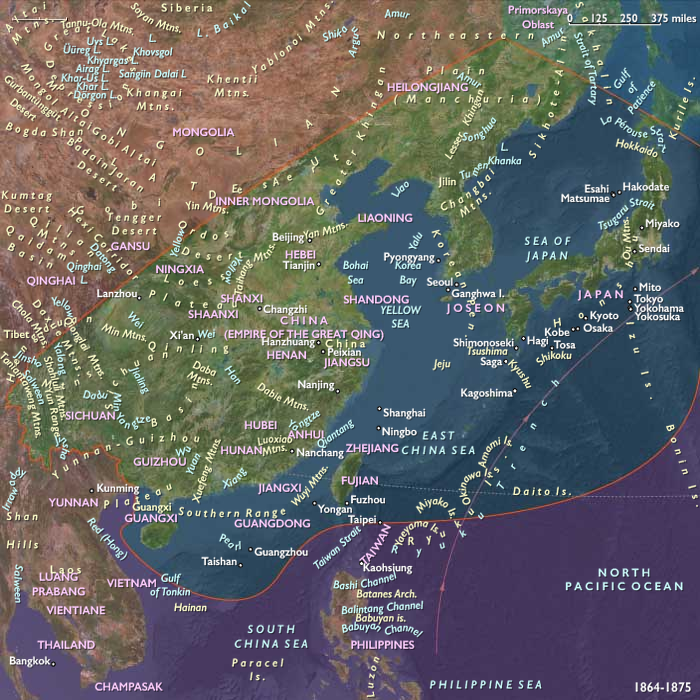
To further dramatize the new order, the capital is relocated from Kyoto, where it had been situated since 794, to Tokyo (Eastern Capital), the new name for Edo.
In a move critical for the consolidation of the new regime, most daimyo voluntarily surrender their land and census records to the emperor, symbolizing that the land and people are under the emperor's jurisdiction.
Confirmed in their hereditary positions, the daimyo became governors, and the central government assumes their administrative expenses and pays samurai stipends.
The han are replaced with prefectures in 1871, and authority continues to flow to the national government.
Officials from the favored former han, such as Satsuma, Choshu, Tosa, and Hizen, staff the new ministries.
Formerly out-of-favor court nobles and lower-ranking but more radical samurai replace bakufu appointees, daimyo, and old court nobles as a new ruling class appears.
Locations
People
Topics
Subjects
Regions
East Asia
View →Subregions