Charles of Habsburg Inherits the Netherlands and…
1506 CE
Charles of Habsburg Inherits the Netherlands and Franche-Comté (1506)
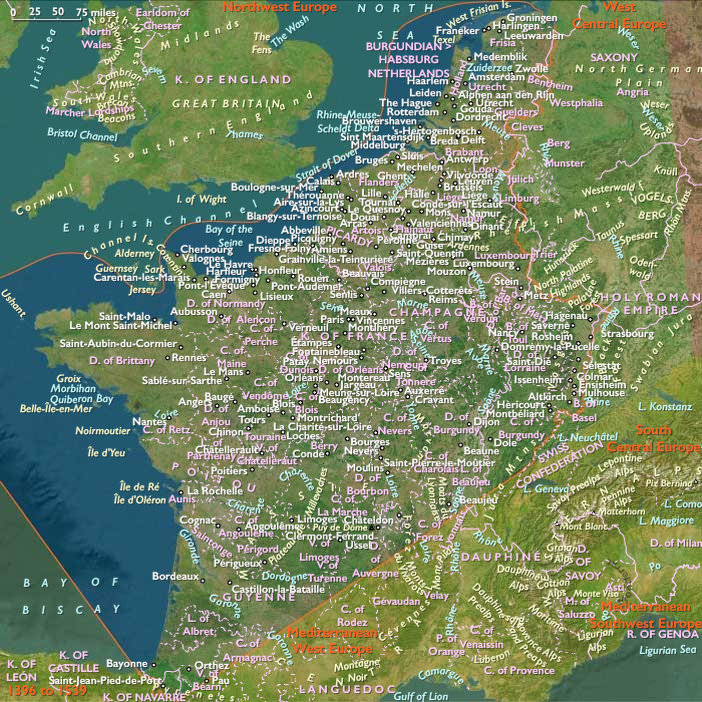
In 1506, upon the untimely death of his father, Philip the Handsome (Philip I of Castile), the four-year-old Charles of Habsburg inherited extensive territories, notably the Netherlands and Franche-Comté. This event marked a significant turning point in Atlantic West Europe, as the young Charles, who would later become the Holy Roman Emperor Charles V, began to consolidate a remarkable array of European domains.
Charles’s inheritance included some of Europe's wealthiest and most strategically important regions, notably the commercially dynamic Netherlands, with its thriving cities such as Antwerp and Bruges, and the agriculturally rich and strategically positioned Franche-Comté. These territories, known collectively as the Burgundian inheritance, significantly bolstered the young prince’s political and economic foundations.
Political and Cultural Significance:
Charles's inheritance brought him under the guardianship and influence of key figures from the Habsburg dynasty, intensifying dynastic rivalries across Europe, particularly with France. His early rule in the Netherlands and Franche-Comté established foundations for future economic prosperity, centralized governance, and cultural flourishing. Under his later mature leadership, these territories became vital centers of trade, commerce, and artistic innovation.
Consequences and Legacy:
The inheritance of the Netherlands and Franche-Comté by Charles profoundly influenced European history, setting the stage for his extensive future reign as Holy Roman Emperor and king of Spain. This early accumulation of territories intensified Habsburg-French tensions and contributed to Europe's geopolitical realignment, eventually shaping the political landscape of Atlantic West Europe throughout the 16th century.
Groups
Commodities
Subjects
Regions
West Europe
View →Subregions