Soult Turns to Portugal – The Capture…
January 1809 CE
Soult Turns to Portugal – The Capture of Ferrol (January 26, 1809)
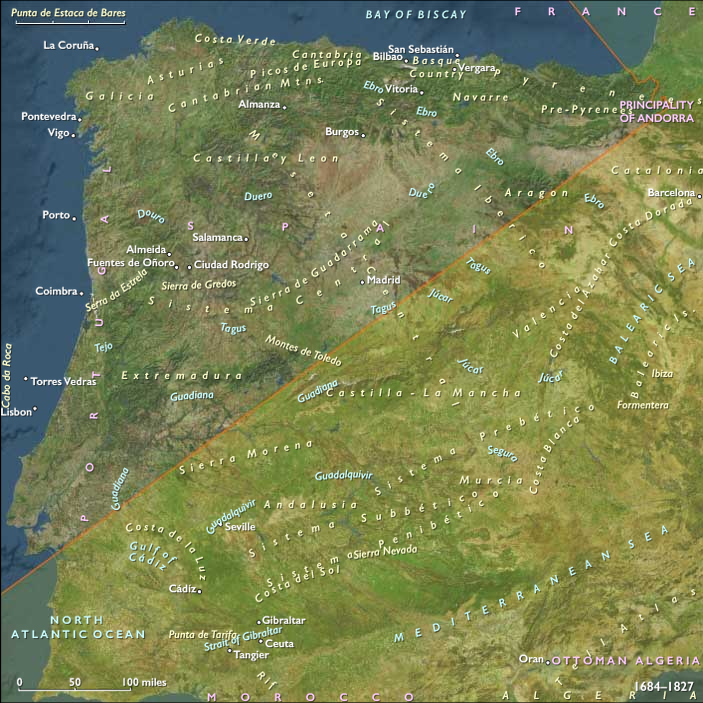
After defeating the British at the Battle of Coruña (January 16, 1809) and forcing their evacuation from Spain, Marshal Nicolas Soult shifted his focus toward invading Portugal. His II Corps, now the strongest French force in northern Spain, was tasked with securing the northern approach to Portugal.
Soult’s Strength – Preparing for the Portuguese Campaign
- II Corps had 20,000 men available for the invasion, not counting garrisons and sick soldiers.
- Portugal remained a key strategic objective, as British forces were regrouping there under Sir Arthur Wellesley (later Duke of Wellington).
- Before advancing into Portugal, Soult first moved to secure Spanish naval facilities in the region.
The Capture of Ferrol (January 26, 1809)
- Soult launched a surprise assault on the Spanish naval base at Ferrol, a key port city in northwestern Spain.
- The French stormed the defenses, overcoming Spanish resistance and securing a significant victory.
- The capture of Ferrol yielded:
- Eight Spanish ships of the line.
- Three frigates.
- Several thousand Spanish prisoners.
- 20,000 Brown Bess muskets, which were used to re-equip Soult’s infantry.
Strategic Impact of Ferrol’s Fall
- The loss of Ferrol further weakened Spanish resistance in the north.
- Soult’s newly armed troops were now better equipped for the Portuguese campaign.
- The capture of valuable naval assets ensured that the French controlled another strategic port, securing supply lines and denying the Spanish fleet to Britain.
Next Step – The Invasion of Portugal
With Ferrol secured, Soult turned his full attention to Portugal, beginning his offensive in March 1809. His goal was to capture Oporto, Portugal’s second-largest city, and solidify French control over the Iberian Peninsula. However, despite initial successes, the campaign would soon face fierce Portuguese resistance and a renewed British intervention under Wellesley, leading to one of the most decisive battles of the Peninsular War.
Groups
Commodities
Subjects
Regions
Southwest Europe
View →Subregions