
Filters:
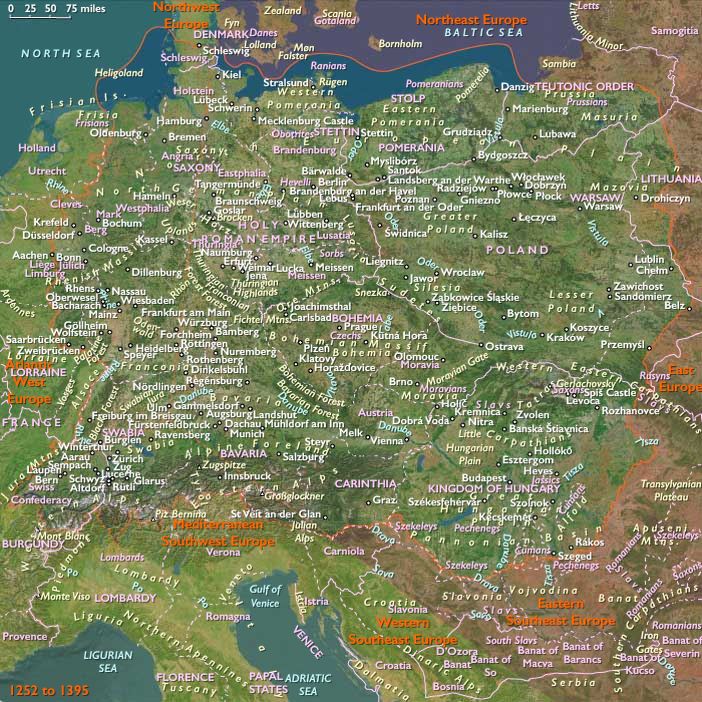
The German princes are not absolute rulers …
Years: 1252 - 1395
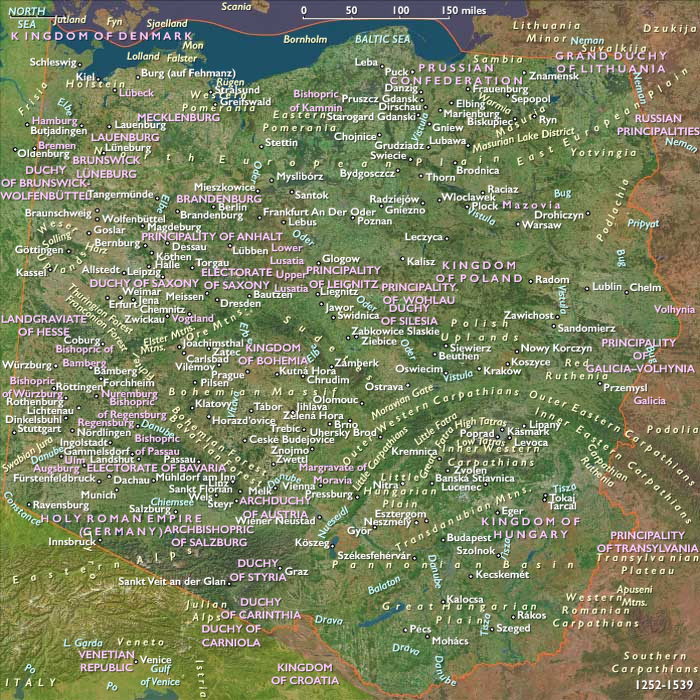
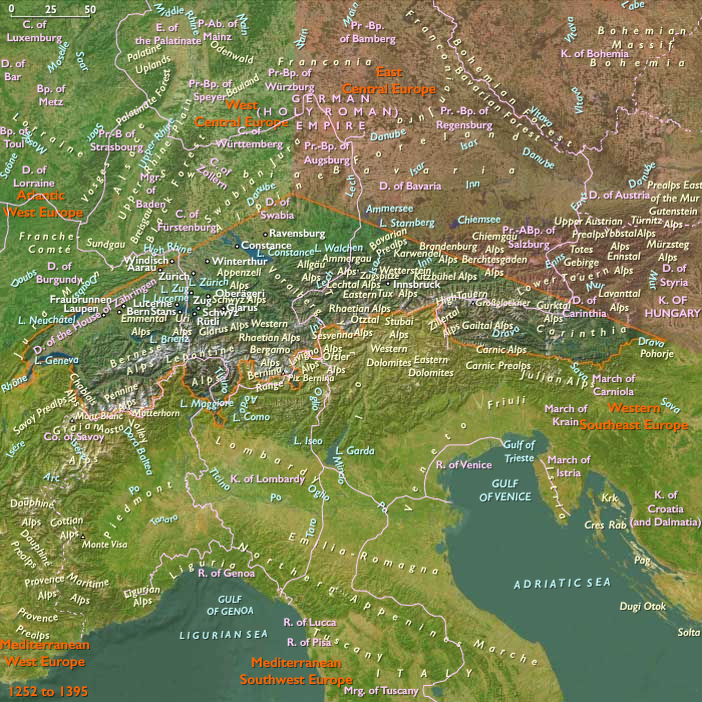
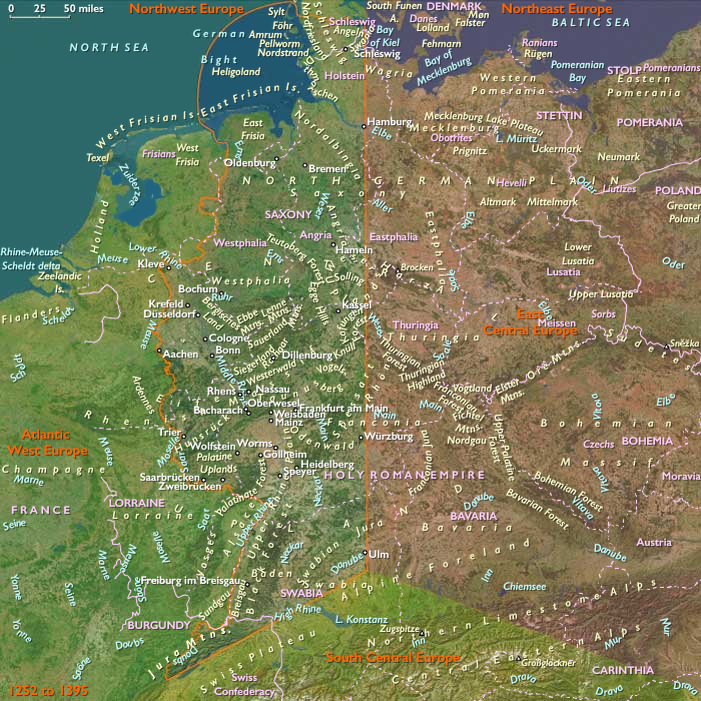
The German princes are not absolute rulers either.
They have made so many concessions to other secular and ecclesiastical powers in their struggle against the emperor that many smaller principalities, ecclesiastical states, and towns have retained a degree of independence.
Some of the smaller noble holdings are so poor that they have to resort to outright extortion of travelers and merchants to sustain themselves, with the result that journeying through Germany could be perilous in the late Middle Ages.
All of Germany is under the nominal control of the emperor, but because his power is so weak or uncertain, local authorities have to maintain order—yet another indication of Germany's political fragmentation.
People
Groups
- Germans
- Papal States (Republic of St. Peter)
- Mainz, Electoral Archbishopric of
- Christians, Roman Catholic
- Palatinate of the Rhine, County
- Trier, Electoral Archbishop of
- Bohemia, Kingdom of
- Holy Roman Empire
- Cologne, Electorate of
- Saxe-Wittenberg, Duchy of
- Comtat Venaissin (Papal enclave)
- Brandenburg, Wittelsbach
- Saxony, Electorate of
- Palatinate, Electoral (Wittelsbach)
Topics
Subjects
Regions
Subregions
Years: 1252 - 1395
People
Groups
- Germans
- Papal States (Republic of St. Peter)
- Mainz, Electoral Archbishopric of
- Christians, Roman Catholic
- Palatinate of the Rhine, County
- Trier, Electoral Archbishop of
- Bohemia, Kingdom of
- Holy Roman Empire
- Cologne, Electorate of
- Saxe-Wittenberg, Duchy of
- Comtat Venaissin (Papal enclave)
- Brandenburg, Wittelsbach
- Saxony, Electorate of
- Palatinate, Electoral (Wittelsbach)
Topics
Subjects
Regions
Subregions